
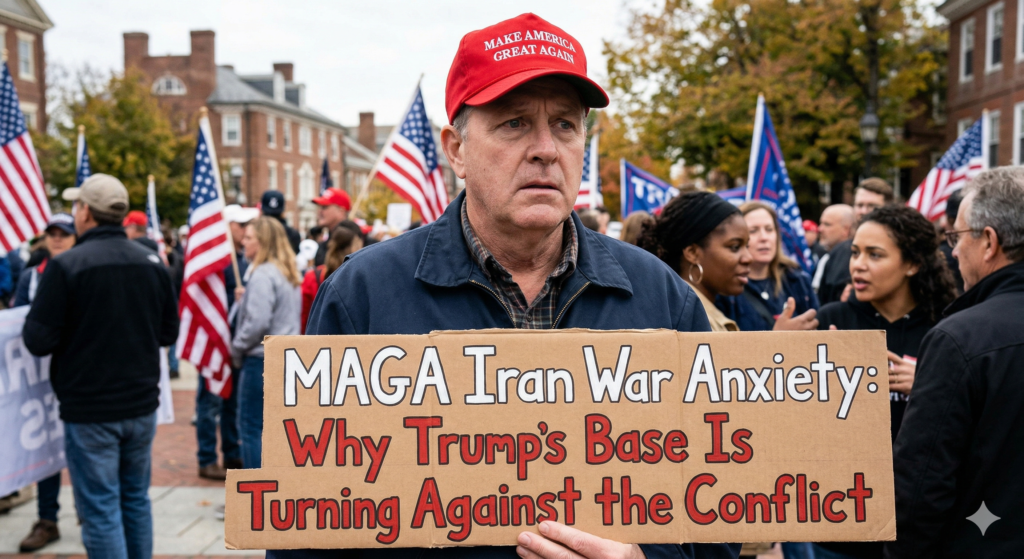
For years, CPAC has served as something of a homecoming for the Trump movement — a place where conservatives gather to celebrate shared victories and rally behind a common cause. This year, though, held in Dallas rather than its traditional home outside Washington, D.C., the mood was noticeably more complicated from the very start.
Most significantly, Trump did not attend. A White House spokesperson confirmed that the president’s schedule — and the ongoing military situation in Iran — kept him away. Vice President JD Vance was also missing from the speaker roster. Together, their absence left a leadership gap that no one at the conference could comfortably fill.
What stepped into that gap was something CPAC conferences rarely produce so openly: genuine disagreement. CPAC chairman Matt Schlapp made a point of welcoming the tension, hosting a panel called “Can’t We All Just Get Along” and telling speakers upfront that he would not police what they said on stage. For a conference built around party unity, that was a telling signal.
The Iran conflict shadowed the entire event — from main-stage speeches to informal conversations between sessions. Even the merchandise tables reflected the mood. Some attendees could be spotted wearing hats that read “MIGA: Make Iran Great Again,” a satirical twist on Trump’s signature slogan that some found funny and others found unsettling.
The MAGA Iran War Anxiety Is Real — And the Polls Back It Up
The national polling picture is not straightforward. At a glance, Republican support for Trump’s military action appears solid. A Quinnipiac University poll found that 86% of Republicans back the U.S. campaign against Iran, and a Pew Research Center survey showed that roughly eight in ten Republicans approve of how Trump has handled the conflict so far.
But those headline numbers hide a more complicated reality — one that was hard to miss in Dallas.
Among younger Republicans and independents who lean conservative, support for the war falls off considerably. Conservative pollster Richard Baris, speaking at CPAC, pointed out that fewer young people are even calling themselves MAGA anymore, and he tied that shift directly to how they feel about the Iran conflict.
The broader American public tells a more critical story. According to Pew Research Center, six out of ten Americans disapprove of U.S. involvement in Iran. Quinnipiac found that 54% of all voters oppose the military action, including 92% of Democrats and 64% of independents. Those are not numbers a party heading into midterms can afford to ignore.
Key Conservative Voices Who Are Questioning Trump’s Iran Strategy
The most eye-opening moments at CPAC this year weren’t necessarily the loudest speeches — they were the ones that broke from the script.
Steve Bannon, who served as a senior adviser in the Trump White House and addressed the CPAC crowd, has emerged as one of the most candid voices of skepticism within the MAGA world. On his War Room podcast earlier this month, he warned that a prolonged Iran conflict could cause the GOP to “bleed support” heading into the midterms. His message at CPAC was equally sobering: American sons, daughters, and grandchildren might end up sent overseas if this war drags on — a far cry from the chest-thumping that typically fills conservative conferences.
Tucker Carlson, although absent from CPAC this year, made headlines with a recent interview on Piers Morgan’s show in which he called the Iran war a “betrayal” of the voters who put Trump in office. He said it felt “heartbreaking” for people who genuinely believed Trump would steer the country away from military adventurism and toward a more restrained foreign policy.
Matt Gaetz, the former Florida congressman who did take the stage at CPAC, offered one of the sharpest critiques of the week: “A ground invasion of Iran will make our country poorer and less safe. It will mean higher gas prices, higher food prices.” He also raised the concern that an escalation could ultimately produce more radicalization abroad, not less.
Erik Prince, the founder of Blackwater and a longtime figure in conservative foreign policy circles, was also scheduled to speak at the conference as a skeptic of the military action.
The Generational Divide
If there was one theme running beneath every other conversation at CPAC 2026, it was the generational gap over the Iran war. Older and younger conservatives are not just disagreeing on tactics — they seem to be operating from entirely different sets of expectations about what the Trump presidency was supposed to mean.
Many older attendees remain firmly in Trump’s corner on this issue. They frame Iran as a four-decade-old adversary that has been allowed to act with impunity for far too long. Joe Ropar, a 70-year-old retired defense contractor from McKinney, Texas, put it directly: “I don’t believe he started a new war. He was responding to a war Iran has been waging on us for 40 years. How long were we supposed to wait?”
Younger conservatives see it through a very different lens. Benjamin Williams, a 25-year-old attending CPAC with Young Americans for Liberty, was blunt about his disappointment: “We did not sign up for more wars. We wanted real ‘America First’ policies — and Trump was crystal clear about that. This does feel like a betrayal.”
Matthew Kingston, 26, from Lubbock, Texas, echoed the feeling: “I personally don’t think we should be getting involved in Iran at all. This is not what I was voting for. This was supposed to be America First, not someone else’s conflict.”
Some young conservatives skipped the conference entirely because of the Iran issue. Law student Mariah Bader, 23, observed that the divide was discouraging younger people from showing up: “Instead of coming and engaging with the debate, a lot of them are just deciding to stay home.”
The demographic reality at CPAC this year reflected that trend. Observers noted that the crowd skewed significantly older — median age appearing to be well above 50 — while newer conservative youth movements, such as Turning Point USA, are increasingly capturing the energy and attention of younger right-leaning Americans.
What the Iran War Could Mean for the 2026 Midterm Elections
Bannon stated it as plainly as anyone: if the war does not resolve cleanly, the GOP could lose voters before Election Day arrives. Several younger conservatives at the conference went a step further, predicting that Republicans could lose their House or Senate majority if the conflict drags on without a defined end point.
The Texas Senate Republican primary runoff has added another layer of drama to the political picture. The race between incumbent Senator John Cornyn and Attorney General Ken Paxton is being closely monitored. Trump has not weighed in with an endorsement, which is unusual given how pivotal his endorsements have historically been within MAGA politics. Paxton spoke at the CPAC Friday dinner; Cornyn was not part of the conference program.
The Vance question is also worth watching carefully. He won the CPAC straw poll for the 2028 Republican presidential nomination — a meaningful result, even at this early stage — but his absence from the event itself, like Trump’s, left a noticeable vacuum that the conference struggled to fill.
CPAC chairman Matt Schlapp acknowledged the dynamic with rare candor: Trump may be the only person who can hold this coalition together, and when he is not physically present, the question of who leads becomes genuinely difficult to answer.
What Ordinary Americans Are Actually Feeling About All of This
Away from the policy debates and political maneuvering, the most grounded and human element of CPAC 2026 was the plain anxiety of everyday Trump supporters — people who believe in their president but are genuinely unsure what this war means for their families and their daily lives.
Kyle Sims, a 61-year-old Republican strategist based in Texas, captured that tension well. “I understand the argument for freeing the Iranian people,” he said. “But there are issues here at home that I think deserve a lot more attention right now.” He pointed to grocery prices — which he called “outrageous” — and was firm on one thing: “I do not want boots on the ground. I do not want another Iraq or Afghanistan.”
That mix of loyalty and real-world worry is what defines the MAGA Iran war anxiety at this moment. These are not people who have turned against Trump. They trust him. They just want to believe he has a clear plan — and that the conflict ends before it becomes something their children are sent to fight.
FAQ:
Why is the MAGA base divided over the Iran war?
A significant portion of Trump’s supporters voted for him because he explicitly promised to wind down foreign military entanglements and put American domestic priorities first. The U.S. military campaign in Iran, launched in February 2026, conflicts with that promise for many voters — especially younger conservatives and those most affected by economic pressures such as rising grocery bills, housing costs, and stagnant wages.
What did Steve Bannon say about the Iran conflict at CPAC?
Bannon cautioned that a prolonged war in Iran could cost the Republican Party crucial voter support ahead of the 2026 midterms. Speaking at CPAC, he also warned the audience that this conflict could result in American family members being deployed overseas — a noticeably restrained message from one of Trump’s longest-serving political allies.
Why did President Trump skip CPAC 2026?
A White House spokesperson cited scheduling demands and the ongoing military situation in Iran as the reasons for Trump’s absence. It was the first time in roughly a decade that Trump did not appear at the conference, and his absence highlighted just how heavily the war is weighing on the administration’s bandwidth.
What does polling show about Republican views on the Iran war?
Broadly speaking, Republicans support the war — Quinnipiac found 86% in favor, and Pew found around 80% approving of Trump’s handling of it. However, support is noticeably weaker among younger Republicans and conservative-leaning independents, two groups that are considered increasingly important to the party’s long-term electoral strength.
Could the Iran conflict affect Republican performance in the 2026 midterms?
Prominent voices at CPAC — including Bannon, Gaetz, and multiple younger attendees — raised this concern openly. With roughly six in ten Americans opposed to the conflict overall, some Republican strategists are privately worried that a prolonged war could both energize Democratic voters and reduce enthusiasm among conservatives who feel let down by the direction of Trump’s foreign policy.
A Movement Searching for Its Footing
CPAC 2026 offered a remarkably candid window into the MAGA Iran war anxiety that has been quietly building since the conflict began earlier this year. The usual spirit of unified purpose that defines these gatherings gave way to something more uncertain and more honest — a movement trying to work out what it believes when its leader makes a decision that, for many supporters, simply does not feel like “America First.”
Trump’s popularity within his base has not collapsed. That much is clear. But the fissures on display in Grapevine, Texas, are genuine, and they carry real political weight — particularly with a midterm election on the horizon and no obvious answer to the question of who holds this coalition together when Trump himself is not in the room.
Whether you’re a lifelong Republican wrestling with your own doubts, a concerned American watching the Iran situation from a distance, or simply someone trying to understand where the country’s politics are heading, what happened at CPAC this week deserves your attention.
For More Information
Related Article
Pentagon Draws Up Ground Operation Plans for Iran as Thousands of US Troops Flood the Middle East
Iran Sleeper Cell Warning: What the 1500 Border Stops Really Mean
Iran War Hormuz Tensions Escalate: What It Means for Oil Prices and American Consumers
3 thoughts on “MAGA Iran War Anxiety: Why Trump’s Base Is Turning Against the Conflict”