
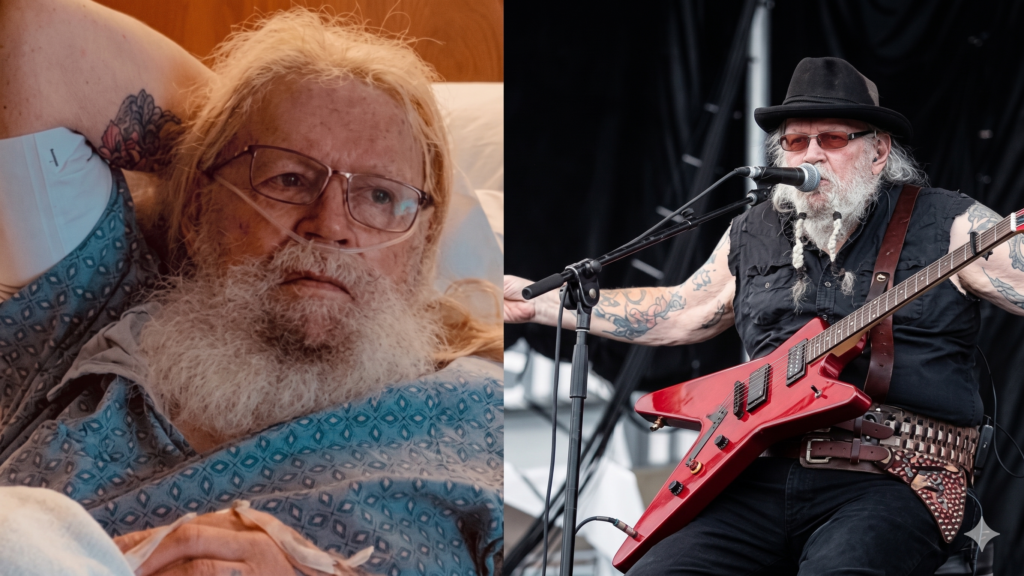
Before David Allan Coe ever played a single note on a Nashville stage, his life had already become the kind of story that country songs are written about — one filled with hardship, stubbornness, and the slow, unlikely climb toward something better.
He was born on September 6, 1939, in Akron, Ohio, into a world that didn’t cut him many breaks. By the age of nine, he had been sent to reform school. What followed was nearly two decades spent cycling through correctional facilities, including a stretch at the Ohio State Penitentiary. That kind of upbringing marks a person deeply — but in Coe’s case, it also gave him something: the solitude and the pain needed to find his voice as a songwriter.
When he walked out of prison for the last time in 1967, he made up his mind. He was heading to Nashville, and he was going to make music — or break himself trying. With little money and even fewer connections, he parked a hearse outside the Ryman Auditorium and used it as a home. On weekends, he would climb on top of it and play for the crowds passing by on their way inside. Looking back, it feels like something out of a movie. At the time, it was just survival.
That stubbornness paid off. Shelby Singleton’s Plantation Records took notice, leading to Coe’s debut album, Penitentiary Blues, in 1970. A few years later, signing with Columbia Records opened the door to a career that would shape American country music in ways that are still being felt today.
David Allan Coe’s Songs
People often talk about David Allan Coe‘s outlaw image, and that’s fair — the rhinestone suits, the long hair, the motorcycle gang history — it all made for a striking figure. But strip all of that away, and what you’re left with is something even more impressive: a songwriter of rare instinct and uncommon depth.
Some artists spend entire careers hoping to write one classic. Coe wrote several, and gave many of them away to others.
“Would You Lay With Me (In a Field of Stone)” — Coe penned this tender, aching ballad, and when Tanya Tucker took it to No. 1 in 1973, Nashville started paying attention to his name in a very different way.
“You Never Even Called Me by My Name” (1975) — Co-written by Steve Goodman and John Prine, but brought to life in a way only Coe could manage, this track was jokingly called “the perfect country and western song” — and the joke turned out to be true. It landed at No. 8 on the charts, but its place in country music history is far higher than that.
“Take This Job and Shove It” (1977) — Written by Coe, turned into a No. 1 smash by Johnny Paycheck, and still one of the most instantly recognizable country recordings ever made. A working man’s anthem that meant something real to the people who sang along.
“Tennessee Whiskey” — Here is a piece of music history that most people don’t know. Long before Chris Stapleton turned this song into a global phenomenon with 17 platinum certifications — and before George Jones made it a hit — David Allan Coe was the first person to ever record it. His ear for a great song was something special.
“The Ride” (1983) — A ghost story wrapped in a country ballad. Coe imagined a hitchhiker picked up by the spirit of Hank Williams, and the result was one of the most quietly haunting recordings in the genre’s long history.
“Mona Lisa Lost Her Smile” (1984) — His highest-charting solo hit, peaking at No. 2 and reminding anyone who had dismissed him that he could hold his own on the radio when he wanted to.
Across a career that stretched over five decades, Coe released 42 studio albums. That alone tells you something about the man’s drive.
David Allan Coe and the Outlaw Country Movement
Ask any serious country music historian to list the pillars of the outlaw country movement, and you will hear the same names: Willie Nelson, Waylon Jennings, Johnny Cash, Kris Kristofferson — and David Allan Coe. Together, these artists pushed back hard against the overly polished, business-driven sound that Nashville had settled into by the 1970s. They wanted creative control. They wanted honesty. They wanted music that felt like something real.
Coe was right in the middle of that rebellion, even if he sometimes operated in the shadows of his better-known peers. He had strong opinions about authenticity — sometimes too strong. He openly accused fellow outlaw artists of selling out, which made him enemies but also earned him fierce loyalty from fans who appreciated someone willing to say what others thought privately.
Waylon Jennings captured their relationship well in just a few words: “He could drive me crazy, but there was something about David that pulled at my heartstrings.”
That tension — between aggravation and admiration — is about as honest a summary of David Allan Coe as anyone ever offered.
His boundary-crossing spirit also showed up in unexpected places. In 2006, he joined forces with members of Pantera — including the late Dimebag Darrell — to record Rebel Meets Rebel, a country-metal fusion project that became a genuine cult classic. It was a bizarre pairing on paper, but it made sense if you understood that Coe had never really belonged to any single world.
The Controversies That Shadowed David Allan Coe
There is no way to write honestly about David Allan Coe without sitting with the uncomfortable parts of his story.
During the late 1970s and into the early 1980s, he released two albums — sometimes referred to as his “underground” records — that contained language many found deeply offensive, including racial slurs and graphic content. The backlash was significant and followed him for the rest of his career. Coe maintained that the material was misunderstood, but critics and listeners who found it harmful were not wrong to feel that way. Both things can be true: the man made brilliant music, and he also made choices that caused real hurt.
In 2015, legal trouble arrived in a more formal sense when he pleaded guilty to obstructing the administration of tax laws. The sentence included three years of probation and a repayment of nearly $1 million owed to the IRS.
He also had ties to the Outlaws Motorcycle Club — a real organization, not just a persona — which fit neatly into the mythology he built around himself but also reflected genuine risks and associations from his past.
These parts of his story do not cancel the music. But they belong in the same conversation.
David Allan Coe’s Legacy
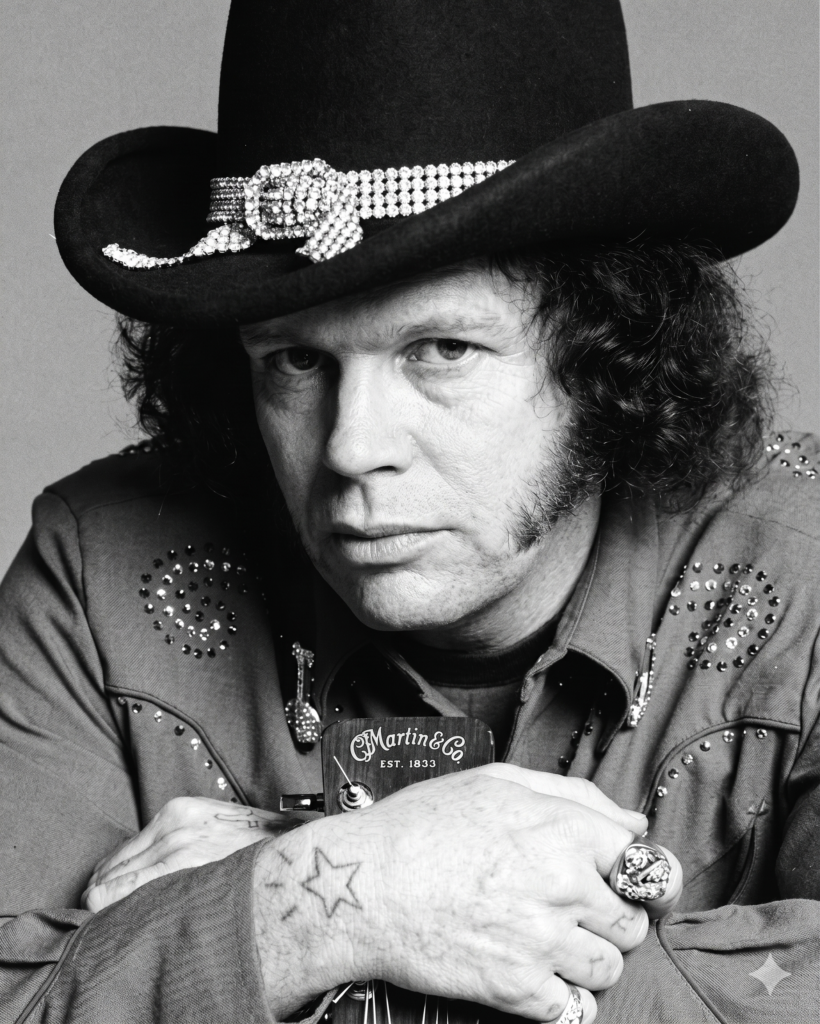
Probably the most striking thing about David Allan Coe — more than the hits, more than the image — is the sheer fact that he made it to 86. This was a man who spent two decades behind bars before his career even began. He survived motorcycle conflicts, federal tax charges, and a severe COVID illness at the age of 82 that landed him in the hospital for an extended period. By any reasonable measure, he should not have lived long enough to become a legend. And yet.
He is survived by his wife, Kimberly Hastings Coe; his son, Tyler Mahan Coe, a well-regarded podcaster and author dedicated to documenting country music’s history; and his daughter, Tanya Coe, who carries on the family’s musical tradition as a country singer in her own right.
Within hours of his passing becoming public, streaming numbers across his catalog climbed sharply. Fans turned to social media not just to post tributes but to share actual memories — concerts attended, songs that helped them through hard times, moments when his lyrics said something they could not say themselves. That does not happen for artists who passed through without leaving anything behind.
FAQ:
Q.1. When and how did David Allan Coe die?
Ans: David Allan Coe passed away on April 29, 2026, at around 5:00 p.m. ET. He was in an intensive care unit at the time of his death. His representative confirmed the news, though an official cause of death has not been released. He had been dealing with deteriorating health for several years prior to his passing.
Q.2. What is David Allan Coe’s most famous song?
Ans: Most people point to “You Never Even Called Me by My Name” (1975) as his signature track — often humorously called “the perfect country and western song.” Beyond that, he wrote “Take This Job and Shove It,” which became a No. 1 hit for Johnny Paycheck, and he was also the first artist to ever record “Tennessee Whiskey” — years before it became a worldwide hit through George Jones and, later, Chris Stapleton.
Q.3.Was David Allan Coe actually an outlaw?
Ans: He was not playing a character. Before country music ever became associated with the word “outlaw,” Coe had already spent close to 20 years inside correctional facilities. He was also a genuine member of the Outlaws Motorcycle Club for a period of his life. The persona he projected on stage and record was rooted in real experiences — something that set him apart from many who borrowed the aesthetic without having lived it.
Q.4. Who are David Allan Coe’s surviving family members?
Ans: He is survived by his wife, Kimberly Hastings Coe; his son, Tyler Mahan Coe, who is a respected country music podcaster and writer; and his daughter, Tanya Coe, who is also a working country music artist. All three carry a deep personal connection to the music he devoted his life to.
Q.5. Why was David Allan Coe considered controversial?
Ans: The controversy around Coe centers mainly on two albums from the late 1970s and early 1980s that included racially offensive language and other highly inappropriate content. Coe defended these recordings during his lifetime, but the criticism they attracted was substantive and did real damage to his mainstream standing. He also faced a federal guilty plea in 2015 for tax-related offenses.
The Legend Lives On
David Allan Coe was told, in many ways and at many points in his life, that he would not make it. The music industry did not fully embrace him. Radio kept its distance. Critics were divided. And still, over 50 years after parking a hearse outside the Ryman Auditorium with nothing but nerve and a guitar, he leaves behind a body of work that holds its own against anyone in country music’s long history.
“Tennessee Whiskey” has been certified platinum 17 times — and Coe heard the greatness in that song before anyone else. “You Never Even Called Me by My Name” is still sung at bars across America on any given Friday night. “The Ride” still quietly unsettles people who hear it for the first time, all these years later.
For More Information
Related Article
King Charles III Gifts Trump the Original HMS Trump Bell at White House State Dinner
Jimmy Kimmel’s Melania Trump “Expectant Widow” Joke: Full Story, Backlash, and What Happens Next
Jonathan Diller Killer Sentenced to 115 Years as Widow Delivers Emotional Statement in Queens Court
Obama Faces Backlash Over WHCD Shooting Response as Cole Allen Manifesto Details Emerge