
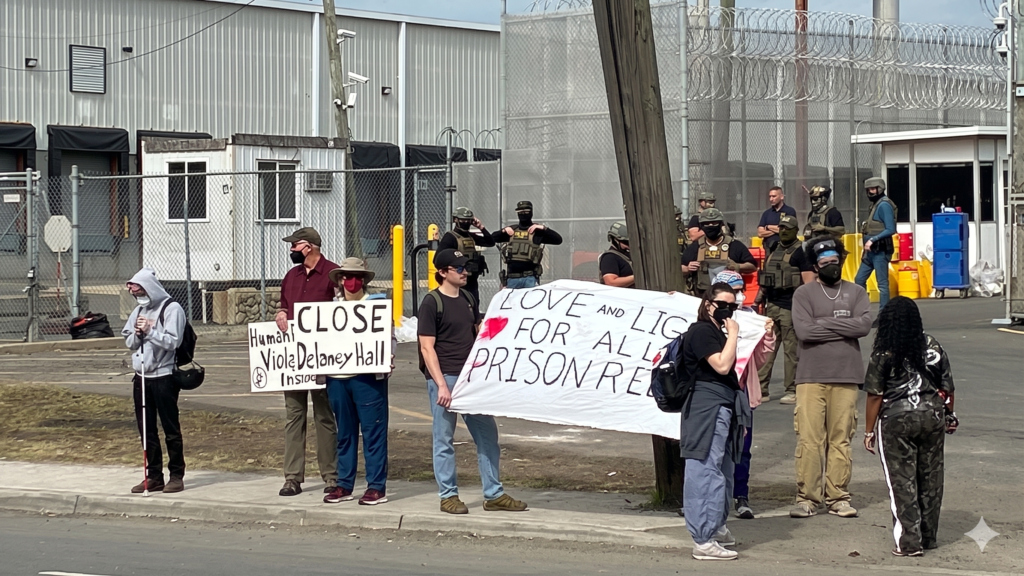
A detention facility in Newark, New Jersey, has become ground zero for one of the most charged immigration battles unfolding across the United States today. Delaney Hall — a privately run ICE detention center — has lit the fuse on a wave of anti-ICE protests, sharp political divisions, and violent clashes between federal agents and demonstrators that show no signs of cooling off.
If you have been following the headlines and want a clear, grounded explanation of what is actually happening at Delaney Hall, who the key players are, and why this matters well beyond New Jersey’s borders, you are in the right place. This article walks through everything — from the origin of the controversy to the hunger strike, the street-level clashes, and the state government’s response.
What Is Delaney Hall, and Why Has It Become So Controversial?
Delaney Hall is a large federal immigration detention facility situated in Newark, New Jersey. The GEO Group — a for-profit prison and detention management company — operates the facility under a contract with U.S. Immigration and Customs Enforcement (ICE). At its peak, the center holds close to 900 to 1,000 detainees, most of whom were apprehended through ICE enforcement operations across New Jersey and nearby states.
The facility resurfaced in public debate in early 2025, when GEO Group announced it had secured a renewed ICE contract to reopen and scale up operations there. Resistance came almost immediately. In April 2025, the city of Newark filed a civil lawsuit against GEO Group, alleging the company had reopened Delaney Hall without obtaining the required municipal permits or passing mandatory city inspections.
Newark Mayor Ras Baraka, a Democrat, went further. He publicly accused GEO Group of routinely ignoring local ordinances and stated that city health inspectors, fire officials, and code enforcement personnel had all been turned away from the facility when they attempted routine compliance visits.
The conflict reached a flashpoint in May 2025 when Mayor Baraka personally showed up at Delaney Hall alongside other elected officials to inspect conditions firsthand. He was arrested outside the facility on a trespassing charge — one that federal prosecutors later dropped entirely. A U.S. Representative who intervened during Baraka’s arrest was separately charged with assaulting officers, allegations she has firmly denied.
The Hunger Strike That Ignited the 2026 Protests
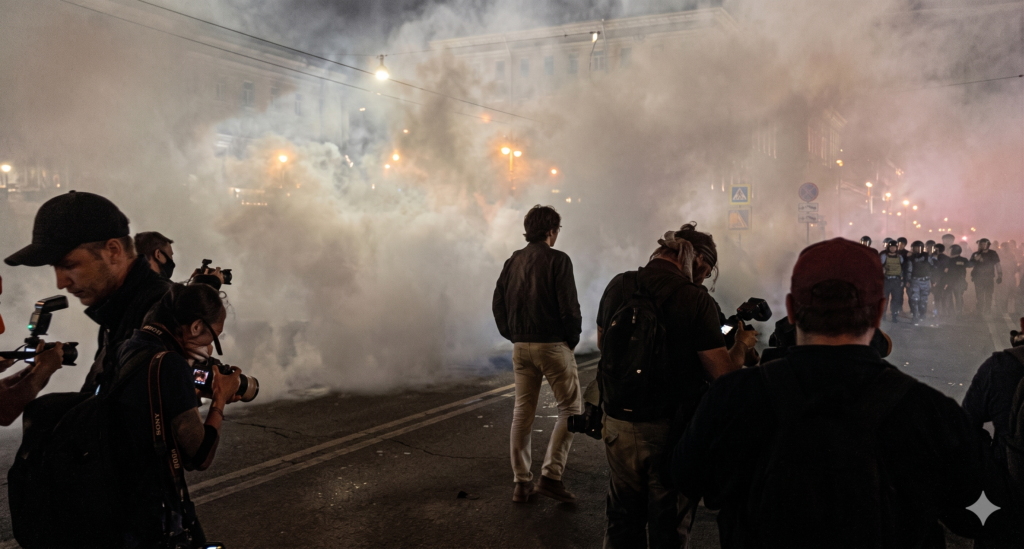
Around May 22, 2026, approximately 300 detainees inside Delaney Hall collectively launched a hunger and labor strike to draw public attention to what they described as deeply inhumane living conditions within the Newark ICE detention center. Their accounts painted a troubling picture: rotten food, with some reports specifically alleging that live worms had been discovered in meals distributed inside the facility. Detainees also said they were being denied basic necessities such as toilet paper and were not receiving adequate medical attention when they fell ill.
The Department of Homeland Security disputed every one of these claims. DHS Secretary Markwayne Mullin went on record stating there was no hunger strike taking place and that conditions inside Delaney Hall were perfectly acceptable. GEO Group similarly pushed back, noting that detainees were provided with around-the-clock medical care, access to legal services, family visitation opportunities, and meals developed with input from a dietician.
However, the accounts coming from elected officials who actually entered the facility told a very different story. Senator Cory Booker and Congressman Adriano Espaillat were granted access and spoke directly with detainees, who described deteriorating conditions and insufficient healthcare. Senator Andy Kim reported that detainees had informed him they were being threatened with punitive transfers and revocation of family visitation rights if they did not end their protest.
Those accounts, shared publicly, were enough to draw hundreds of supporters outside the facility walls — and what came next captured the attention of the entire country.
Delaney Hall Clashes: How the Protests Turned Physical
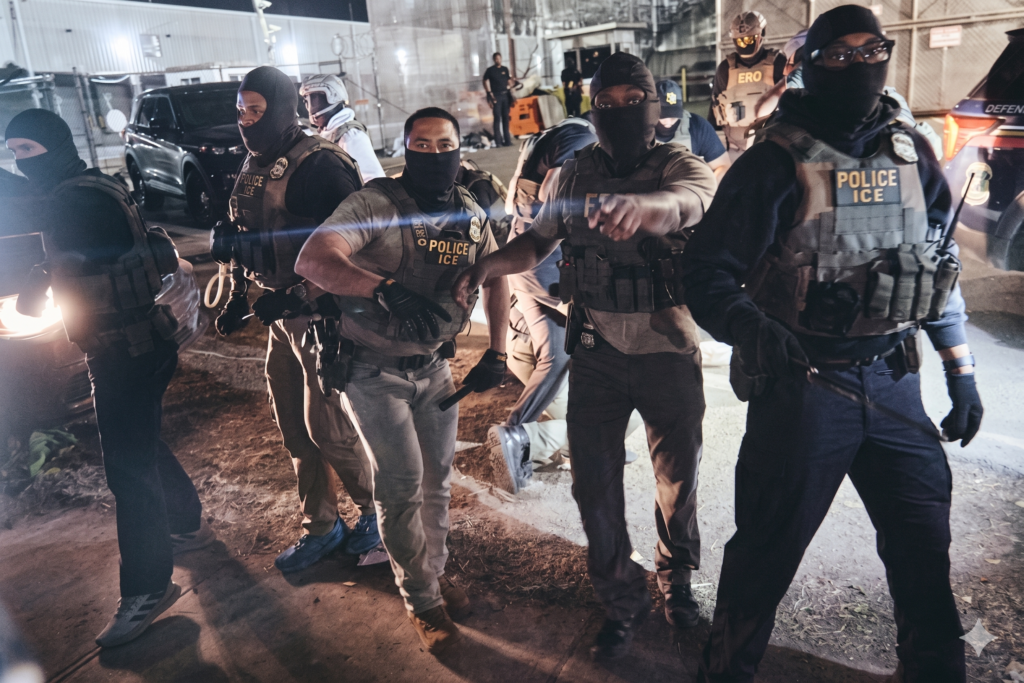
Beginning around Memorial Day weekend in 2026, demonstrators began arriving outside Delaney Hall in steadily increasing numbers to stand in solidarity with the striking detainees. What began as an act of peaceful protest quickly intensified into some of the most confrontational scenes between anti-ICE activists and federal enforcement agents that New Jersey had witnessed in years.
ICE deployed agents in formation along the outer perimeter of the facility. As the days and nights wore on, those confrontations grew sharper:
- Protesters formed human chains around the facility’s entry points and constructed barricades in an effort to obstruct access.
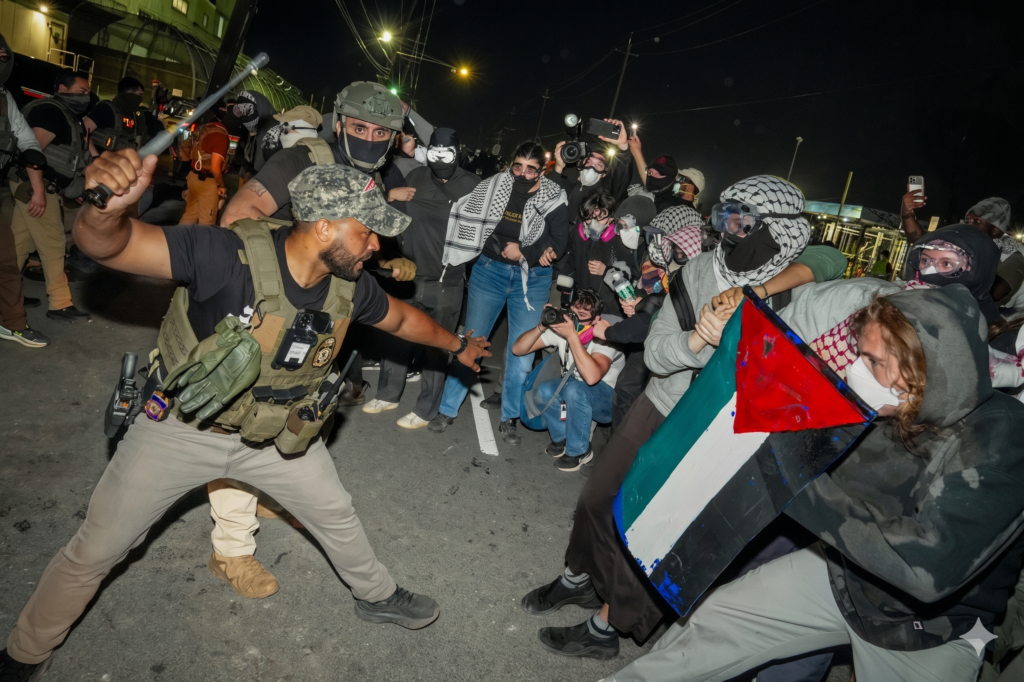
- ICE agents responded with batons, pepper spray, and physical force to clear demonstrators from the area.
- Members of the press and media were reportedly knocked to the ground during the turmoil.
- Senator Andy Kim was struck by pepper spray while attempting to de-escalate a confrontation immediately after completing an official congressional oversight visit inside the facility.
- By the night of Thursday, May 28, nine protesters had been taken into custody in a single evening, pushing the week’s total arrest count to at least 17.
Tensions inside Delaney Hall also escalated in parallel. Reports surfaced that ICE agents deployed pepper spray inside one of the facility’s housing units, which had been placed on lockdown, with detainees alleging this was direct retaliation for the hunger strike. DHS denied the reports.
The mounting violence outside the facility drew a steady stream of Democratic lawmakers to the site each day, all calling for Delaney Hall to be closed down or, at the very least, for immediate improvements to conditions inside.
Governor Mikie Sherrill’s Response: Establishing the New Jersey ICE Protest Zone
Governor Mikie Sherrill, who assumed office in January 2026, quickly emerged as one of the most prominent voices in the Delaney Hall crisis. Her approach won strong backing from immigration advocates while drawing pointed criticism from conservative commentators and the Trump administration alike.
On Memorial Day, Sherrill traveled to Delaney Hall in person alongside U.S. Senator Andy Kim and a group of Democratic House members, intending to conduct an inspection of conditions inside. ICE officials denied her entry. Following the rebuff, Sherrill stated publicly: “For days, ICE has refused most of our requests, raising serious questions about what it is trying to hide from public view.”
As the week of protests wore on and the violence outside escalated, Sherrill made a decisive move on Friday, May 29, 2026. She announced that New Jersey State Police would assume responsibility for public safety operations outside Delaney Hall — effectively relieving ICE agents of that role — and that the state would designate protected protest zones in the surrounding area.
“I will not give ICE the pretext to expand operations in our state,” Sherrill declared at a news conference. “For that reason, New Jersey law enforcement is today establishing a peaceful, protected protest zone in the area outside Delaney Hall.”
State Police Lt. Col. David Sierotowicz confirmed that ICE agents agreed to pull back inside the facility’s perimeter fence as state police took command of the exterior. Vehicle checkpoints were also put in place to manage traffic along the roadway fronting the detention center.
Sherrill’s administration framed the intervention as both a matter of public safety and a principled stand for New Jersey’s commitment to First Amendment rights — while simultaneously reducing the risk of further violence on either side.
The reaction was mixed. A number of protesters staged sit-ins and refused to move into the newly established designated areas, with some expressing concern that corralling demonstrators amounted to silencing them. On the other side of the political spectrum, Republican officials criticized Sherrill for what they characterized as earlier inaction in the face of protester violence and announced a pro-ICE rally at the facility for Saturday.
The Federal Government Fires Back: Sanctuary State vs. Federal ICE Enforcement
The Trump administration wasted little time in staking out its position on the Delaney Hall protests. DHS Secretary Markwayne Mullin accused New Jersey’s Democratic leadership of orchestrating “political stunts” and exploiting the controversy for fundraising purposes. He dismissed all claims of inhumane conditions as fabricated and labeled demonstrators as “rioters” and “agitators” who had “surrounded Delaney Hall” and deliberately “blocked all entries and exits.”
Mullin escalated the rhetoric further by raising the possibility that the administration could impose travel restrictions on sanctuary cities where local law enforcement agencies declined to cooperate with federal immigration operations. New Jersey operates as a sanctuary state, meaning it does not mandate local police participation in ICE enforcement activities.
The DHS characterized detainees held at Delaney Hall as dangerous individuals with serious criminal histories, including alleged murderers and people accused of sexual assault, armed robbery, and illegal firearms possession. Democratic officials and immigrant rights organizations strongly rejected that framing, arguing that a significant number of detainees held at the facility had no violent criminal background whatsoever.
Adding historical context to the current tension: in June 2025, four detainees had escaped from Delaney Hall in the aftermath of an internal uprising triggered by grievances over detention conditions. All four individuals were eventually recaptured, but the incident raised persistent questions about oversight and management of the facility.
Voices from the Ground: What Detainees and Advocates Are Reporting
Those closest to the situation — detainees themselves and the advocates working on their behalf — have offered accounts that differ sharply from the official federal narrative.
Activist Catalina Adorno relayed firsthand reports from detainees describing being served rotten frozen food, including one widely shared account of live worms discovered in a meal. She and fellow advocates also reported that people were being denied toilet paper and that requests for medical attention were consistently going unanswered.
Representative Robert Menendez, who visited Delaney Hall in person, accused facility authorities of using intimidation as a tool to silence detainees, warning them of retaliation if they continued participating in the hunger strike. “They’ve been trying to break the people inside for as long as this facility has been open,” he said during remarks outside the facility.
Brooklyn Borough President Antonio Reynoso, who made his own visit on Friday, framed the situation as a direct contradiction of core American principles. He described detainees as people “really struggling in a detention center that does not meet American values and standards” and called the conditions unacceptable, particularly given that 2026 marks the 250th anniversary of the nation’s founding.
Legal experts from Seton Hall University School of Law’s Immigrants’ Rights and International Human Rights Law Clinic have also been monitoring the situation closely, raising formal legal concerns about the treatment of individuals held inside the Newark ICE detention center.
FAQ:
Q: What exactly is Delaney Hall, and who is responsible for running it?
Delaney Hall is a federal immigration detention facility located in Newark, New Jersey. It is privately managed by the GEO Group under an active contract with U.S. Immigration and Customs Enforcement. The facility can hold approximately 1,000 individuals at capacity.
Q: Why are protesters gathering outside Delaney Hall?
Demonstrators are showing up in solidarity with detainees who launched a hunger and labor strike in May 2026 over alleged inhumane conditions inside the facility — including spoiled food, inadequate medical care, and denial of basic hygiene supplies. Activists are also broadly opposed to ICE detention practices in general and are calling for the facility to be permanently closed.
Q: Who is Governor Mikie Sherrill, and where does she stand on this issue?
Mikie Sherrill is the Democratic Governor of New Jersey, first elected in 2025. She has publicly called for Delaney Hall to be shut down, personally attempted to inspect the facility and was denied access by ICE officials, and in late May 2026, deployed New Jersey State Police to take over crowd management outside the facility and establish protected, designated protest zones.
Q: Have any elected officials been arrested or physically harmed during these events?
Yes. Senator Andy Kim was struck by pepper spray during a congressional oversight visit. In 2025, Newark Mayor Ras Baraka was arrested outside the facility on a trespassing charge that was subsequently dropped. A U.S. Representative was also charged with assaulting officers during that same incident — allegations she has vigorously disputed.
Q: What is the Trump administration’s official position on the Delaney Hall situation?
DHS Secretary Markwayne Mullin has defended conditions at Delaney Hall as adequate, referred to protesters as agitators and rioters, accused New Jersey’s Democratic leaders of political theater, and raised the prospect of imposing travel restrictions on sanctuary cities that refuse to assist with federal immigration enforcement.
Why the Delaney Hall Story Matters Far Beyond Newark
The Delaney Hall anti-ICE protests are not a local dispute limited to one city block in Newark. What is unfolding there is a direct collision between the federal government’s immigration enforcement agenda and the sanctuary policies of one of the most densely populated states in the country — and it is happening in full public view.
The images coming out of Delaney Hall — federal agents with batons facing off against protesters carrying homemade shields, elected senators catching pepper spray during oversight visits, and a sitting governor being turned away at the gate of a facility on her own state’s soil — reflect just how deeply fractured the national conversation on immigration has become.
For More Information
Related Article
Minnesota Family Charged for Attacking TPUSA Reporter
David Allan Coe Dead at 86: Country Legend Dies
King Charles III Gifts Trump the Original HMS Trump Bell at White House State Dinner