
It is not every day that two completely unrelated events — one political, one scientific — both land at the top of the national news feed on the same day. Yet here we are.
On one front, the Department of Homeland Security (DHS) is locked in an intensifying standoff with California Governor Gavin Newsom over the state’s long-standing sanctuary immigration policies. Federal officials are warning that thousands of individuals with serious criminal histories could walk free from California jails without any coordination with immigration enforcement.
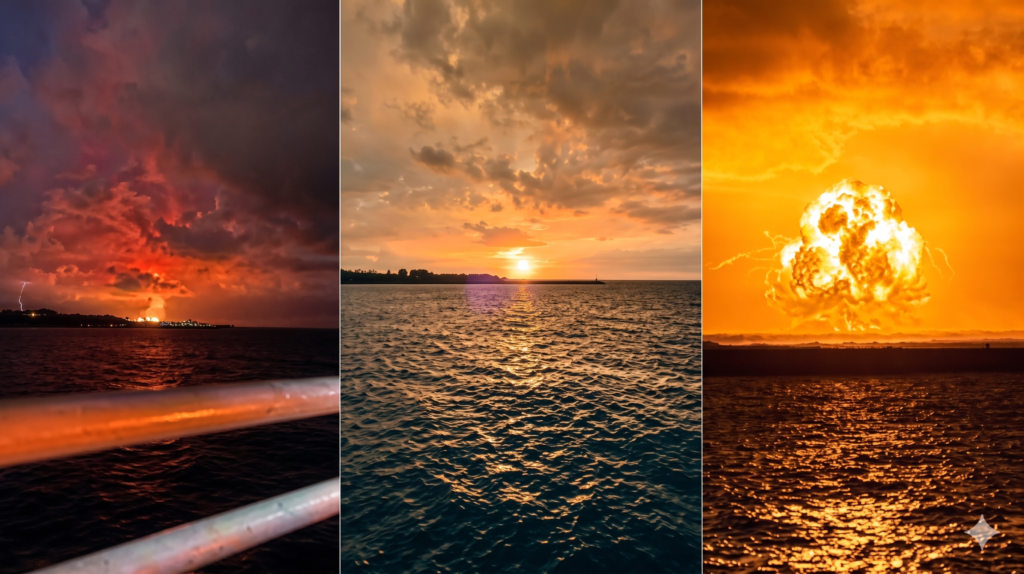
On another front, Jeff Bezos‘ rocket company Blue Origin suffered a devastating blow on the night of May 28, 2026, when its flagship New Glenn rocket erupted into a towering fireball during a routine pre-launch test at Cape Canaveral Space Force Station in Florida.
Both stories carry enormous consequences — for public safety, national policy, and the future of American space exploration. This article breaks down what is happening, why it matters, and what comes next.
The DHS vs. Gavin Newsom Sanctuary Policy Controversy Explained
What Exactly Is a Sanctuary Policy?
At its core, a sanctuary policy is a state or local government rule that restricts how far local law enforcement will go in assisting federal immigration authorities — specifically, ICE (Immigration and Customs Enforcement). Under such policies, local jails typically will not hold someone beyond their legal release date just because ICE has filed a detainer request.
California has operated under some of the broadest sanctuary protections in the country. State law generally prohibits agencies from detaining individuals past their scheduled release dates for the sole purpose of handing them over to federal immigration officials.
For years, this approach has been a point of fierce debate. Supporters argue it builds trust between immigrant communities and local police. Critics, including the current federal administration, say it creates dangerous gaps in the enforcement chain.
The “Sanctuary Calamity” Declaration
In February 2026, DHS and ICE went public with an unusually forceful statement they titled “Sanctuary Calamity.” The statement called directly on Governor Newsom and California officials to stop releasing individuals with active immigration detainers from state jails.
The scale of what DHS described is hard to ignore. According to the agency, approximately 33,179 people in California’s custody currently have active ICE detainers against them. The alleged crimes connected to this group include 399 homicides, 3,313 assault charges, 3,171 burglary charges, 1,011 robbery charges, 8,380 drug-related offenses, 1,984 weapons violations, and 1,293 offenses classified as sexually predatory in nature.
On top of that, DHS reported that since January 20, 2025 — when President Trump began his second term — 4,561 individuals with active ICE detainers had already been released into California communities. Crimes attributed to those released include 31 homicides and 661 assaults, among many others.
Cases That Have Kept the Controversy in the Headlines
Several specific incidents have kept this debate from fading into the background:
- The Killing of Alberto Rangel (December 2024): Wilfredo Jose Tortolero-Arriechi, a Venezuelan national, was charged with stabbing 51-year-old hospital social worker Alberto Rangel multiple times inside Zuckerberg San Francisco General Hospital in San Francisco. Rangel died two days later. DHS stated that Border Patrol had encountered the suspect back in 2023, and he had been released into the U.S. under the prior administration.
- A Fatal Hit-and-Run in Orange County (November 2025): Barry William Tutt, a 71-year-old California resident, was killed when an intoxicated driver — identified as an undocumented immigrant — struck him and fled the scene. Following the incident, DHS publicly asked Governor Newsom how many more American lives would have to be lost before California chose to work alongside federal law enforcement rather than against it.
- Deadly Commercial Truck Crashes (2025–2026): A troubling pattern of fatal accidents involving undocumented immigrants who held state-issued commercial driver’s licenses prompted DHS and the Department of Transportation to jointly push for new federal legislation. The proposed law, informally referred to as “Dalilah’s Law,” would prohibit any state from issuing commercial driver’s licenses to individuals who are in the country without legal authorization.
Newsom’s Response: A Firm Pushback
Governor Newsom has not been silent. His office has pushed back at every turn, with spokesperson Diana Crofts-Pelayo dismissing the federal agency’s claims as “fake news.” She accused the Trump administration of using isolated tragic cases to justify what she called “cruel and militaristic” actions against broad immigrant populations — including people who are in the country legally or are U.S. citizens.
Newsom backed up his position with action as well. In February 2025, he approved $50 million in state funding specifically to counteract federal immigration enforcement efforts. Half of that money was directed toward nonprofit organizations providing legal assistance to immigrants facing deportation, eviction, or other federal actions.
The courts have also weighed in on California’s side, at least partially. A federal judge in San Francisco issued an injunction in April 2025, blocking the Trump administration from punishing sanctuary cities by cutting off federal funding.
A New Flashpoint: International Airport Access
The confrontation took a surprising turn in April 2026. Newly confirmed DHS Secretary Markwayne Mullin suggested in a Fox News interview that the administration was exploring whether to restrict customs and border control operations at international airports located in sanctuary cities — a move that could create significant disruptions for travelers passing through major California hubs.
Governor Newsom responded swiftly on social media, warning that such a policy would cause severe economic damage and disrupt international travel at some of the world’s busiest airports.
Meanwhile, on Capitol Hill, a March 2026 House committee report formally referenced the Shut Down Sanctuary Policies Act of 2026, signaling that the legislative branch is prepared to add federal pressure of its own to the ongoing dispute.
Blue Origin’s New Glenn Rocket Explosion: A Disaster on the Space Coast
What Happened on the Night of May 28, 2026?
At roughly 9:00 p.m. Eastern Time on Thursday, May 28, 2026, something went horribly wrong at Launch Complex 36 (LC-36) on Cape Canaveral Space Force Station.
Blue Origin’s New Glenn — a 321-foot-tall heavy-lift rocket and the centerpiece of Jeff Bezos’ commercial space ambitions — exploded violently during what was supposed to be a standard pre-launch engine test. The resulting fireball lit up the night sky across Florida’s Space Coast and was clearly visible from miles away. Witnesses described it as one of the most dramatic rocket failures seen in the United States in years.
By any measure, it represents the most serious setback in Blue Origin’s history.
Understanding What a Static Fire Test Is
To understand why this failure is so significant, it helps to understand what a static fire — or hotfire — test actually involves.
Before every rocket launch, engineers conduct a controlled ignition of the vehicle’s engines while the rocket remains physically locked down to the launchpad. The test typically lasts anywhere from a few seconds to a minute. Its purpose is straightforward: confirm that the rocket’s propulsion systems and the launch pad infrastructure are both working correctly before the vehicle ever leaves the ground.
It is supposed to be one of the safest stages of launch preparation. In Blue Origin’s case on May 28, it was anything but.
How Blue Origin and Jeff Bezos Responded
Blue Origin released a statement on X — formerly Twitter — within hours of the explosion: “We experienced an anomaly during today’s hotfire test. All personnel have been accounted for. We will provide updates as we learn more.”
Jeff Bezos posted his own message shortly afterward: “All personnel are accounted for and safe. It’s too early to know the root cause but we’re already working to find it. Very rough day, but we’ll rebuild whatever needs rebuilding and get back to flying. It’s worth it.”
The most important immediate confirmation: no injuries or fatalities were reported. Space Launch Delta 45 Public Affairs and U.S. Representative Mike Haridopolos — chairman of the House Space and Aeronautics Subcommittee — both confirmed there were no casualties.
The FAA also issued a brief statement acknowledging it was aware of the incident, while noting that the static fire test was not a FAA-licensed activity and therefore did not affect commercial air traffic.
What Was New Glenn Scheduled to Carry?
The stakes for this particular test were exceptionally high. New Glenn’s fourth launch was set to be the first of 24 missions contracted by Amazon, carrying satellites for Amazon’s Leo broadband internet constellation into orbit. The rocket was reportedly fully fueled at the time of the explosion — which likely contributed to the scale of the blast.
To appreciate how much progress Blue Origin had made before this setback, here is a brief look at New Glenn’s track record:
- Early 2025 — Mission 1: New Glenn made its operational debut from Cape Canaveral, entering the commercial launch market.
- November 2025 — Mission 2: The rocket successfully delivered NASA’s twin ESCAPADE spacecraft on a Mars-bound trajectory. Blue Origin also achieved a major milestone by landing the first-stage booster for the first time.
- April 2026 — Mission 3: The company flew a previously recovered and refurbished booster — demonstrating reusability — and landed it at sea a second time. However, a cryogenic malfunction in the upper stage caused the mission’s satellite payload to be lost.
- May 28, 2026 — Mission 4 attempt: The pre-launch static fire ends in a full rocket explosion.
What This Means for the SpaceX vs. Blue Origin Space Race
The New Glenn explosion deals a real blow to Blue Origin’s credibility in an already lopsided competition with SpaceX.
SpaceX’s Falcon 9 has become the global standard for reliable commercial orbital launches, with an extraordinary success record built over more than a decade. Blue Origin has been working aggressively to position New Glenn as a serious rival — especially for large government contracts and Amazon’s satellite deployment schedule.
This explosion does not end that ambition, but it does set the timeline back significantly. It also raises questions about the readiness of New Glenn for the heavy launch cadence that Amazon and NASA are counting on.
NASA Administrator Jared Isaacman acknowledged the gravity of the situation, saying the agency would work with Blue Origin to investigate the anomaly, assess any near-term mission impacts, and support a return to flight. He noted that developing new heavy-lift launch vehicles is “extraordinarily difficult,” reminding the public that setbacks are part of the process.
NASA has not yet confirmed whether the explosion will affect its Artemis moon exploration program or other planned missions that rely on New Glenn’s payload capacity. Damage assessments at Launch Complex 36 are ongoing.
Why Both of These Stories Hit Close to Home for Americans
These two headlines could not look more different on the surface. One is a political dispute over immigration law. The other is a rocket disaster on a Florida coastline. But both speak to the same underlying theme: the difficulty of managing enormous systems — whether that means governing a nation of 330 million people or engineering a vehicle designed to escape Earth’s gravity.
The DHS vs. Newsom conflict forces every American to grapple with competing values: the rule of law, public safety, the rights of immigrants, and the limits of federal authority over states. These are not simple questions, and the answers people give tend to say a great deal about what they believe government is for.
The New Glenn explosion, meanwhile, is a reminder that America’s place in space is not guaranteed. Every major spacefaring nation — including China — is investing heavily in launch capability. Blue Origin’s stumble is a setback not just for one company, but for the broader goal of keeping the United States at the frontier of space exploration.
FAQ:
Q:1. What does California’s sanctuary policy actually prevent law enforcement from doing?
Ans: Under California’s sanctuary laws, local and state law enforcement agencies are generally not permitted to hold individuals in custody past their legal release date solely because ICE has filed a detainer. Officers also cannot share an individual’s release schedule with federal immigration authorities in most cases, limiting ICE’s ability to coordinate arrests at the jail door.
Q:2. Is the New Glenn rocket completely destroyed?
Ans: That determination has not yet been made. Blue Origin has confirmed that all personnel are safe and that a full investigation is underway. The extent of physical damage to both the vehicle and Launch Complex 36 is still being evaluated. Jeff Bezos has publicly committed to rebuilding and returning to flight.
Q:3. Was the New Glenn explosion the result of human error or a mechanical failure?
Ans: No cause has been officially identified. Blue Origin has categorized the event as an “anomaly” and has not speculated publicly about its origin. The FAA confirmed it was aware of the incident but noted that the static fire was outside the scope of its licensed activities, meaning the FAA was not directly overseeing the test.
Q:4. How many people with criminal records have been released by California despite federal detainers? Ans: According to DHS, between January 20, 2025, and early 2026, California released 4,561 individuals who had active ICE detainers. Additionally, DHS warned that approximately 33,179 additional people currently in California custody have active detainers that could be ignored upon their scheduled release.
Q:5. Will the New Glenn explosion delay Amazon’s satellite internet service?
Ans: Almost certainly, yes — at least to some degree. The fourth New Glenn mission was intended to kick off a 24-launch series for Amazon’s Leo broadband constellation. With the rocket grounded and an investigation underway, the deployment schedule will face delays. Amazon had not issued a public statement regarding the impact at the time of publication.
Conclusion: A Country Navigating Turbulence — On the Ground and in the Sky
From the political corridors of Sacramento to the launch pads of Cape Canaveral, this has been a week that underlines just how much is at stake in modern America.
The DHS vs. Gavin Newsom sanctuary policy dispute is not going away. It is a fight over fundamental questions of law, safety, and state sovereignty — and with legislation moving through Congress and courts weighing in from both sides, expect this battle to define California’s relationship with the federal government well into the future.
And as Blue Origin engineers sift through the wreckage at Launch Complex 36, the commercial space industry is reminded — once again — that the road to orbit is never easy, no matter how many billions of dollars are behind the effort.
Related Article
Minnesota Family Charged for Attacking TPUSA Reporter
David Allan Coe Dead at 86: Country Legend Dies
King Charles III Gifts Trump the Original HMS Trump Bell at White House State Dinner
Jimmy Kimmel’s Melania Trump “Expectant Widow” Joke: Full Story, Backlash, and What Happens Next