
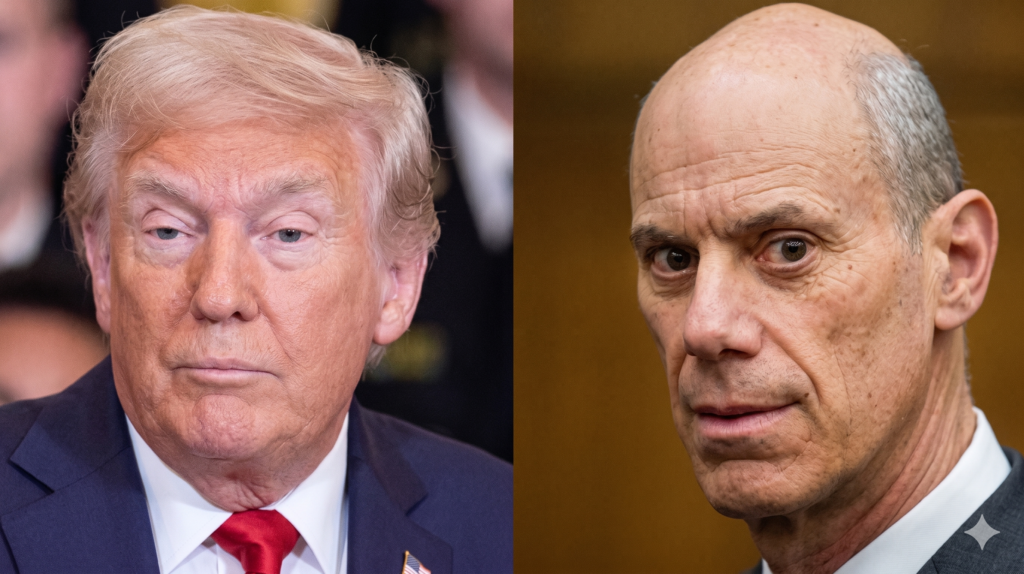
To make sense of where things stand today, you need to rewind to March 2025. That month, President Trump invoked the Alien Enemies Act — a 1798 wartime law that had rarely been used in modern times — to fast-track the deportation of hundreds of Venezuelan men his administration labeled as members of the Tren de Aragua gang. The men were placed on flights headed to CECOT, El Salvador’s maximum-security prison.
U.S. District Judge James Boasberg, the chief judge of the federal trial court in Washington, DC, responded swiftly by issuing an emergency order directing the administration to halt those flights. The flights continued anyway.
That moment of defiance — planes in the air despite a sitting federal judge’s order — became the flashpoint for one of the most consequential legal battles the country has seen in years. After reviewing the evidence, Judge Boasberg concluded that the Trump administration had shown deliberate disregard for his order. He found that probable cause existed to hold administration officials criminally accountable for ignoring a direct judicial command.
The administration rejected any suggestion of intentional wrongdoing and filed an immediate appeal.
Criminal vs. Civil Contempt: Understanding the Difference
Before going further into the Trump deportation contempt case, it helps to understand what contempt of court actually involves, because the two types are very different in how they work and what they can lead to.
Civil contempt is about getting someone to comply. Think of it as a judge saying: “Follow my order, or you will pay fines every day until you do.” Courts around the country applied this approach against Trump administration officials in immigration matters throughout early 2026. A federal judge in Minnesota, for instance, found a Trump administration attorney in civil contempt for what she described as open and deliberate violation of her court’s orders during an immigration enforcement operation.
Criminal contempt is a different animal entirely. Rather than pushing someone toward future compliance, it punishes them for past conduct. It can carry fines, official censure, or even imprisonment. One important wrinkle: the president holds pardon power over criminal contempt convictions. Trump exercised that power back in 2017 when he pardoned a county sheriff who had been held in criminal contempt for violating a court order tied to immigration enforcement.
The DC Circuit Weighs In: The Blockbuster April 2026 Ruling
For the better part of a year, the Trump administration worked relentlessly to shut down Boasberg’s contempt inquiry before it could gain any real momentum. Those efforts finally succeeded on April 14, 2026, when a divided panel of the U.S. Court of Appeals for the District of Columbia Circuit voted 2-1 to direct Boasberg to close his criminal contempt investigation for good.
Circuit Judges Neomi Rao and Justin Walker — both appointed by Trump — made up the majority. Judge J. Michelle Childs, appointed by President Biden, filed a strong dissent.
The majority rested its decision on two main arguments:
First, the original order no longer existed. The Supreme Court had already wiped out Boasberg’s initial ruling that blocked the deportation flights, on the grounds that the case had been brought in the wrong court. According to the majority, once that underlying order was gone, there was nothing legally left to enforce through contempt proceedings.
Second, the inquiry had gone too far into executive territory. Judge Rao wrote that the contempt probe was pushing into sensitive high-level deliberations within the executive branch involving national security and foreign affairs — an area where judges are not supposed to venture. She called Boasberg’s approach a clear abuse of judicial discretion.
Not an Isolated Case: Contempt Issues Spreading Across the Country
It would be a mistake to view the DC Circuit ruling as a one-off. Throughout early 2026, federal judges in multiple states have been grappling with a broad pattern of immigration-related noncompliance by the Trump administration.
In Minnesota, a Trump administration attorney was held in civil contempt after a court found repeated and deliberate violations of its orders in connection with Operation Metro Surge. The judge in that case imposed monetary sanctions — marking a notable escalation in how courts in that district were willing to handle noncompliance.
In New Jersey, U.S. District Judge Michael Farbiarz directed administration officials to spell out exactly what procedures were in place to make sure court orders were being followed consistently. The reason for his concern was concrete: Trump administration officials had missed court-ordered deadlines for immigration bond hearings in 12 out of approximately 550 cases since December 2025.
Pam Bondi and the Epstein Files: A Second Contempt Battle Takes Shape
While deportation-related contempt cases have grabbed the biggest headlines, a separate and equally heated confrontation has been taking shape in Congress. This one centers on former Attorney General Pam Bondi and her handling of the Jeffrey Epstein files.
Bondi had been subpoenaed by the House Oversight and Government Reform Committee to sit for a deposition on April 14, 2026, and answer questions about how the Justice Department handled the release of documents related to the late financier Jeffrey Epstein. Those documents were supposed to be made public under the Epstein Files Transparency Act, which Congress passed in November 2025.
What happened instead? President Trump removed Bondi from her position as attorney general on April 2, 2026 — less than two weeks before her scheduled testimony. The DOJ then informed the committee that Bondi would not appear, arguing that the subpoena had been issued to her as the attorney general, a role she no longer held.
That reasoning landed poorly with lawmakers. Rep. Robert Garcia of California, the top Democrat on the committee, made clear that the subpoena applied to Pam Bondi as an individual, not to the office she had vacated. He warned that contempt charges would follow if she failed to appear. Notably, Republican Rep. Nancy Mace of South Carolina — who had pushed to subpoena Bondi in the first place — joined in calling for Bondi to honor her legal obligation.
This is not a partisan fight. Bondi’s refusal to testify has generated bipartisan anger on the committee, and Epstein survivors have publicly urged Congress to pursue every available legal tool to compel her to speak under oath.
What Comes Next: The Legal Roads Still Ahead
None of these battles are close to finished. Here is what to keep an eye on in the coming months:
Regarding the deportation contempt case: The ACLU can ask the full DC Circuit to rehear the matter with all of its judges sitting together — a process known as en banc review. Because the full court leans Democratic in its composition, a different result is possible. The case could also be taken directly to the Supreme Court.
Regarding the Bondi contempt fight: Congress has the authority to vote to hold Bondi in contempt of Congress. That finding would then be sent to the Justice Department for potential prosecution. However, it is difficult to imagine the current DOJ prosecuting one of its own former senior officials under these circumstances.
Regarding broader immigration enforcement: Courts around the country continue to monitor compliance closely. Judges have been explicit — court orders are not optional — and further civil contempt actions against ICE officials and DOJ lawyers remain live possibilities.
FAQ:
Q:1. Can the Trump administration legally ignore court orders?
Ans: No. Court orders apply to every person and institution in the United States, including the executive branch. Ignoring them can trigger contempt proceedings, financial penalties, and in serious cases, imprisonment. The one major complicating factor is that the president can pardon individuals convicted of criminal contempt, which limits how much pressure courts can ultimately apply to executive branch officials.
Q:2. What exactly did the DC Circuit’s April 2026 ruling decide?
Ans: A three-judge panel voted 2-1 to end Judge Boasberg’s criminal contempt investigation into Trump administration officials. The two judges in the majority argued that because the Supreme Court had already cancelled the underlying court order, there was no valid legal basis left to pursue contempt. They also expressed concern that Boasberg’s probe had reached too far into executive branch decision-making on national security matters.
Q:3. Does Pam Bondi still have to testify before Congress?
Ans: Most legal experts — and lawmakers from both parties — believe she does. Congressional subpoenas are typically tied to the individual, not the office that individual holds. Leaving a government position does not, on its own, dissolve a subpoena obligation. The committee has signaled that contempt charges remain on the table if Bondi continues to refuse.
Q:4. What is the Alien Enemies Act, and how does it fit into this situation?
Ans: The Alien Enemies Act is a wartime statute passed in 1798 that allows the president to detain or remove nationals of a hostile country quickly, bypassing the standard immigration court process. The Trump administration invoked it against Venezuelan migrants it identified as gang members. Courts have disagreed sharply over whether that application of the law is legally sound.
Q:5. Is it realistic that any Trump administration official could end up in jail for contempt?
Ans: In theory, yes. Criminal contempt can carry a prison sentence. In practice, the path to that outcome is full of obstacles — the appeals process gives officials multiple off-ramps, and the president retains the power to pardon anyone convicted. Jailing a sitting or former senior official over contempt would be an extraordinary and historically unprecedented event.
Why the Contempt Battles of 2026 Actually Matter
Strip away the legal terminology, the competing political narratives, and the daily avalanche of breaking news — what you are left with in 2026 is a straightforward question that Americans have wrestled with since the founding of this republic: Is anyone truly above the law?
The Trump administration contempt proceedings are not just insider Washington drama. They are a real-world stress test of one of the Constitution’s core promises — that the law applies equally to everyone, whether they work at a desk in Minnesota or in the West Wing of the White House.
The DC Circuit’s April 2026 ruling hands the administration a meaningful legal win in the deportation contempt case. But it is almost certainly not the final chapter. Appeals are expected, the Supreme Court may yet weigh in, and dozens of immigration-related contempt proceedings across the country continue to grind forward.
At the same time, the Pam Bondi situation makes it clear that the tension is not limited to the courts. Congress is asserting its own oversight authority, and that tug-of-war shows no sign of easing.
For More Information
Related Article
It’s Official: HBO Max and Paramount+ Will Combine Into a Single Streaming Service
Sergio Garcia Breaks His Driver at the 2026 Masters — And the Whole World Watched
Susan Sarandon Makes Surprise Coachella 2026 Appearance Months After Hollywood Blacklist Claims
2 thoughts on “DC Appeals Court Blocks Trump Contempt Probe — Here’s What the 2026 Ruling Really Means”