
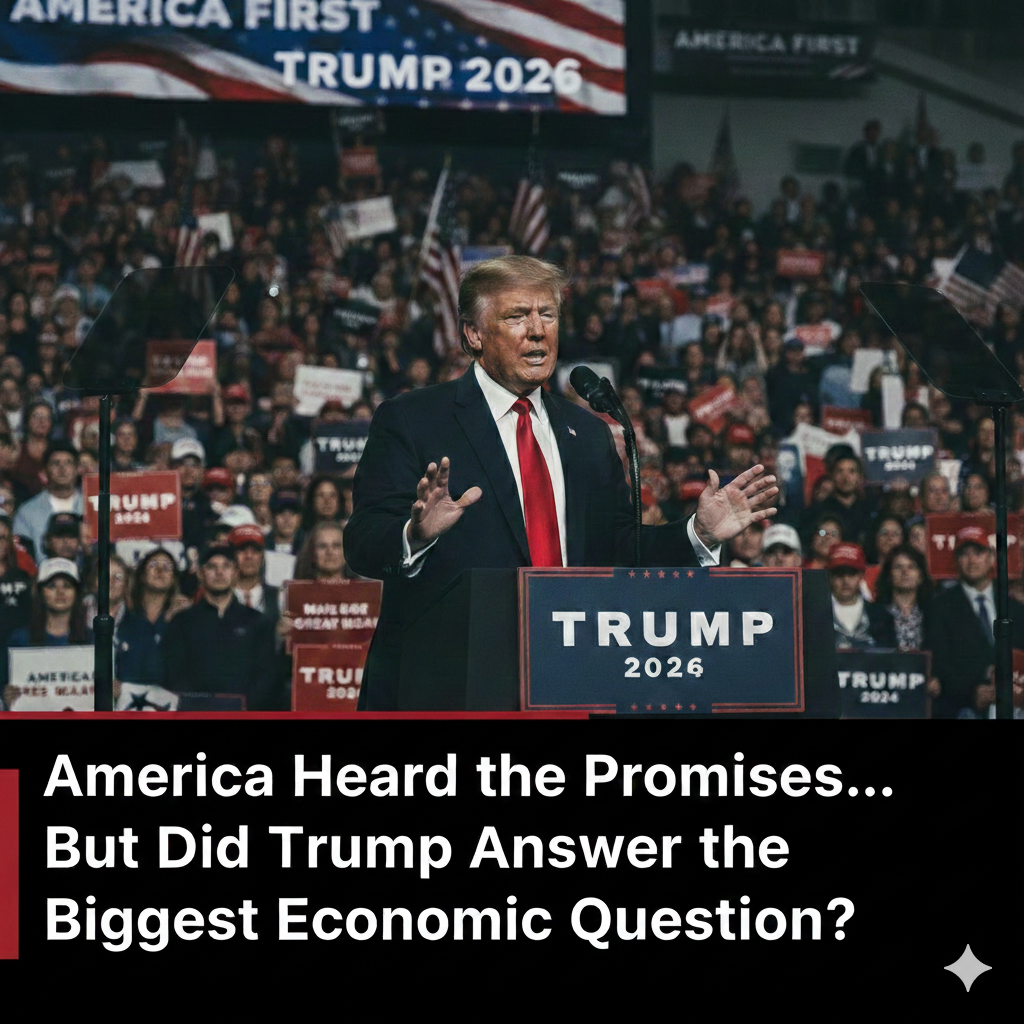
When Donald Trump stepped before Congress for his latest State of the Union Address, expectations were high. Supporters anticipated a confident vision for America’s future, while critics looked for answers to pressing economic and political concerns. By the end of the night, the speech had achieved one thing clearly — it ignited a nationwide debate about what was said, and what was noticeably left unsaid.
The address combined bold messaging with careful political positioning, offering insight into how Trump plans to shape the next phase of his presidency.
A Speech Focused on Strength and Stability
Trump’s address emphasized economic resilience, national security, and American competitiveness. He highlighted job growth, domestic manufacturing, and energy production as proof that his policies are strengthening the country.
Throughout the speech, the president framed his administration as prioritizing economic independence and reduced reliance on foreign supply chains. Supporters applauded the optimistic tone, describing it as a message of confidence during uncertain global conditions.
The Economy Takes Center Stage
Economic messaging formed the backbone of the address. Trump pointed to declining inflation pressures and investment growth as signs of progress, while promising continued tax and regulatory policies aimed at encouraging business expansion.
However, analysts noted that the speech avoided detailed discussion of long-term fiscal challenges, including federal debt and rising costs faced by many households. Critics argued that voters still want clearer explanations about how economic gains will translate into everyday financial relief.
The economy remains a key political battleground, especially as comparisons with policies from former president Joe Biden continue to shape public debate.
A Strategic Political Tone
Unlike some past speeches marked by sharp confrontation, this address adopted a more measured delivery at key moments. Trump emphasized unity and national pride while still drawing contrasts with political opponents.
Observers say the strategy appeared designed to appeal beyond his core supporters, presenting a presidential image focused on stability rather than conflict. Even so, partisan reactions emerged quickly, reflecting deep divisions in Washington.
What Critics Say Was Missing
Political analysts pointed out that the speech largely avoided certain sensitive topics, including detailed policy roadmaps on healthcare costs, social programs, and bipartisan cooperation.
Some commentators described the approach as politically cautious — highlighting achievements while limiting exposure to controversial policy specifics. Others argued that avoiding difficult subjects may reduce opportunities for bipartisan dialogue.
The absence of self-reflection or acknowledgment of political challenges became a major talking point in post-speech analysis.
Supporters Applaud Clear Messaging
Despite criticism, many supporters praised the address for projecting confidence and clarity. They argued that focusing on achievements rather than problems helped reinforce optimism about the country’s direction.
For Trump’s political base, the speech reinforced familiar themes: economic nationalism, strong borders, and American leadership on the global stage.
Why the Speech Matters Moving Forward
State of the Union addresses often serve as political roadmaps, signaling priorities for the year ahead. This speech offered clues about upcoming policy battles and campaign messaging likely to dominate national discussions.
With economic uncertainty, international tensions, and domestic political rivalry continuing to shape headlines, the address may influence both legislative debates and voter perceptions in the months ahead.
Conclusion
Trump’s latest State of the Union speech delivered a carefully balanced message — confident in tone, selective in detail, and strategically focused on economic strength. While supporters viewed it as a strong affirmation of leadership, critics questioned the absence of deeper policy explanations.
Ultimately, the speech reflects a broader political reality: Americans are not only listening to what leaders promise but also paying close attention to what remains unsaid. As political debates intensify, the impact of this address will likely unfold far beyond one evening in Congress.
For More Read
Martin Short Faces Heartbreaking Family Tragedy After Daughter’s Death
Pedro Pascal’s Valentine’s Weekend Outing Sparks Massive Dating Speculation Online
Bill Gates Breaks Silence: Billionaire Apologizes as Epstein Files Spark Fresh Global Controversy
Why the Cuba Crisis Is Suddenly Becoming a Global Flashpoint
3 thoughts on “America Heard the Promises… But Did Trump Answer the Biggest Economic Question?”