
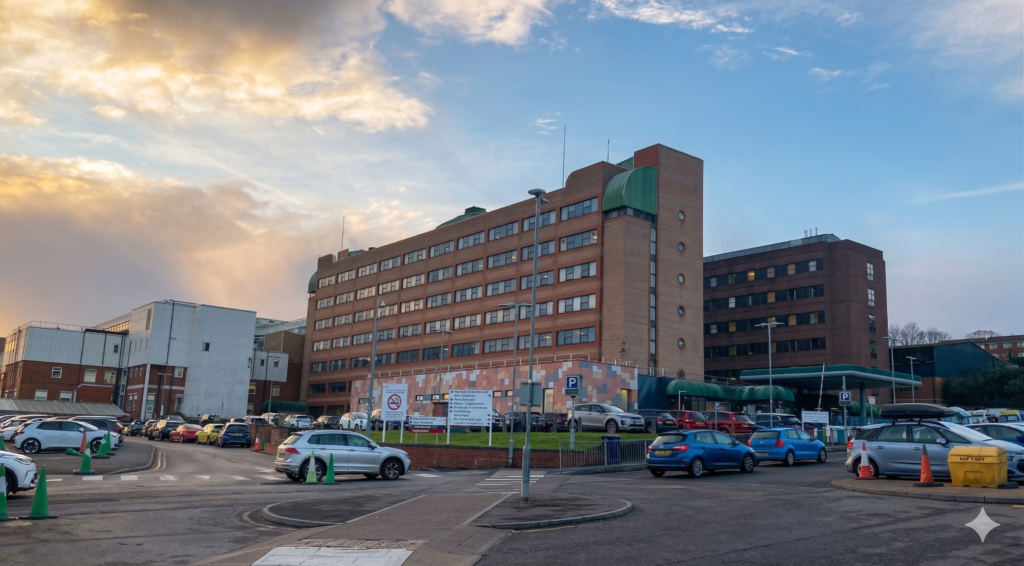
For anyone living in Newport or the broader Gwent region of South Wales, the Royal Gwent Hospital is likely a familiar landmark. It is one of those institutions that most people have encountered at some point — whether through a late-night trip to the minor injuries unit, a scheduled outpatient appointment, or a far more serious medical event. Yet how much do most people actually understand about what this hospital offers, how it operates, and why its function has changed considerably over recent years?
This guide covers everything worth knowing about the Royal Gwent Hospital — beginning with its almost two-century-long history, moving through its current range of services and ward types, and finishing with practical guidance on how to access care today. Whether you are a patient, a family member, or simply someone who wants to be better informed, you will find straightforward, reliable answers throughout.
What Is the Royal Gwent Hospital Used For?
The Royal Gwent Hospital is a large general hospital situated on Cardiff Road in Newport, Wales. It falls under the management of the Aneurin Bevan University Health Board — the NHS body responsible for delivering healthcare to a combined population exceeding 600,000 people across Newport, Blaenau Gwent, Caerphilly, Monmouthshire, Torfaen, and parts of South Powys.
In practical terms, the hospital manages a broad spectrum of medical needs. Employing over 3,400 members of staff and operating approximately 774 inpatient beds, it serves as a major healthcare hub for the surrounding region. Among the services currently available on site are:
- Inpatient admissions and day-case procedures
- Outpatient consultations and specialist clinics
- Medical assessment units and short-stay facilities
- Planned and elective surgical procedures
- Rehabilitation and recovery services
- Diagnostic imaging, including MRI and CT scanning
- Maternity care and children’s health services
- A round-the-clock Minor Injuries Unit (MIU)
It is worth noting that, since 2020, the Royal Gwent Hospital no longer operates a full Accident and Emergency Department. Patients presenting with life-threatening or serious conditions are now directed to call 999 or travel to the Grange University Hospital in Cwmbran, which opened in November 2020 as part of a wider NHS modernisation strategy for the region. For conditions that do not require full emergency care, however, the Royal Gwent continues to be the first point of contact for a large number of local residents each year.
A Brief History of the Royal Gwent Hospital
The history of the Royal Gwent stretches back almost two centuries, placing it among the oldest hospital sites in Wales. Its origins trace back to 1839, when it was established as the Newport Dispensary on Llanarth Street — a modest facility offering local people access to medicines and basic healthcare. By 1867, growing demand had enabled it to accept overnight patients, at which point it was renamed the Newport Dispensary and Infirmary.
In the early 1900s, the hospital relocated to its present site on Cardiff Road, following a generous land donation by Viscount Tredegar. The new building opened formally in August 1901 under the name the Newport and Monmouthshire Hospital. Twelve years later, in 1913, the institution was granted its royal title, officially becoming the Royal Gwent Hospital.
As with most hospitals across England and Wales, the modern chapter of its story began in 1948 with its incorporation into the National Health Service. Substantial rebuilding and expansion took place during the early 1960s and continued throughout the 1970s and 1980s, giving rise to the large district general hospital that stands on the site today. The most recent and far-reaching transformation has been the NHS Clinical Futures Programme — a strategic initiative that redistributed services between the Royal Gwent and the newly built Grange University Hospital in Cwmbran.
What Is the Most Serious Ward in a Hospital?
When a loved one is admitted to hospital, one of the most common questions asked is which ward represents the highest level of medical urgency. The answer is the Intensive Care Unit, more commonly referred to as the ICU.
Understanding the ICU
The ICU — sometimes referred to as the Critical Care Unit (CCU) or the Intensive Therapy Unit (ITU) — is a highly specialised ward that provides continuous monitoring and advanced treatment for patients with life-threatening conditions. This may include individuals who have sustained serious injuries, experienced a major cardiac event or stroke, or are recovering from complex surgical procedures.
What distinguishes the ICU from other hospital wards is the exceptionally high level of individual care each patient receives. On a standard ward, a single nurse may be responsible for several patients simultaneously. Within the ICU, the staffing ratio is typically one nurse for every one or two patients, enabling constant, close observation. Every patient is connected to sophisticated monitoring systems that track vital signs without interruption, and many will require life-support interventions — such as mechanical ventilators — to assist with breathing.
The Hospital Ward Hierarchy Explained
Hospital care is generally organised into a tiered structure, moving from the most intensive level of support down to routine care:
- ICU / Critical Care — reserved for life-threatening conditions that demand constant monitoring and life-support measures
- High Dependency Unit (HDU) — one level below the ICU, designed for patients who require close observation but do not need full life support
- Specialist Wards — such as cardiac, surgical, or neurological units catering to specific clinical conditions
- General Wards — for patients who are recovering or undergoing treatment that does not require intensive medical supervision
It is completely understandable to feel anxious when a family member is admitted to an ICU. The environment can appear overwhelming, with monitoring equipment, cables, and medical devices surrounding every bed. ICU staff are well aware of this and are generally experienced at keeping both patients and their families informed, reassured, and supported throughout the process.
How the Grange University Hospital Changed Things for Newport
The launch of the Grange University Hospital in Llanfrechfa, Cwmbran, during November 2020 represented a defining moment in healthcare provision across the Gwent area. Operating under the NHS Clinical Futures Programme, the Grange assumed responsibility for major emergency and specialist services — among them the regional Emergency Department and Critical Care facilities.
This transition allowed the Royal Gwent to concentrate on its core strengths: the delivery of routine, elective, and sub-acute care within easy reach of Newport’s population. Rather than spreading services thinly across multiple locations, the programme consolidates the most clinically complex care within one purpose-built facility, while ensuring that day-to-day healthcare services remain locally accessible.
From a patient’s perspective, the key message is simple: in a serious or life-threatening emergency, dial 999 immediately. For everything else — a suspected broken bone, an unexplained lump, a post-operative check-up, or a diagnostic scan — the Royal Gwent Hospital will most likely remain your first point of contact.
Visiting the Royal Gwent
Whether you are planning to visit a patient at the Royal Gwent Hospital or if you are attending for an appointment of your own, the following practical details will help you prepare.
Location and Getting There
The Royal Gwent Hospital is located on Cardiff Road (postcode NP20 2UB), at the western edge of Newport city centre along the A48 corridor. The site is well connected by public transport — Newport Bus services operate frequently from Friars Walk in the city centre, with the journey taking approximately five minutes. Visitors travelling by train will find the hospital roughly two miles from Newport railway station, with the option of continuing by bus or taxi.
On-Site Facilities
The hospital provides several amenities for visitors and patients. A Costa Coffee outlet is situated on Level 1 of D Block, open from 7:00am to 9:30pm on weekdays and from 10:00am to 8:30pm at weekends. The Belle Vue Restaurant, located on Level 3 of B Block, is open daily from 7:30am to 8:00pm. There is also a retail shop on the same level, along with trolley services delivering refreshments and essentials to the wards twice each day. Chaplaincy services are available, with hospital chaplains making regular rounds across the wards.
Contacting the Hospital
The main switchboard number for the Royal Gwent Hospital is 01633 234234. For non-urgent health queries, you can also contact NHS 111 or visit 111.wales.nhs.uk, where trained advisers can guide you on the appropriate course of action.
The Future of the Royal Gwent Hospital
The Royal Gwent Hospital is not standing still. The Aneurin Bevan University Health Board has been actively channelling investment into the site’s future as part of a broader redevelopment programme supported by Welsh Government funding — one that includes a £350 million commitment to NHS infrastructure across the Gwent region.
The long-term vision positions the Royal Gwent as an enhanced local general hospital — a facility equipped to deliver high-quality routine and elective care to the community, alongside ambulatory emergency care models and short-stay units designed to manage patients efficiently without unnecessary overnight admissions. There are also active discussions about expanding academic ties with the University of Wales College of Medicine, a development that could introduce further research programmes and specialist clinical expertise to the site.
For the people of Newport and the wider Gwent area, this trajectory sends a clear message: the hospital on which communities have relied for generations is being carefully adapted — not dismantled — to meet the healthcare needs of future generations.
FAQ:
Does the Royal Gwent Hospital Have an A&E?
No, not in the traditional sense. Since 2020, full emergency department services for the Gwent region have been consolidated at the Grange University Hospital in Cwmbran. The Royal Gwent continues to operate a 24-hour Minor Injuries Unit, which manages non-life-threatening conditions such as sprains, minor lacerations, and hairline fractures. For anything more serious or potentially life-threatening, patients should call 999 or proceed directly to the Grange.
Who Manages the Royal Gwent Hospital?
The Royal Gwent Hospital is overseen by the Aneurin Bevan University Health Board, which was established in 2009 following NHS restructuring in Wales. The Board is responsible for planning and delivering healthcare across six local authority areas in South East Wales, serving a combined population of more than 600,000 people.
What Is the Most Serious Ward in a Hospital?
The Intensive Care Unit (ICU) — also referred to as the Critical Care Unit or Intensive Therapy Unit (ITU) — is considered the most clinically serious ward within any hospital. It delivers intensive, one-to-one or two-to-one nursing care for patients whose conditions are life-threatening. Patients accommodated in the ICU are continuously monitored around the clock and are frequently dependent on life-support technology to sustain essential bodily functions.
Is Parking Available at the Royal Gwent Hospital?
Yes, parking facilities are available on the hospital site, although charges apply and spaces can become scarce during peak hours. Arriving by public transport or being dropped off tends to be a more practical option, particularly during busy periods. Newport Bus operates regular services from the city centre with a direct stop at the hospital.
How Do I Get a Referral to the Royal Gwent Hospital?
The majority of patients are referred to the Royal Gwent by their general practitioner (GP), who will arrange an appropriate outpatient appointment or, where necessary, an inpatient admission. Referrals can also originate from other hospital departments, specialist services, or following an emergency presentation elsewhere. All NHS services provided at the hospital are free at the point of delivery.
The Royal Gwent Hospital’s Role in Newport Life
The Royal Gwent Hospital has occupied a central place in the healthcare landscape of Newport for nearly two centuries, and it is not going anywhere. Its role has undeniably evolved — most significantly following the opening of the Grange University Hospital — yet for the overwhelming majority of everyday medical needs, it remains the primary care facility for tens of thousands of people across the region.
Whether you require a diagnostic scan, a specialist outpatient appointment, a same-day medical assessment, or treatment at the Minor Injuries Unit, knowing how to access the right level of care can save both time and unnecessary stress. Understanding what the Royal Gwent offers — including which type of ward is appropriate for different clinical situations — positions you to make well-informed decisions at the moments that matter most.
To contact the Royal Gwent Hospital directly, call 01633 234234 or visit abuhb.nhs.wales. For non-urgent medical advice at any time of day, NHS 111 Wales is available both online and by phone. In the event of a genuine emergency, always call 999 first.
For More Information
Related Article
Alan Ritchson Attacks Neighbor in Nashville — Police Investigation Now Underway
Air Canada Flight 8646 Crashes at LaGuardia — Airport Closed, Flights Diverted to JFK and Newark
Trump Issues 48-Hour Iran Ultimatum: Reopen Strait or Face Power Plant Strikes
How Did Arsenal Go From Losing 8-2 to Manchester City to Becoming Their Biggest Threat?
3 thoughts on “What Is Royal Gwent Hospital Used For? The Complete Newport NHS Patient Guide”