
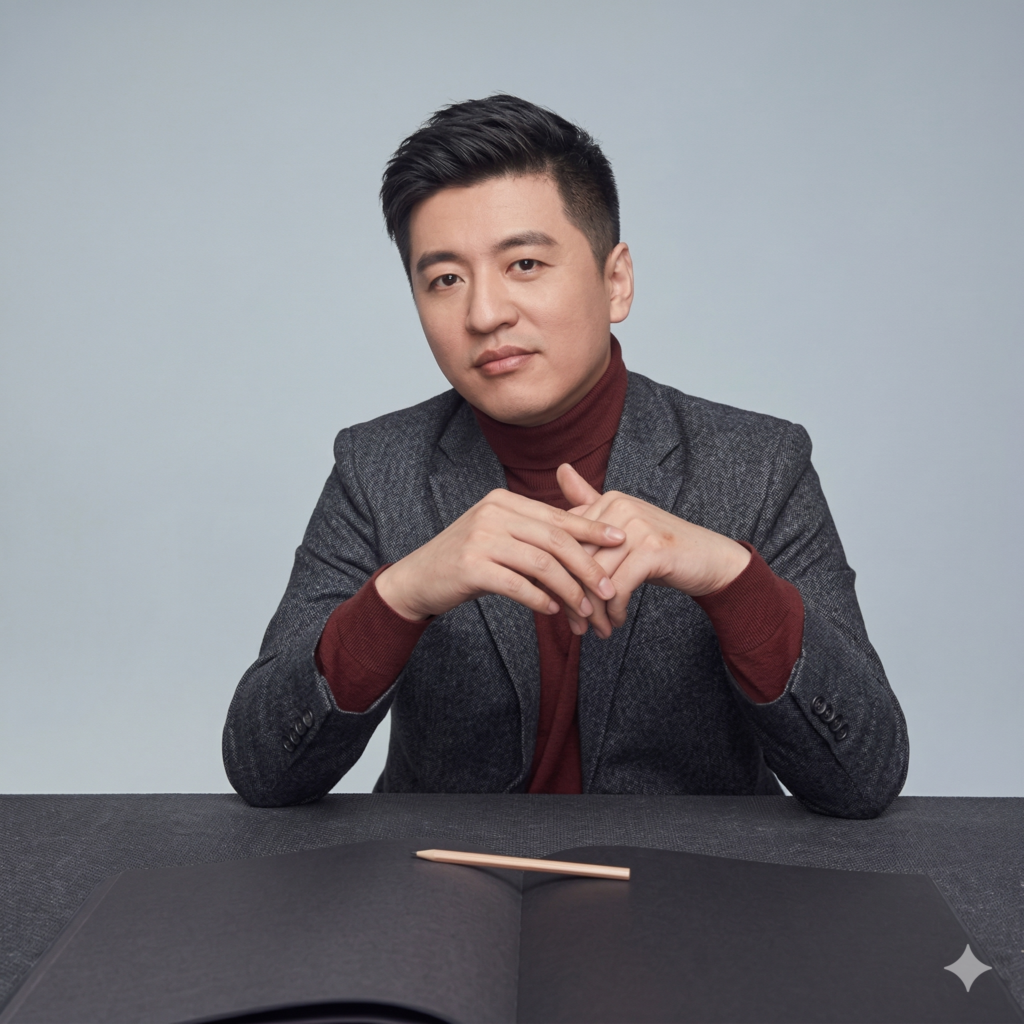
Few pieces of news travel as fast in China as the death of someone millions of people genuinely loved. On March 24, 2026, that person was Zhang Xuefeng — a 41-year-old education consultant, social media personality, and the closest thing China’s exam-weary students ever had to a trusted older brother who knew exactly how the system worked.
Zhang Xuefeng passed away in Suzhou after suffering sudden cardiac arrest while running near his company’s offices. He was taken to hospital immediately, but medical teams were unable to save him. By the evening, his name was trending on every major Chinese platform — which, as those who knew him well would point out, was precisely what he had once said he hoped would happen when his time came.
This article tells the full story: who Zhang Xuefeng was before the cameras found him, how he became one of the most influential voices in Chinese education, why his methods sparked both fierce loyalty and fierce debate, and what the country loses now that he is gone.
Who Was Zhang Xuefeng?
Zhang Xuefeng was born Zhang Zibiao on May 18, 1984, in Fuyu County — a quiet township in Heilongjiang Province in China’s northeast, home to roughly 220,000 people. Money was tight during his childhood, and like many students from similar backgrounds, his path forward ran directly through the gaokao.
He sat the national university entrance examination and placed 60th in his county — a solid result that earned him admission to Zhengzhou University, where he studied Water Supply and Drainage Engineering. It was an unglamorous subject, chosen for practical reasons rather than passion. But what happened after graduation mattered far more than what he studied.
Watching classmates agonise over postgraduate exam applications, Zhang started offering informal advice — not because anyone asked him to, but because he noticed how much confusion surrounded a process that should have been straightforward. A contact in the exam coaching industry saw his instincts and brought him into the fold. From that point on, Zhang never worked in engineering.
How One Video Changed Everything
After relocating to Beijing, Zhang spent years refining his craft inside a postgraduate exam preparation company. He had an unusual skill: he could take dense, bureaucratic admissions information and deliver it in language that a nervous parent sitting in a rural kitchen could immediately grasp and use. His style was frank, occasionally abrasive, and entirely devoid of the vague reassurances that tend to define official educational communication.
In June 2016, he recorded a video called Seven-Minute Interpretation of 34 Project 985 Universities, breaking down China’s most prestigious institutions in a way that had never been done so accessibly in public. The video spread widely across Chinese social media and transformed Zhang from an industry insider into a household name practically overnight.
From there, his reach expanded steadily — through published books, university speaking engagements, livestreamed Q&A sessions, and a growing presence across Weibo, Douyin, and WeChat. When he established Suzhou Fengxue Weilai Education Technology Co. in May 2021, he had already accumulated more than 30 million followers and built a personal net worth reported to exceed 100 million US dollars.
What Made Zhang Xuefeng So Influential?
To appreciate the depth of grief that followed the news of Zhang Xuefeng’s passing, it helps to understand why he occupied such an unusual place in the lives of so many Chinese families.
The gaokao is the defining academic event in the life of a Chinese student. It is sat once a year, scores are final, and the institution and major that a student’s result unlocks can set the direction of their entire professional life. The knowledge required to navigate that system intelligently — which universities weight which subjects, which majors lead to which careers, how application strategy can compensate for a score that falls short of a dream school — is not evenly distributed across society.
Families in major cities with money and connections often have access to experienced advisers. Families in smaller cities and rural areas frequently do not. Zhang’s entire operation was built on closing that gap.
A Message That Was Practical, Polarising, and Deeply Valued
His guiding belief was deceptively simple: a strong gaokao score matters less than a smart application strategy. That premise led him to tell families things that neither universities nor government bodies were particularly eager to say out loud — that certain majors consistently led to poor employment outcomes, that prestige and practicality often pull in opposite directions, and that treating a university application as a purely emotional decision was a luxury most families could not afford.
His critics argued that framing education primarily through an employment lens discouraged intellectual curiosity and reduced young people’s choices to a transaction. That criticism was not without merit, and Zhang acknowledged the tension in his own public comments. His supporters, however — and they vastly outnumbered his detractors — valued him for the same reason: he said what the system preferred to leave unsaid, and he said it in plain language to people who had never before had access to that kind of candid expert guidance.
His consultancy reportedly generated 300 million yuan in course sales within a matter of hours during a single year, serving families across more than 3,000 institutions with over two million possible application combinations on offer.
Zhang Xuefeng’s Death
The sequence of events on the day Zhang Xuefeng passed away was both swift and devastating. At 12:26 PM on March 24, 2026, Zhang felt unwell shortly after completing a run on his company’s premises in Suzhou. Emergency services were called without delay, and he was transported to hospital as quickly as possible.
Despite sustained resuscitation efforts by medical staff, he could not be revived. He was pronounced dead at 3:50 PM local time. Suzhou Fengxue Weilai Education Technology Co. released an official obituary confirming that the cause of death had been determined by the treating hospital as sudden cardiac death.
What added particular weight to the shock was what Zhang had shared publicly just two days before. His final WeChat Moments post recorded a 7-kilometre run, bringing his total running distance for the month of March to 72 kilometres. To his followers, he had appeared fit, energetic, and fully engaged with life. The contrast between that image and the news of his death made the grief feel all the sharper.
Understanding Sudden Cardiac Death
Sudden cardiac death, known in medicine as SCD, refers to an unexpected loss of heart function that occurs rapidly — typically within an hour of the first symptoms appearing — in a person who may have had no previously known heart condition. It differs from a standard heart attack in that it stems from a sudden breakdown in the heart’s electrical signalling system rather than a blockage in blood supply. When the electrical system fails, the heart stops pumping in any organised way, and blood circulation ceases almost immediately.
SCD can affect people who exercise regularly and appear to be in good physical health. In some cases, an underlying structural or electrical vulnerability in the heart remains completely undetected until a physical trigger — such as intense exertion — causes it to manifest. The absence of warning signs is precisely what makes it so difficult to prevent and so shocking when it occurs.
The Nation Grieves: How China Responded to the News
Within hours of the official announcement, tributes began flooding in from every corner of Chinese social media. Hashtags tied to Zhang Xuefeng’s name climbed to the top of trending lists on Sina Weibo and Douyin simultaneously — two platforms with very different audiences, both united by the same sense of loss.
Students who had used his advice to navigate their gaokao applications, parents who had watched his livestreams until well past midnight, and educators who had disagreed with him but respected his reach all posted messages of remembrance. The dominant tone was not one of commentary or analysis. It was simply loss.
Those close to Zhang’s work noted the particular poignancy of the moment. In an earlier livestream, he had described his personal definition of a life well lived: if, upon his death, his name appeared as a trending topic on every major platform in China, it would mean that students and families had genuinely found value in what he gave them. By that measure — his own measure — he had succeeded entirely.
The Business He Built and the Questions That Remain
At the point of his death, Zhang’s commercial footprint extended well beyond individual tutoring. His consultancy charged families between 12,000 and 17,000 yuan per student for college application guidance, with slots booked through the remainder of 2026. His first company had been moving toward a public market listing. His portfolio of products — covering digital courses, books, live instruction, and advisory services — had made him one of the most commercially significant figures in China’s private education sector.
What happens to all of that now is genuinely uncertain. The company has not released any statement addressing the continuity of its services, the management of pre-booked client commitments, or the future direction of the business. For families who had already paid for consultations or enrolled in courses, those questions are not abstract — they are urgent and practical. The expectation is that an announcement will follow in the coming days, but as of publication, nothing formal has been communicated.
FAQ:
How exactly did Zhang Xuefeng pass away?
Zhang Xuefeng died from sudden cardiac death on March 24, 2026, in Suzhou. He became ill while running near his company offices at around 12:26 PM and was transported to hospital immediately. Despite all medical efforts, he could not be resuscitated and was pronounced dead at 3:50 PM. He was 41 years old.
What was Zhang Xuefeng best known for?
He was China’s most recognised education consultant and exam coaching personality, known for giving direct, practical guidance to students preparing for the gaokao and postgraduate entrance examinations. He was particularly valued by families from smaller cities and rural areas who had limited access to professional admissions advice. His social media following exceeded 30 million people across multiple platforms.
How old was Zhang Xuefeng at the time of his death?
Zhang Xuefeng was 41 years old when he died. He was born on May 18, 1984, in Fuyu County, Heilongjiang Province, northeastern China.
What was Zhang Xuefeng’s real name?
His given name was Zhang Zibiao. He used Zhang Xuefeng as his professional name and became so widely identified by it that most of his audience would not have recognised his birth name at all.
What happens now to his company’s services and client bookings?
Suzhou Fengxue Weilai Education Technology Co. has confirmed his death through an official statement but has not yet addressed questions about active client bookings, ongoing course access, or the company’s operational future. Anyone with an existing booking or enrolment is encouraged to monitor the company’s official Weibo account for further announcements.
What Zhang Xuefeng’s Life and Death Ask of Us
Zhang Xuefeng passed away at an age when most people are still in the middle of building the things they care about most. The gap his absence creates in China’s education conversation is not the kind that gets filled quickly, because what he offered was not simply information — it was a voice that millions of people had learned to trust.
He was imperfect. He was opinionated in ways that made people uncomfortable. His commercial success raised genuine questions about who education consulting should serve and at what cost. None of that disappears because he is gone, and none of it should. But neither should the fact that for an enormous number of families who had never before had access to an expert willing to speak honestly about the system, Zhang Xuefeng was that person.
He gave students from small towns and modest households something quietly powerful: the sense that the game was not entirely fixed against them, and that with the right information, they could compete.
That is a legacy worth carrying forward — by the educators who follow him, by the families who benefited from his work, and by anyone who believes that access to good guidance should not depend on where you were born or how much money your family has.
For More Information
Related Article
Breaking: Emily Gregory Wins Florida Special Election HD 87
Japan Oil Reserves See Biggest-Ever Release as Middle East Crisis Escalates
Valerie Perrine Cause of Death, Net Worth, Husband & Legacy Explained
Heavy Snow Warning Map UK 2026: What It Means & How to Stay Safe
3 thoughts on “Breaking: Famous Tutor Zhang Xuefeng Dies of Cardiac Arrest”