
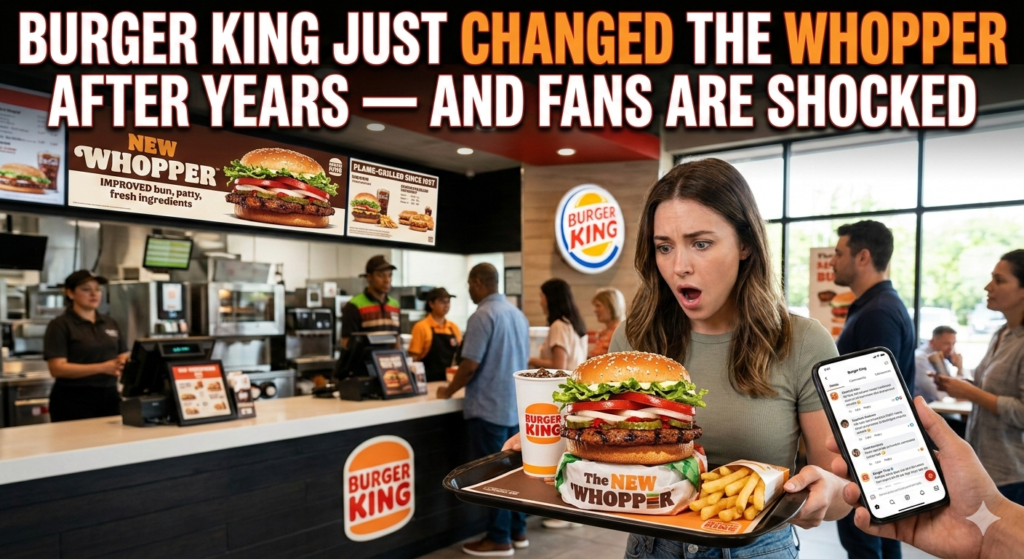
For decades, one burger has defined an entire fast-food empire. Now, that icon is changing — and the transformation goes far beyond what customers see on their trays.
In one of its biggest strategic shifts in years, Burger King is upgrading its famous Whopper while introducing artificial intelligence tools inside restaurants. The move combines food innovation with technology, signaling how the future of fast food may look: smarter kitchens, more consistent meals, and a renewed focus on quality.
The company isn’t simply launching a new menu item. Instead, it’s refining its identity — betting that improving the basics can win back customers in an increasingly competitive industry.
Why the Whopper Needed an Upgrade
The Whopper has been the centerpiece of Burger King’s menu since the 1950s. Generations of customers recognize it instantly, from its flame-grilled patty to its signature toppings.
But even iconic products must evolve.
In recent years, fast-food competition has intensified. Consumers have become more selective, expecting better ingredients, reliable consistency, and meals that hold up during delivery. Feedback revealed that customers didn’t necessarily want a different burger — they wanted a better version of the one they already loved.
Common complaints included buns becoming soggy, burgers arriving flattened in wrappers, and inconsistent preparation between locations.
Rather than reinventing the recipe, Burger King chose a more careful approach: improve the experience without changing the familiar taste.
What’s Actually Changing in the New Whopper
At first glance, the updated Whopper looks similar. That’s intentional. The company avoided drastic changes that might alienate loyal fans.
However, several behind-the-scenes upgrades aim to improve texture, freshness, and presentation.
Key improvements include:
- A softer, higher-quality sesame seed bun designed to stay fresh longer
- A revised mayonnaise recipe for a creamier flavor balance
- Better preparation standards for vegetables and toppings
- New box-style packaging instead of traditional wrapping
The packaging change may sound minor, but it solves a major delivery-era problem. Boxes help maintain structure, preventing burgers from being crushed during transport — a growing concern as takeout and app orders dominate fast food sales.
The goal is simple: customers should receive a burger that looks and tastes closer to what advertisements promise.
Listening to Customers Instead of Reinventing the Menu
One surprising aspect of the update is how it was developed. Company leaders say customer feedback directly shaped the changes.
Rather than relying only on internal testing, executives encouraged diners to share suggestions through surveys, digital channels, and customer outreach programs. The message was clear: improve what matters most instead of chasing short-term food trends.
This reflects a broader industry shift. Many chains are realizing that constant limited-time offers create excitement but don’t always build long-term loyalty. Improving core menu items can have a deeper impact.
In Burger King’s case, strengthening the Whopper means strengthening the brand itself.
A Price Strategy Designed for Today’s Economy
Another notable decision: the company is encouraging franchise operators to keep pricing stable despite the upgrades.
Fast-food customers worldwide are increasingly sensitive to price increases after years of inflation. Raising costs while promoting improvements could risk driving diners away.
By enhancing perceived quality without significantly increasing prices, Burger King hopes customers feel they’re getting better value — a key factor influencing restaurant choices today.
Industry analysts say value perception may be just as important as flavor in attracting repeat visits.
The Bigger Story: Artificial Intelligence Enters the Kitchen
While the Whopper changes grab attention, the company’s technology rollout may have even greater long-term impact.
Burger King is testing an AI-powered assistant designed to support restaurant employees during daily operations. The system acts like a digital coach, helping staff manage tasks more efficiently and maintain consistent service standards.
The AI tool can:
- Guide workers through food preparation steps
- Send reminders about cleaning and maintenance tasks
- Monitor ingredient availability
- Help managers maintain order accuracy
- Provide prompts aimed at improving customer interaction
Instead of replacing employees, the technology is positioned as a support system — helping teams work faster and reducing operational mistakes during busy hours.
Why Fast Food Is Turning to AI Now

The adoption of artificial intelligence isn’t happening in isolation. Across the restaurant industry, companies face rising labor costs, staffing challenges, and growing pressure to deliver faster service.
Drive-thru speed, order accuracy, and customer satisfaction are now measurable metrics that directly impact profits.
Burger King’s parent company, Restaurant Brands International, has been investing heavily in modernization efforts, including technology upgrades and marketing expansion.
AI tools promise several advantages:
- Faster training for new employees
- Reduced human error during peak hours
- More consistent customer experiences across locations
- Better operational insights for managers
In an industry where seconds matter, efficiency can translate into significant revenue gains.
Mixed Reactions to AI Monitoring
Not everyone welcomes artificial intelligence in restaurant workplaces without hesitation.
Some critics worry that monitoring interactions or workflow patterns could feel intrusive for employees. Others question how data collected by AI systems will be used long term.
Supporters, however, argue that similar technology already exists in retail, logistics, and customer service industries. When implemented responsibly, AI can reduce stress by guiding workers rather than replacing them.
The success of the rollout may ultimately depend on whether employees feel supported — and whether customers notice smoother service.
Competing in a Crowded Fast-Food Battlefield
Burger King’s strategy comes at a time when competition is fiercer than ever. Rivals like McDonald’s continue investing heavily in technology, loyalty apps, and menu innovation.
Consumers now compare restaurants not only on taste but also on:
- Mobile ordering convenience
- Delivery reliability
- Speed of service
- Overall value
By upgrading its most famous product while modernizing restaurant operations, Burger King is attempting to compete on all fronts simultaneously.
It’s a shift away from relying purely on marketing campaigns and toward improving everyday customer experience.
Why the Whopper Still Matters After Nearly 70 Years

Few menu items carry the cultural weight of the Whopper. For many customers, it represents nostalgia — family meals, road trips, and late-night cravings.
That emotional connection makes updates risky. Even small recipe changes can spark backlash from loyal fans.
Burger King’s approach shows careful balance: preserve the recognizable flavor while improving quality details customers may not consciously notice but will feel when eating.
Food experts often call this strategy “evolution, not revolution.” Instead of shocking customers, brands subtly improve satisfaction over time.
Technology + Food Quality: A New Fast-Food Formula
The company’s dual strategy highlights an emerging industry formula:
Better core products + smarter operations = stronger brand loyalty.
Rather than chasing viral menu experiments alone, Burger King is investing in fundamentals — consistency, efficiency, and reliability.
If successful, customers may experience:
- More accurate orders
- Shorter wait times
- Better-looking meals
- Consistent taste across locations
These improvements may sound simple, but they address the most common frustrations diners face.
What Happens Next
The upgraded Whopper is rolling out gradually across locations, while AI systems continue expanding through pilot programs.
Executives will closely monitor customer feedback, employee response, and sales performance to determine how quickly changes spread globally.
Industry watchers say the initiative could influence competitors if results show measurable improvements in customer satisfaction and operational performance.
In many ways, Burger King’s experiment represents a test case for the next generation of fast food.
Conclusion: A Small Burger Change With Big Industry Implications
At first glance, a new bun or different packaging may seem like minor adjustments. But together with artificial intelligence integration, Burger King’s latest moves reveal a deeper transformation.
The company isn’t just updating a sandwich — it’s redefining how fast-food restaurants operate in a digital era.
By improving its most iconic product while embracing technology behind the scenes, Burger King is betting that customers want reliability as much as novelty.
If the strategy works, the future of fast food may not be about bigger menus or wilder creations. Instead, it could be about something simpler: better execution, smarter kitchens, and a classic burger done right — every single time.
Related Article
Who Was Robert Cosby Jr.? Inside the Life That Sparked Internet Curiosity
Who Was Robert Cosby? Age, Family, Son, Marriage, and Cosby Name Confusion Explained
Google Sends Shocking Notification to Thousands — Then Rushes to Apologize After Major Mistake
Frozen Blueberry Recall Shock: Why Officials Say This Contamination Is Especially Dangerous
4 thoughts on “Burger King Just Changed the Whopper After Years — And Fans Are Shocked”