
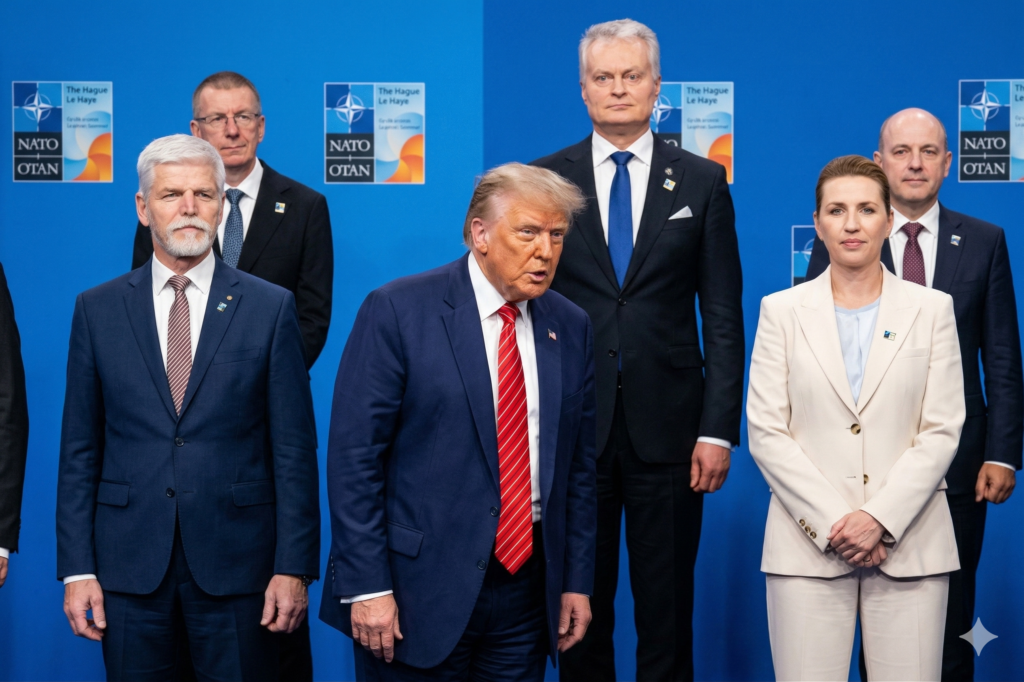
The roots of the US-NATO tensions in the Trump-Denmark dispute actually go back to Trump’s first term, when he casually floated the idea of buying Greenland in 2019. Most people dismissed it as a strange talking point. By 2026, no one was dismissing anything.
After Trump’s 2024 re-election, his administration brought the Greenland idea back — this time with real momentum behind it. Things came to a head in early January 2026, right after US forces intervened in Venezuela and captured President Nicolás Maduro. That aggressive military move sent shockwaves through European capitals, and governments that had been cautiously monitoring Trump’s rhetoric suddenly started taking his Greenland ambitions very seriously.
Over the following days, Trump and senior White House officials made a string of escalating statements that rattled the entire transatlantic alliance. Trump reportedly said it “may be a choice” between preserving NATO and seizing Greenland, and that he “no longer felt an obligation to think purely of peace.” He argued the US “needed” Greenland for national security, pointing to Russia and China’s expanding footprint in the Arctic. He then raised the stakes even higher by threatening a 25% import tax on EU goods — Denmark’s included — unless Copenhagen agreed to transfer the island.
To understand why this was so inflammatory: Greenland has been a self-governing territory of Denmark since 1953. Both Greenland’s own government and Denmark have said, repeatedly and without ambiguity, that Greenland is simply not for sale.
Denmark Fires Back: “Everything Stops” If the US Attacks
Denmark’s reaction to the Trump NATO backlash was sharp, clear, and historically significant. Prime Minister Mette Frederiksen did not hold back. She warned that if the United States attacked another NATO country militarily, “everything stops” — meaning the alliance itself, along with eight decades of close security cooperation between the two nations.
That warning landed hard across Europe. Seven major European leaders — including French President Emmanuel Macron, German Chancellor Friedrich Merz, and UK Prime Minister Keir Starmer — released a joint statement affirming that Greenland “belongs to its people” and that only Denmark and Greenland had any say over the island’s future.
Poland’s Prime Minister Donald Tusk stood firmly behind Denmark as well, cautioning that no member of the alliance should “attack or threaten another member,” and that NATO would “lose its meaning” if conflicts broke out from within.
Former Danish Prime Minister Anders Fogh Rasmussen took an even harder line, calling Trump “the biggest threat to world peace” and declaring the era of “flattering Trump” over. He went so far as to suggest the possibility of a “European NATO” that operated without US involvement.
On the ground, Danish and Greenlandic forces quietly began making defensive preparations — deploying special forces units and pre-positioning medical supplies, including blood stocks, according to Danish broadcaster DR.
The Emergency Talks and the Davos Deal
By mid-January 2026, with US-NATO tensions over the Trump-Denmark dispute reaching their highest point, NATO Secretary-General Mark Rutte stepped in to keep the situation from spiraling further. At that point, Trump had threatened 10% tariffs on Denmark and seven other European nations beginning February 1, rising to 25% from June 1 onward.
A temporary resolution emerged at the World Economic Forum in Davos, Switzerland, on January 21, 2026. Trump sat down with Rutte, and the two announced a “framework of a future deal” touching on Greenland and the broader Arctic. After that meeting, Trump did an about-face — he walked back his tariff threats and his earlier statements about using military force to take the island.
“This solution, if consummated, will be a great one for the United States of America, and all NATO Nations,” Trump posted on Truth Social.
Not everyone bought it. Ole Wæver, a professor of international relations at the University of Copenhagen, called the framework little more than a face-saving “pretend” deal, pointing out that NATO has no authority to negotiate mineral rights or territorial ownership.
In the days that followed, NATO and Denmark agreed to deepen Arctic security cooperation, with Frederiksen emphasizing that “defence and security in the Arctic are matters for the entire alliance.” Officials also confirmed that the US and Denmark would look at renegotiating the 1951 pact that governs American force deployments on Greenland — a move that could allow Washington to significantly expand its military presence there.
Can NATO Actually Remove the United States? The Legal Reality
During the height of the Trump-Denmark crisis, this became one of the most Googled questions in the country — Can NATO kick out the US? The answer is both legally interesting and politically sobering.
The North Atlantic Treaty contains no expulsion clause whatsoever. Legal experts are clear that there are no provisions in the charter for removing a member once it has joined. The only way out is voluntary departure, governed by Article 13, which lets any member leave by giving one year’s written notice to the US government — which, somewhat ironically, serves as the treaty’s depositary state. As of 2026, not a single NATO member has ever followed through on that process.
Could the other 31 members make life politically uncomfortable for a problem member? Absolutely. But they cannot legally push anyone out the door.
Here is the twist: it is Trump himself who has been raising the idea of the US walking away from NATO. In late March and into early April 2026, Trump called the alliance a “paper tiger” and started floating the idea of US withdrawal after European allies declined to actively support American military operations in Iran — specifically the push to reopen the Strait of Hormuz. Trump told reporters he was “absolutely” considering leaving, citing what he called “disgust with NATO.”
That prospect brings up its own legal headache. Back in 2023, Congress passed bipartisan legislation — signed into law by President Biden — that prohibits any president from withdrawing the US from NATO without approval from two-thirds of the Senate. Whether Trump could legally sidestep that requirement is still an open question. The executive branch’s own legal counsel had previously argued that the president holds sole authority over treaty withdrawal decisions, setting up what could become a serious constitutional conflict.
Why Greenland? The Strategic Picture Behind the Dispute
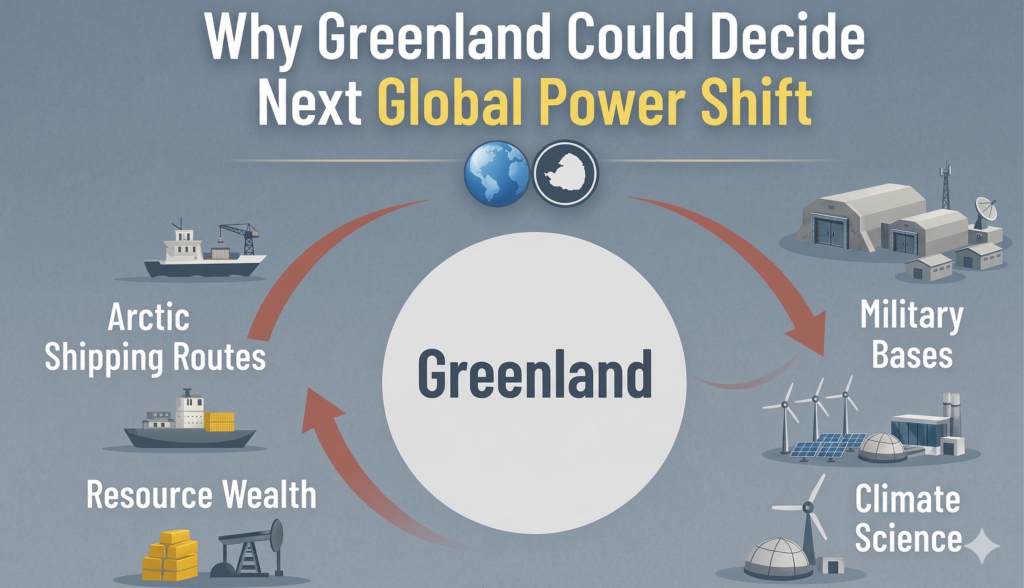
To really understand the Trump NATO expulsion threat and the Denmark crisis of 2026, you need to understand why Greenland has become such an obsession for the Trump administration.
Geographically, Greenland is in a remarkably sensitive spot. It is the world’s largest island, sitting between the North Atlantic and the Arctic Ocean. If Russia ever launched intercontinental ballistic missiles toward the continental United States, many flight paths would pass directly over Greenland. The island is also a key piece of Trump’s proposed “Golden Dome” missile defense system, which would need new Arctic infrastructure and basing rights to function as planned.
The economic angle matters, too. Greenland is home to vast untapped deposits of rare earth minerals, as well as significant oil and gas reserves. Both the US and China have been eyeing these resources, and Trump’s team has consistently argued that allowing Beijing or Moscow any kind of economic or military toehold on the island would be a serious national security failure.
The Atlantic Council called the situation “the worst possible start” for NATO in 2026 and noted that the North Atlantic Treaty’s very first paragraph commits all members to settling disputes peacefully and avoiding the threat or use of force. Denmark has been a NATO founding member since 1949 and fought alongside American troops in Afghanistan, suffering among the highest per-capita casualties of any ally. The notion of the US then threatening that same country struck many longtime alliance observers as a profound contradiction of NATO’s founding principles.
Where Things Stand Now: Is NATO Still Holding Together?
As of early April 2026, NATO is managing what many analysts are calling the deepest internal crisis in its history — and the Greenland dispute is just one piece of a larger fracture.
The Trump administration’s military campaign in Iran, combined with most European allies’ refusal to actively back those operations, has driven new wedges through the alliance. Trump’s repeated threats of US withdrawal have pushed European defense ministers to start having frank conversations about what NATO would look like without America and how quickly they could develop sufficient independent defense capabilities to compensate.
Analysts and several major media reports now suggest the alliance could face a genuine existential moment as soon as 2027 if current tensions do not ease. Spain denied American military aircraft access to its airspace during Iran-related operations. Multiple allies have declined to offer direct support. NATO Secretary-General Rutte continues to act as a go-between, keeping channels open on all sides, but the underlying tensions are hard to ignore.
On the Greenland front specifically, the Pentagon has reportedly opened talks with Denmark about gaining access to three additional facilities on the island, including former US bases at Narsarsuaq and Kangerlussuaq. That development suggests that despite all the heated rhetoric, quiet diplomacy is still moving forward — and that some of Trump’s core strategic objectives in the Arctic may end up being achieved through negotiation rather than confrontation.
FAQ:
Q.1. Can NATO expel the United States?
Ans: No. The North Atlantic Treaty contains no expulsion mechanism. There is no legal pathway through which the other 31 member nations can remove the United States from the alliance. The only way out is voluntary withdrawal under Article 13, which requires one year’s notice to be formally filed. No member country has ever done so.
Q.2. Can Trump withdraw the US from NATO on his own?
Ans: This is legally contested. Trump has publicly raised the idea of withdrawal, most recently in response to European allies’ refusal to support US military operations in Iran. A 2023 law signed by President Biden prohibits any president from pulling the US out of NATO without a two-thirds majority vote in the Senate. However, the executive branch’s own legal office has previously taken the position that the president holds exclusive authority over treaty withdrawal — which sets up a potential clash in the courts.
Q.3. Did Trump threaten Denmark with military action over Greenland?
Ans: Yes, to a degree. Trump and senior White House officials raised the possibility of military action to take Greenland in early January 2026, an alarming development that followed the US military intervention in Venezuela. Trump later reversed his position at Davos on January 21, 2026, ruling out the use of force and backing away from tariff threats after reaching a broad “framework” agreement with NATO chief Mark Rutte.
Q.4. What was Denmark’s response to Trump’s Greenland threats?
Ans: Denmark’s Prime Minister Mette Frederiksen warned directly that a US attack on Greenland would bring NATO to a halt — her exact words were “everything stops.” Seven European leaders issued a joint statement of solidarity with Denmark. Danish and Greenlandic defense forces began low-profile defensive preparations. Denmark also engaged in urgent diplomatic consultations with European partners and the United Kingdom.
Q.5. Is Greenland part of NATO?
Ans: Yes. Greenland is a self-governing territory within the Kingdom of Denmark, and Denmark is a founding NATO member. Because of that constitutional relationship, Greenland falls under NATO’s collective defense guarantee, including Article 5 — the clause that treats an attack on any one member as an attack on all members.
A Crisis That Forced the World to Rethink NATO
The Trump NATO expulsion threat and Denmark crisis of 2026 did not bring NATO down — but it shook the alliance in ways that are going to take years to fully understand. For the first time in the alliance’s 75-year history, a sitting American president openly threatened a NATO member with potential military force and economic penalties over a territorial dispute.
For American readers, this is about more than foreign policy strategy. It raises a fundamental question about national identity: What does the United States actually stand for on the world stage, and which alliances genuinely serve this country’s long-term security and interests? Whatever your political views, the early months of 2026 made one thing undeniably clear — the rules-based international order that America helped construct after World War II can no longer be assumed to be permanent or self-sustaining.
For More Information
Related Article
Blake Lively Claims Dismissed: What the Judge’s Ruling Means Before the May Trial
Gucci Mane Kidnapping Explained: Who Did It, Why It Happened, and What Comes Next
Hired to Kill: Inside the US Special Forces Mercenary Killing Unit Lawsuit and the UAE Connection
Texas Firefighter Child Abuse Case: 3 Howe Volunteers Arrested in 2026 Scandal
3 thoughts on “29 NATO Nations Stand With Denmark After Trump’s Greenland Ultimatum — What’s Trump’s Next Move?”