
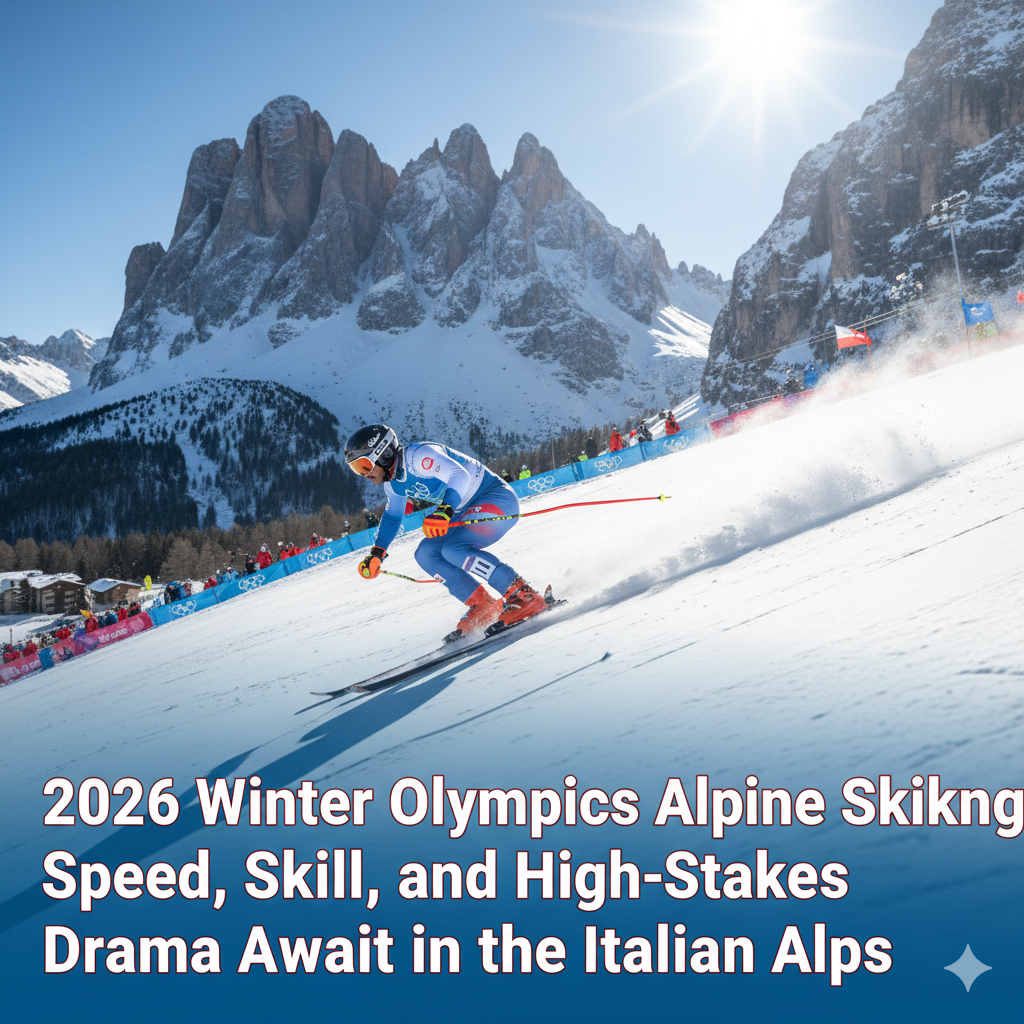
The countdown to the 2026 Winter Olympics is already building excitement — and few events promise as much adrenaline and global attention as alpine skiing. With athletes preparing to race down some of the world’s most demanding mountain courses, the upcoming competition is shaping up to be one of the most thrilling chapters in Olympic winter sports history.
Set against the dramatic backdrop of northern Italy, alpine skiing at the Games will combine breathtaking scenery with razor-thin margins of victory, where medals are often decided by hundredths of a second.
A Historic Olympic Return to the Italian Alps
The alpine skiing events will take place during the 2026 Winter Olympics, officially hosted across Milan and Cortina. The iconic mountain town of Cortina d’Ampezzo — already famous for hosting the 1956 Winter Games — will once again become the center of Olympic skiing.
Cortina’s steep slopes and unpredictable winter conditions make it one of the sport’s most respected venues. Organizers say updated infrastructure and modern safety improvements will allow athletes to push performance limits while ensuring world-class competition standards.
For fans, the location offers something equally important: visually spectacular races set in the heart of the Dolomites, a UNESCO World Heritage mountain range known for dramatic peaks and challenging terrain.
What Makes Alpine Skiing So Compelling?
Alpine skiing stands apart from many Olympic sports because it blends raw speed with technical precision. Competitors must balance aggression and control while navigating gates at speeds that can exceed 130 km/h.
The Olympic program includes several disciplines:
- Downhill – The fastest and most dangerous event, prioritizing speed.
- Super-G – Combines speed with technical turns.
- Giant Slalom – Requires precision carving and rhythm through tighter gates.
- Slalom – The most technical race, demanding lightning-fast reflexes.
- Alpine Combined – Tests versatility across different racing styles.
Each discipline rewards a different skill set, meaning athletes must specialize while maintaining peak physical conditioning.
Athletes to Watch and Rising Rivalries
As the Games approach, attention is turning to both established champions and emerging talents from Europe and North America. Alpine skiing has long been dominated by powerhouse nations such as Switzerland, Austria, Norway, Italy, and the United States.
Experts expect intense rivalries, especially among younger athletes who have risen through the ranks of the FIS Alpine Ski World Cup in recent seasons. These competitions often serve as a preview of Olympic battles, where consistency across multiple races separates medal contenders from the rest of the field.
Veteran skiers bring valuable experience on difficult Olympic courses, while newcomers often introduce fearless racing styles that can disrupt expectations. This generational clash is one reason alpine skiing consistently produces unforgettable Olympic moments.
Technology, Training, and the Evolution of the Sport
Modern alpine skiing has evolved far beyond traditional techniques. Advances in ski design, aerodynamic suits, and data-driven training methods now play a major role in performance.
Athletes rely heavily on motion tracking, video analysis, and simulation training to perfect racing lines before ever stepping onto Olympic snow. Even minor adjustments in body position or equipment tuning can significantly impact race times.
At the same time, organizers are increasingly focused on athlete safety. Improved course preparation, protective barriers, and weather monitoring systems aim to reduce risks while preserving the sport’s high-speed excitement.
Why Alpine Skiing Matters at the 2026 Olympics
Beyond medals and national pride, alpine skiing represents the spirit of the Winter Olympics itself — courage, precision, and resilience under pressure.
The 2026 Games arrive at a time when winter sports are also confronting challenges such as climate change and shifting snowfall patterns. Hosting events in established alpine regions like Cortina allows organizers to showcase sustainable planning while preserving traditional mountain sports culture.
For viewers worldwide, alpine skiing remains one of the most accessible Olympic spectacles. The rules are easy to understand: fastest time wins. Yet behind that simplicity lies years of discipline, risk, and preparation.
A Showcase of Speed and Human Limits
As the Olympic flame prepares to return to Italy, alpine skiing is expected to deliver some of the most dramatic highlights of the Games. Every run down the mountain will carry enormous stakes — a single mistake can erase years of preparation, while one perfect descent can create Olympic history.
The 2026 Winter Olympics will not only crown new champions but also demonstrate how far athletic performance and technology have advanced. More importantly, it will remind audiences why alpine skiing continues to capture global imagination: the timeless thrill of humans racing gravity itself.
With anticipation growing and athletes entering their final training cycles, one thing is certain — when the starting gates open in Cortina, the world will be watching.
2 thoughts on “2026 Winter Olympics Alpine Skiing: Speed, Skill, and High-Stakes Drama Await in the Italian Alps”