
Here’s something a lot of casual fans don’t fully appreciate: the first round gets the spotlights, the red carpets, and the prime-time ratings. But Rounds 2 and 3 on Friday night? That’s where front offices either show what they’re really made of — or quietly make decisions they’ll spend years trying to justify.
With 68 picks flying off the board in a single evening, there’s simply less margin for error. Teams are balancing board value against positional need, factoring in private medical evaluations the public never sees, and sometimes just going with their gut. This year, a few of those gut calls went sideways — or at least raised a whole lot of questions.
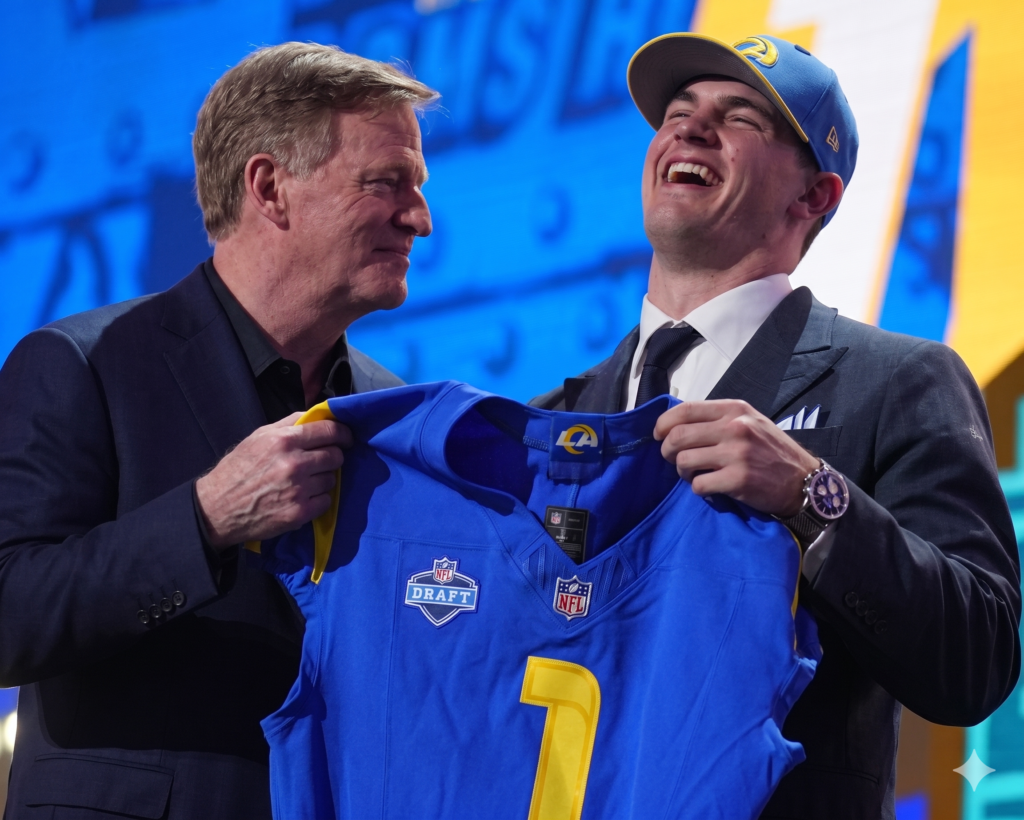
After a Day 1 that included the Rams stunning everyone by taking Ty Simpson at No. 13, the expectations for drama were already high heading into Friday. Day 2 more than delivered.
Carson Beck to the Arizona Cardinals: The Pick That Stopped the Room
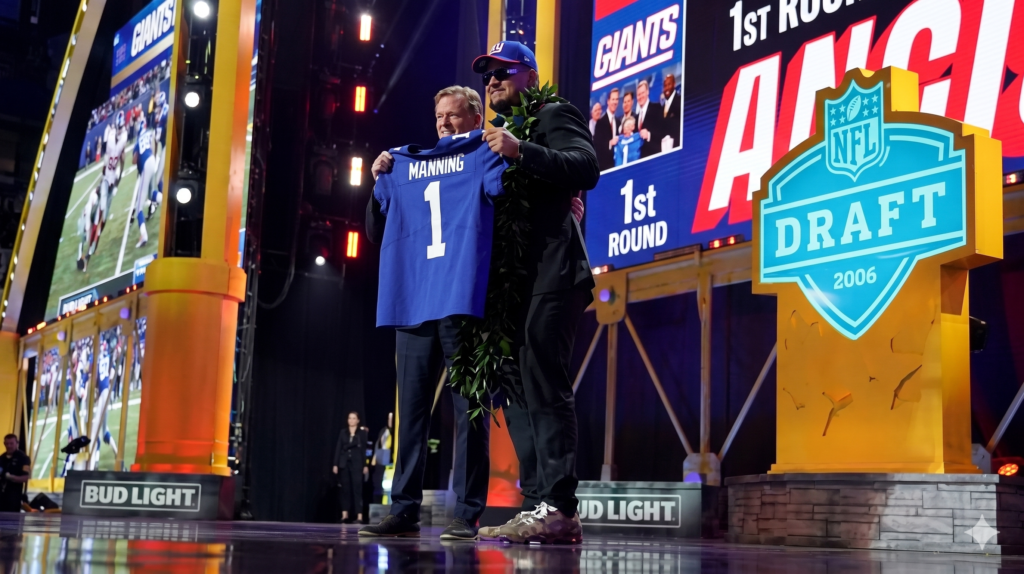
If you had to point to one moment that captured the spirit of the 2026 NFL Draft Day 2 shocking picks, this is it.
What Actually Happened
Arizona used the No. 65 overall pick — the very first selection of the third round — to take Miami quarterback Carson Beck. That made Beck the third quarterback off the board in the entire draft, and the pick caught pretty much everyone off guard. Most draft observers expected the Cardinals to let Day 2 pass without making a move at quarterback at all.
Why People Were Confused
The Cardinals had already filled some roster gaps heading into Friday night, and the prevailing opinion among analysts was that Arizona planned to wait for the 2027 draft class before seriously investing in a long-term quarterback answer. So seeing them spend a third-round pick on Beck — at the very top of Round 3 — raised more than a few eyebrows.
What made the situation even messier was the Jacoby Brissett drama hovering in the background. NFL Network Insider Ian Rapoport had reported that Brissett skipped offseason workouts and was not planning to show up until the Cardinals agreed to a contract extension. With that hanging over the room, Beck and veteran Gardner Minshew suddenly became more important to Arizona’s immediate plans than anyone expected.
So Who Is Carson Beck, Exactly?
His backstory is worth knowing, because it adds real context to why a team would take a chance on him in Round 3.
Beck arrived at Georgia as a four-star recruit from Jacksonville, Florida — highly touted, projected to be the next great Bulldogs quarterback after Stetson Bennett. And for a while, he lived up to every bit of that hype. In 2023, he threw for 3,941 yards and posted a 24-to-6 touchdown-to-interception ratio, helping Georgia finish 12-1. Then an elbow injury derailed everything. He initially declared for the 2025 NFL Draft, thought better of it, transferred to Miami, and spent a year leading the Hurricanes through one of the more memorable playoff runs in recent memory.
The talent has always been there. The question is whether it translates.
What Does This Mean for Arizona?
Honestly? It’s complicated. The Cardinals can still pursue a franchise quarterback in the 2027 draft, and a third-round pick doesn’t force their hand in any meaningful way. Beck will likely spend his rookie year learning from Brissett and Minshew, getting reps where he can and developing behind the scenes.
That said, there are still serious holes on this roster — a right tackle situation that needs urgent attention, for one. Spending that third-round capital on a developmental quarterback when other needs remain unaddressed is the part that makes analysts uneasy. If the season goes sideways early, though, Beck could find himself on the field sooner than expected.
The Jacksonville Jaguars and Nate Boerkircher: Bold Move or Clear Overpay?
The Beck pick dominated the conversation, but Jacksonville made a move Friday night that had its own share of critics.
What the Jaguars Did
With the No. 56 overall pick — their first selection of the draft weekend, since they traded away their first-round pick — the Jaguars went with Texas A&M tight end Nate Boerkircher. On paper, the need made sense. Jacksonville had parted ways with Johnny Mundt earlier in the offseason and wanted to add depth and versatility at tight end. Head coach Liam Coen has built offenses around multi-tight end sets, so the positional priority was real.
The problem? Boerkircher was ranked 163rd on the consensus big board. Taking him at No. 56 is a gap of more than 100 spots — and that kind of reach is hard to explain away with scheme fit alone.
What He Actually Offers
To be fair to the Jaguars here, stats alone don’t capture what Boerkircher brings to the table. At 6-foot-5 and 245 pounds, he has the frame you want. His tape shows a player who can win at the catch point, holds up as a blocker, and offers enough route-running polish to threaten man coverage when lined up in various spots — detached, in the slot, or as an H-back in the backfield.
He’s never put up flashy college numbers — 38 career catches across five seasons at Nebraska and one at Texas A&M — but blocking-first tight ends rarely do. His coaches clearly see something the stat sheet doesn’t show, and Jacksonville’s regime has shown good judgment before.
The Bottom Line
It’s fair to call this a reach. It’s also fair to say the Jaguars may know something the rest of us don’t. GM James Gladstone has built credibility in Jacksonville, and this front office has shown a willingness to bet on traits over résumé. Whether Boerkircher develops into a legitimate weapon or quietly fades into depth chart obscurity will tell us a lot about whether this pick was savvy or simply premature.
Other Picks That Had People Raising Their Hands
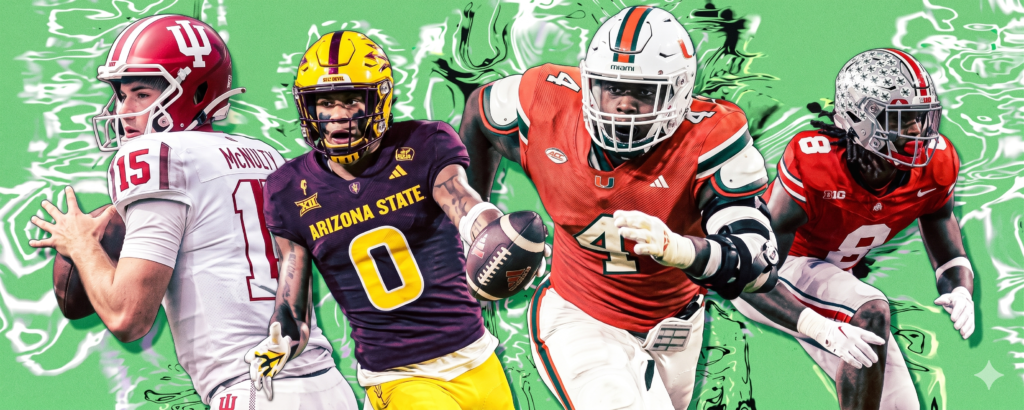
Beck and Boerkircher weren’t the only names sparking debate on Friday night.
De’Zhaun Stribling, San Francisco 49ers — No. 33 Overall
This one kicked off the second round with an immediate jolt. PFF had Stribling ranked 112th on their big board. San Francisco took him 33rd overall — a swing of 79 spots. The Niners clearly fell hard for the Ole Miss wideout, and maybe they’re right to love him. But taking a player that far ahead of his consensus grade, with the very first pick of the second round, is the kind of move that either ages brilliantly or gets replayed on highlight reels for the wrong reasons.
Drew Allar, Pittsburgh Steelers — No. 76 Overall
This pick was different — it wasn’t necessarily a reach so much as a statement. The Steelers took Penn State quarterback Drew Allar in the third round, and the crowd in Pittsburgh went wild. The real question, of course, is what it signals about Aaron Rodgers. If Rodgers walks away from football, Allar steps into a competition for a starting job. If Rodgers comes back, Allar gets to sit behind one of the most decorated signal-callers in NFL history and absorb everything he can. Either way, it’s not the worst situation for a developmental quarterback to land in.
Why “Reach” Picks Aren’t Always What They Seem
It’s tempting to look at a 100-spot gap between a player’s consensus ranking and his draft position and immediately write it off as a mistake. But that’s not really how this works.
NFL teams run private workouts. They commission independent medical examinations. They spend hours talking to coaches, teammates, and family members. They build their own internal boards that may look nothing like what’s published publicly. A player who grades out as a mid-fourth-round talent on a consensus board might be a top-50 player on a specific team’s internal evaluation — and that team might be right.
History backs this up. The NFL is full of players who were called reaches on draft night and became Pro Bowlers. The reverse is also true — plenty of consensus top-10 prospects flamed out before their rookie contracts expired.
The honest answer is that we don’t know which of Friday’s “reaches” were mistakes and which were genius until the season plays out.
What These Picks Reveal About Each Franchise
Arizona Cardinals: A Team Figuring Things Out in Real Time
There’s no clean narrative for where the Cardinals are right now. Losing Kyler Murray was a franchise-altering moment, and everything since then has felt like improvisation. Taking Beck in the third round is another example of a front office trying to build something without a clear blueprint yet.
New head coach Mike LaFleur is trying to establish an identity quickly, and adding a quarterback with Beck’s raw upside gives Arizona at least one more option as they figure out their long-term plan under center. Whether that’s wise or wishful depends entirely on how this roster performs over the next 12 months.
Jacksonville Jaguars: Patient, Methodical, and Leaning In
The Jaguars didn’t have a first-round pick. They traded it away to select Travis Hunter in 2025, and that deal has already shown promise. Rather than panic on Day 2, Jacksonville was deliberate — they used their picks to address specific offensive needs and tried to build depth in a scheme-friendly way.
Boerkircher fits that description on paper. Whether the price paid was justified is a question only time will answer.
FAQ:
Q:1. Why did the Cardinals select Carson Beck in the third round?
Ans: Arizona has been searching for a legitimate quarterback since moving on from Kyler Murray. With Brissett’s contract situation unsettled and no clear franchise solution on the roster, Beck offered an affordable, developmental option backed by genuine big-game experience from his time at Georgia and Miami.
Q:2. Was Nate Boerkircher truly a reach for Jacksonville?
Ans: By the numbers, yes — there’s no getting around the 107-spot gap between his consensus ranking and where he was drafted. Jacksonville’s front office clearly values traits and scheme fit over pure production, though, and the team had a genuine need at tight end. Whether the cost was right is what remains to be seen.
Q:3. Which team had the most surprising Day 2 overall?
Ans: Arizona stands out the most. Across two days, the Cardinals prioritized skill positions in ways that raised questions — opening with a running back at No. 3 on Thursday, then doubling back to take a developmental quarterback in the third round. It’s an unconventional approach, and the results will be fascinating to follow.
Q:4. Does a “reach” always mean a bad pick?
Ans: No, and it’s important to remember that. Teams operate with information the public simply doesn’t have. A player ranked 163rd on a consensus board could be ranked 40th on a team’s internal board based on medical clearances, personality assessments, and scheme-specific evaluations. The proof always comes on the field, not at the podium.
Q:5. How do I follow up on these picks as the season unfolds?
Ans: Watch training camp depth chart updates closely, pay attention to preseason snaps, and follow beat reporters who cover these franchises daily. That’s where the real story of these draft choices starts to take shape.
Day 2 Was Everything We Hoped For
The 2026 NFL Draft Day 2 shocking picks gave football fans exactly what this time of year is supposed to deliver — genuine surprise, lively debate, and that electric uncertainty that reminds you why the draft is must-watch television.
Carson Beck heading to Arizona as a third-round developmental project. Nate Boerkircher landing in Jacksonville more than 100 spots ahead of his consensus grade. De’Zhaun Stribling kicking off Round 2 as a steep reach. Drew Allar raising big questions about the Steelers’ quarterback future. None of these picks came with a clean, obvious explanation. All of them will be dissected for months.
That’s the thing about the NFL Draft — the drama doesn’t end when the commissioner walks off the stage. It’s just getting started. The real verdicts get written in September, October, November, and January.
For More Information
Related Article
NFL Draft 2026 Live Tracker: Round 1 Picks, Trades, and Biggest Surprises as They Happen
Baton Rouge Mall of Louisiana Shooting: Teen Killed, 5 Injured After Food Court Gunfight