
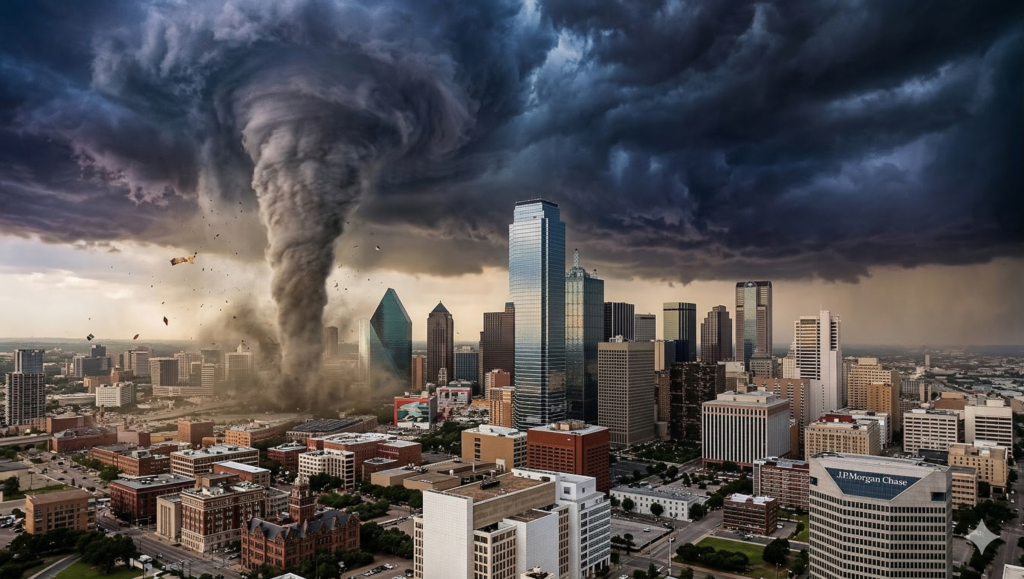
When dark skies gather over Lake Michigan and the air takes on that eerie greenish tint, many Chicagoans silently wonder the same thing: is a tornado actually coming our way? The idea feels almost far-fetched in a city defined by towering skyscrapers, packed expressways, and millions of residents. Yet the short answer may catch you off guard.
This guide covers everything worth knowing about tornadoes and Chicago — from documented storm history and the true level of risk to what residents should do the moment a Chicago storm escalates into a tornado warning. Read on, and you might rethink how seriously you take those springtime sirens.
Has a Tornado Ever Hit Chicago?
Yes — and the record shows it has happened more than once. Although a tornado making a direct pass through the Chicago Loop is uncommon, the wider metro area has faced tornado strikes repeatedly across recorded history. The deadliest incident occurred on April 20, 1967, when a violent tornado carved a path through the Belvidere district on Chicago’s Northwest Side, claiming 33 lives and leaving hundreds injured. That event still stands as one of the most fatal tornado occurrences in Illinois history.
In more recent decades, tornado warnings have brought life across the Chicago area to a halt on several occasions. Suburban communities have borne the heaviest damage — towns such as Plainfield in 1990, Utica in 2004, and parts of Naperville have all dealt with serious tornado destruction. The takeaway is clear: tornado activity in the Chicago region is not an urban legend. It is a well-documented, repeating pattern.
Chicago Tornado History: Key Events
- 1967 — Belvidere neighborhood: A deadly tornado killed 33 people, ranking among Illinois’s worst on record.
- 1990 — Plainfield, IL: An F5 tornado struck just 35 miles southwest of the city, killing 29 people.
- 2004 — Utica, IL: An F3 tornado hit the community, resulting in 8 fatalities.
- Ongoing — Tornado watches and warnings are issued for the Chicago metro region during most spring and summer seasons.
Can Tornadoes Actually Form Near Chicago? Understanding the Risk
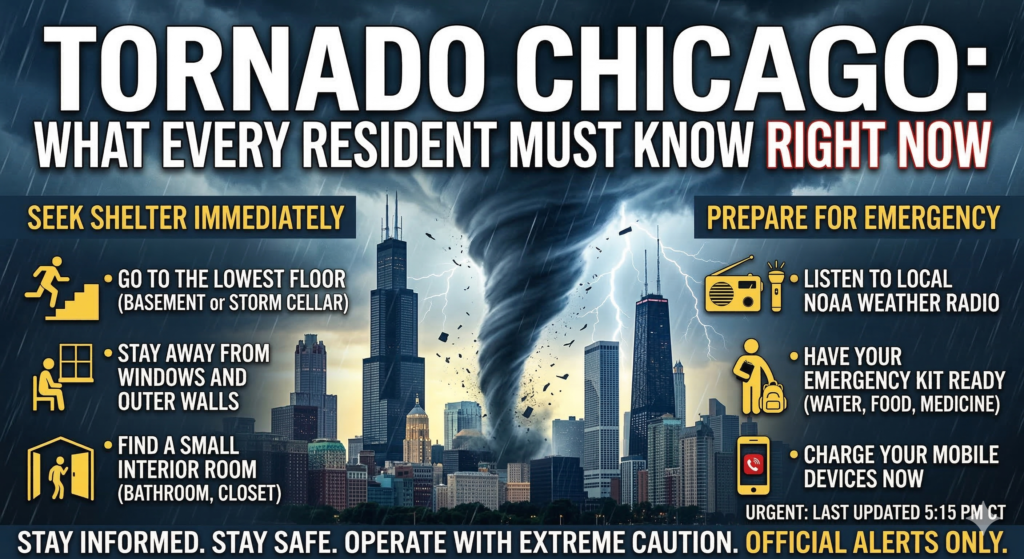
Without question. Illinois occupies the eastern fringe of what storm scientists call Tornado Alley — a broad corridor across the central United States where moisture-laden air moving up from the Gulf of Mexico meets cold, dry air pushing down from Canada and the Rockies. When these opposing air masses interact, the conditions are ripe for powerful thunderstorms and tornadoes to develop.
Chicago sits at the southern edge of Lake Michigan, and although the lake does moderate temperatures along the immediate shoreline, it functions as no kind of shield against rotating storms. Lake-influenced weather patterns can, in certain situations, actually amplify incoming storm systems as they track toward the city from the southwest. Each year, the National Weather Service (NWS) Chicago office issues tornado watches and warnings for Cook County — the county that encompasses the city itself.
Illinois routinely appears near the top of national rankings for both tornado frequency and tornado-related casualties. The state records roughly 50 tornadoes annually. Peak activity runs between April and June, though confirmed tornado touchdowns have occurred in Illinois during every calendar month.
Why Don’t Tornadoes Hit Chicago More Often?
It is a fair question, and the honest answer comes down to probability rather than any inherent protection the city enjoys. Chicago has no atmospheric forcefield. No part of it is off-limits to a tornado. That said, a handful of geographic and meteorological factors do lower — without removing — the odds of a tornado striking the dense urban core.
The Urban Heat Island Effect
Cities concentrate enormous amounts of heat from pavement, structures, and human activity. A number of atmospheric researchers have proposed that this urban warmth may mildly interfere with the near-surface conditions tornadoes need to stay in contact with the ground. Even so, this influence remains scientifically uncertain and offers no reliable protection against a tornado that is already on the ground and moving.
Lake Michigan’s Role in Chicago Weather
The presence of Lake Michigan means that cooler, more stable air tends to settle over the immediate lakefront corridor. On occasion, this can cause westward-approaching storm systems to lose some strength before they reach downtown. However, this stabilizing effect is narrow in scope — residents living just a few miles from the lakeshore gain little to no protection from it.
Probability Plays the Biggest Role
Tornadoes are, by nature, relatively compact features — most measure only a few hundred yards across at any given moment. Even in the most tornado-active regions of the United States, the statistical likelihood that a tornado will cross any specific square mile on a specific day is quite small. Chicago spans roughly 234 square miles, but the odds of a tornado traveling straight through the central business district on any given afternoon remain low purely because most square miles go untouched on most days.
The suburbs, which have lower building density and less of the lake’s moderating influence, tend to face greater exposure. As a reminder of just how close severe impacts can reach: the 1990 Plainfield F5 — one of the most powerful tornadoes in American history — touched down only 35 miles southwest of downtown Chicago.
What City Has Been Hit by the Most Tornadoes?
Putting Chicago’s risk into national perspective requires looking at which major American cities have been struck most often. Oklahoma City, Oklahoma, holds that unenviable title. The metropolitan area has absorbed more than 100 confirmed tornado strikes since official records began, including the catastrophic May 3, 1999 super outbreak that generated an F5 with measured wind speeds exceeding 300 miles per hour.
Other metro areas that see frequent direct hits include Tulsa, Oklahoma; the Dallas-Fort Worth corridor in Texas; and Birmingham, Alabama. Compared to these cities, Chicago occupies a lower-risk category — but lower risk should never be mistaken for zero risk. Deadly tornadoes have reached the Chicago area before, and the atmospheric fuel for severe weather replenishes itself every single spring.
Chicago Storm Season: When Residents Should Stay Alert
Life in Chicago means accepting severe weather as a seasonal reality. Here are the windows when storm awareness matters most:
- Spring (April–June): The primary tornado season. Gulf moisture surges northward and frequently collides with cold air masses still holding on across the Great Lakes region, fueling dangerous storm development.
- Summer (July–August): Organized storm clusters known as derechos can race across the region, bringing destructive straight-line winds and, on occasion, embedded tornadoes tucked within squall lines.
- Fall (September–October): A secondary, smaller period of elevated severe weather risk occurs as summer warmth retreats and sharper temperature contrasts return to the atmosphere.
- Winter: Tornadoes are infrequent but not impossible during this period. Illinois has recorded both December and January tornadoes, though such events are uncommon.
The NWS Chicago office, located in Romeoville, Illinois, maintains continuous monitoring of regional weather conditions. It issues two distinct alert levels: a Tornado Watch signals that atmospheric conditions are favorable for tornado development and that people should remain alert, while a Tornado Warning means a tornado has been confirmed either visually or on radar — and that those in the affected area must seek shelter without delay.
What to Do When a Tornado Warning Is Issued in Chicago
A large portion of Chicago’s population lives in apartments or multi-story residential buildings, which means standard tornado safety guidance written for single-family suburban homes does not always apply. Here is what residents and visitors should know:
If You Are Inside a High-Rise Apartment or Office Tower
- Do not go to the roof or move toward upper floors under any circumstances.
- Relocate to an interior hallway on a low floor — preferably below the 10th floor.
- Keep clear of all windows and exterior-facing walls throughout the event.
- Lower yourself to the ground and shield your head and neck using both arms.
If You Are in a House or Low-Rise Building
- Head to the lowest level available — a basement provides the best protection.
- If the building has no basement, move to an interior ground-floor room such as a bathroom or an interior closet, well away from windows.
- Use a mattress, heavy blankets, or a sleeping bag to cover your body and reduce the risk of injury from flying debris.
If You Are Outside or Inside a Vehicle
- Attempting to drive away from a tornado in Chicago’s dense urban traffic is extremely hazardous — congestion and blocked streets can trap you directly in the storm’s path.
- Enter the nearest solid, permanent structure as quickly as possible.
- If you cannot reach a building, move away from your vehicle and lie flat in the lowest ground you can find, keeping clear of trees and parked cars, with your arms over your head.
FAQ:
Q: Has a tornado ever struck downtown Chicago directly?
A tornado passing directly through the Chicago Loop is exceedingly rare. The 1967 Belvidere tornado struck residential neighborhoods on the Northwest Side rather than the central business district. That said, no section of the city sits outside the NWS tornado warning zone, and no neighborhood can claim immunity.
Q: Is there an official tornado season in Chicago?
Yes. Tornado activity in Chicago peaks between April and June each year, with a secondary risk window in late summer. Because severe weather can develop whenever atmospheric conditions align, it is advisable to keep a weather alert application or a NOAA Weather Radio accessible throughout the entire year.
Q: Does Lake Michigan offer any protection against tornadoes?
Lake Michigan provides a degree of atmospheric stability along the immediate lakefront corridor, but it does not block tornadoes. The vast majority of severe weather affecting the Chicago area arrives from the southwest — well before any storm reaches the lakefront. As a result, the western and southern suburbs typically carry a higher exposure level than neighborhoods directly adjacent to the lake.
Q: What should I do if there is a Chicago tornado today?
If tornado sirens activate or your phone receives a Tornado Warning notification, act immediately — do not wait to see what happens. Move to the lowest interior level of the nearest solid building and stay away from all windows. If you are in a high-rise, find an interior hallway on a low floor. Continue monitoring NWS alerts and remain sheltered until the warning officially expires.
Q: How frequently do tornadoes occur in the Chicago area?
Illinois records approximately 50 tornadoes per year across the entire state. The Chicago metro area — spanning Cook, DuPage, Will, Kane, and Lake counties — experiences some level of tornado activity in most years. Full tornado warnings covering parts of the city itself are issued several times each decade, while the outer suburban ring sees confirmed touchdowns more regularly than the urban core.
Chicago and Tornado Risk
Chicago is not at the epicenter of Tornado Alley, but it is far from immune. The city and its surrounding suburbs carry a real, documented history of deadly tornado strikes. The same atmospheric dynamics that generate violent storms in Oklahoma and Texas rebuild themselves across Illinois each spring — and they do not respect city limits.
Unlike residents of Oklahoma City or Tulsa, many Chicagoans have never rehearsed tornado safety or considered where they would go when the sirens sound. That gap in preparedness is worth closing now, before the skies darken.
Identify the safest spot in your building today. Enable severe weather alerts on your phone. And whenever a tornado warning covers your neighborhood, treat it as a genuine emergency — because every single one has the potential to be.
CALL TO ACTION: Stay one step ahead this storm season. Bookmark the National Weather Service Chicago page (weather.gov/lot) for live warnings and radar updates. If this article was useful, share it with family and friends across the metro area — because tornado preparedness begins with knowing the risk exists.
For More Information
Related Article
Where to Watch Galatasaray vs Liverpool FC: Live Stream, TV Channel & Kick-Off Time in the USA
Kalif Raymond Stats 2026: Career Numbers, 40 Time, Wife & Full Bio
JetBlue Flights: Book Cheap Tickets, Check Status & Find the Best Deals
Did Heeseung Leave ENHYPEN? The Full Story Behind His Departure
2 thoughts on “Tornado Chicago: What Every Resident Must Know Right Now”