


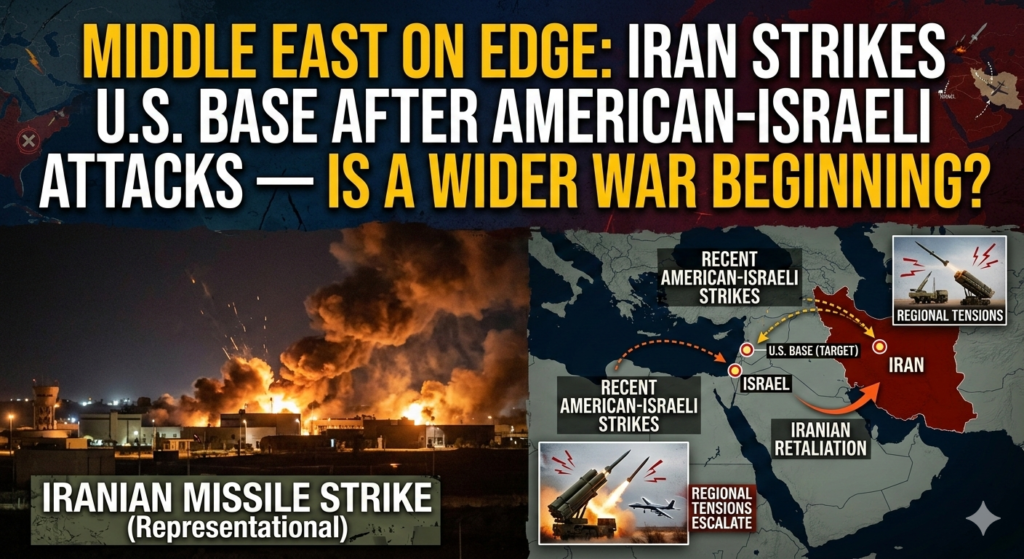
A Sudden Escalation That Shook the Region
Late-night explosions heard across the Gulf region instantly triggered global concern. Reports confirmed that Iran had launched strikes targeting a United States military facility in Bahrain — a dramatic development that pushed already fragile tensions closer to open confrontation.
For weeks, the Middle East had been simmering with rising hostility linked to clashes involving Israel, Iran, and allied forces. But this latest move marked a direct escalation involving American military assets, shifting the situation from indirect conflict to something far more serious.
As breaking updates spread worldwide, governments, analysts, and civilians alike began asking the same question: Is this the beginning of a larger regional crisis?
What Happened: Iran Targets a U.S. Military Base
According to early reports, Iranian forces launched strikes aimed at a U.S. military installation located in Bahrain, home to key American naval operations in the Gulf.
Witnesses described loud explosions lighting up the night sky, while air-defense systems were reportedly activated. Officials moved quickly to assess damage and ensure personnel safety.
Why Bahrain matters strategically
Bahrain hosts one of the most important American military presences in the region. The base supports naval operations responsible for protecting major shipping routes and maintaining stability in the Persian Gulf.
Because of this, any attack on installations there carries symbolic and strategic weight far beyond the immediate area.
Military analysts note that targeting such a location sends a clear geopolitical message — demonstrating capability while testing international reactions.
The Chain of Events: Rising Israel–Iran Tensions
The strike did not occur in isolation. It followed heightened confrontation connected to Israeli military activity and long-standing disputes over Iran’s regional influence and nuclear ambitions.
Tensions between Israel and Iran have escalated repeatedly in recent years through cyber operations, proxy conflicts, and limited military exchanges.
Why Israel is central to the crisis
Israel has consistently viewed Iran’s expanding military and nuclear capabilities as a direct security threat. Meanwhile, Iran accuses Israel and its allies of aggression and interference across the region.
The United States, a close Israeli ally, has often been drawn into these tensions due to defense partnerships and military deployments.
This interconnected relationship explains why conflicts involving Israel frequently expand into broader regional crises involving U.S. forces.
Why Iran Launched the Strike
Experts believe several motivations may have influenced Iran’s decision.
1. Strategic retaliation
Iran may have intended the strike as a response to perceived attacks or pressure from U.S. and Israeli actions in the region.
Retaliatory moves allow governments to demonstrate strength domestically while signaling deterrence internationally.
2. Controlled escalation
Military analysts often describe such actions as “calibrated responses.” The goal is to send a warning without triggering full-scale war.
By targeting military infrastructure rather than civilian areas, nations attempt to maintain pressure while avoiding uncontrollable escalation.
3. Regional signaling
The strike also communicates influence to allies and rivals across the Middle East, reinforcing Iran’s willingness to respond directly when challenged.
Global Reaction: Calls for Calm as Fear Spreads
Within hours, world leaders urged restraint. Diplomatic channels reportedly intensified as countries attempted to prevent further escalation.
The United Nations and several European governments called for de-escalation, emphasizing the risks of miscalculation.
Why global markets reacted quickly
Even limited military action in the Gulf region can have worldwide consequences.
The region plays a critical role in:
- global oil supply,
- international shipping routes,
- energy pricing stability.
When conflict threatens these systems, financial markets often respond immediately.
Oil prices historically rise during Middle East instability because traders anticipate potential supply disruptions.
Explosions Heard Across the Gulf: What Witnesses Reported
Residents across parts of Bahrain and nearby Gulf areas described hearing multiple blasts late at night. Social media videos showed flashes in the sky, though officials urged caution regarding unverified footage.
Security experts emphasize that early visuals during conflicts are often misleading due to:
- incomplete information,
- delayed confirmations,
- edited or recycled videos.
Authorities typically release verified assessments only after damage evaluations are completed.
Could This Lead to a Wider War?
This is the question dominating international discussion.
Factors that may prevent escalation
- Diplomatic backchannel negotiations
- Economic risks for all parties involved
- Military caution from regional powers
Factors increasing risk
- Misinterpretation of military actions
- Additional retaliatory strikes
- Pressure from domestic political audiences
History shows that Middle East crises often move through cycles of escalation followed by negotiated cooling periods. However, each incident carries unpredictable risks.
Why the Situation Matters Beyond the Middle East
Even people thousands of miles away may feel the effects of the crisis.
Economic impact
Energy costs can rise globally if instability threatens shipping lanes or oil production.
Higher fuel prices often lead to:
- increased transportation costs,
- rising food prices,
- broader inflation pressures.
Aviation and trade disruptions
Airlines sometimes reroute flights to avoid conflict zones, increasing travel time and operational expenses.
Shipping insurance rates can also surge, affecting global supply chains.
Cybersecurity risks
Modern geopolitical conflicts frequently extend into cyber warfare, targeting financial systems and infrastructure worldwide.
Understanding the Bigger Picture
Geopolitical experts stress that this escalation reflects deeper long-term tensions rather than a single isolated event.
Key underlying issues include:
- regional power competition,
- nuclear program disputes,
- alliance dynamics between global powers.
The Middle East remains one of the world’s most strategically sensitive regions, meaning even limited military actions attract intense international scrutiny.
What Happens Next?
In the coming days, attention will likely focus on three major developments:
- Official damage assessments from military authorities.
- Diplomatic negotiations aimed at preventing further retaliation.
- Military readiness adjustments across the region.
Analysts will closely watch whether additional strikes occur or whether diplomatic efforts successfully stabilize the situation.
Conclusion: A Critical Moment for Regional Stability
Iran’s strike on a U.S. military base marks a serious turning point in an already tense geopolitical landscape. While the action may represent a calculated response rather than the start of full-scale war, it highlights how quickly regional rivalries can escalate into global concerns.
For now, the world is watching carefully — not only for military developments but for signs of diplomacy that could prevent further escalation.
Understanding events like these requires patience and verified information rather than reaction to early headlines. As updates continue, the coming days will likely determine whether this moment becomes a brief flare-up or a defining chapter in Middle East history.
Readers interested in deeper context may benefit from exploring a related explainer on how geopolitical conflicts influence global energy prices and international security — an issue increasingly shaping everyday life worldwide.
⚡ Key Highlights
- Iran launched strikes targeting a U.S. military installation in Bahrain amid escalating regional tensions.
- Explosions were reported across parts of the Gulf, raising fears of wider conflict.
- The escalation follows growing confrontation involving Israel, Iran, and the United States.
- Global leaders are urging restraint as markets and security analysts monitor risks closely.
- The situation could affect oil prices, global trade routes, and geopolitical stability.
Related Article
Jim Carrey’s César Awards Moment Leaves Audience Speechless — Here’s What Happened
United States Strikes on Iranian Nuclear Sites Spark Global Alarm — What Happens Next?
Jack Dorsey Just Hit Reset at Block — Here’s What the Layoffs Really Mean
Why Is Pokemon So Popular Again? The Real Reasons Behind the Revival