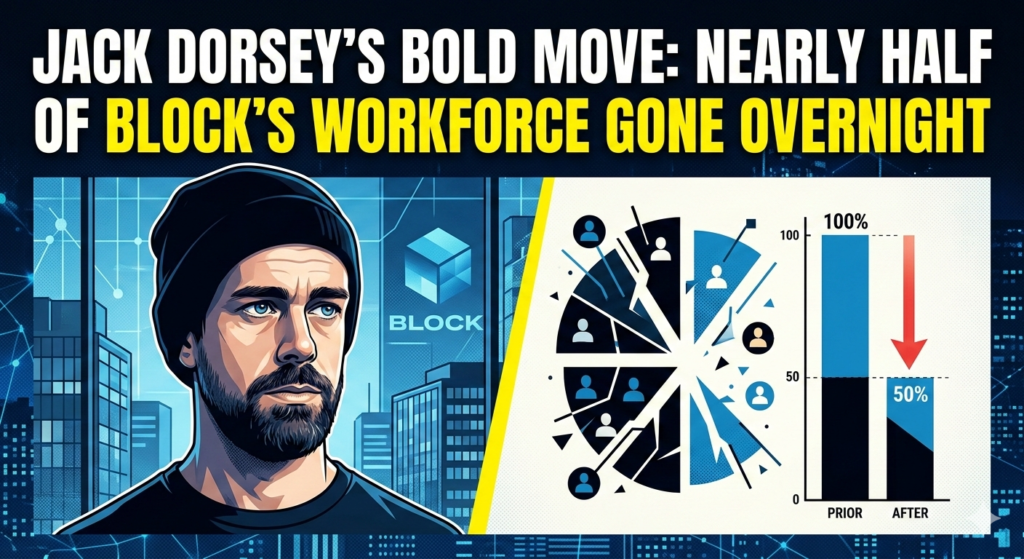
The technology industry has spent years talking about artificial intelligence changing the future. Now, that future is arriving faster — and more painfully — than many expected.
In a move that sent shockwaves across the business world, fintech company Block, Inc. announced plans to eliminate thousands of jobs, cutting nearly half of its workforce. The decision, led by CEO Jack Dorsey, signals a dramatic shift in how modern companies believe work should be done in the AI era.
The layoffs are not simply about reducing costs. Instead, they reflect a deeper transformation — one where artificial intelligence is reshaping corporate structures, productivity expectations, and the very meaning of employment in tech.
A Layoff Announcement That Shook the Industry


The scale of Block’s workforce reduction immediately captured global attention.
Approximately 4,000 employees are being laid off, affecting teams across operations, management, and support roles. For many observers, the size of the cuts stood out as much as the reasoning behind them.
Unlike traditional layoffs tied to financial struggles, Block framed the decision as part of a long-term strategy to redesign how the company operates. Leadership emphasized efficiency, speed, and technological integration rather than emergency cost-saving measures.
This distinction matters. It suggests the layoffs are not temporary adjustments but part of a permanent shift in corporate thinking.
Why Artificial Intelligence Is Driving the Change
At the center of Block’s restructuring is artificial intelligence.
Executives believe AI tools can now handle tasks that once required large teams — from coding assistance and customer support workflows to data analysis and internal operations. With automation improving rapidly, companies are beginning to question how many employees are truly necessary to maintain productivity.
According to company leadership, smaller teams supported by advanced AI systems can move faster and make decisions more efficiently.
In simple terms, technology is allowing companies to produce more output with fewer people.
This idea, once theoretical, is now influencing real hiring and firing decisions.
A New Corporate Philosophy: Smaller, Faster, Leaner
Block’s restructuring reflects a broader philosophy championed by Jack Dorsey for years: lean organizations outperform complex ones.
The company aims to remove layers of management and streamline decision-making processes. Instead of large departments with multiple approval levels, Block wants compact teams focused on execution.
Key internal priorities reportedly include:
- Reducing bureaucracy and hierarchy
- Increasing individual ownership of projects
- Expanding technical and engineering-focused roles
- Using AI tools to automate repetitive work
The goal is to operate more like a startup — even as a global financial technology company.
How the Tech Industry Reached This Moment
To understand why layoffs like this are happening, it helps to look at the broader industry context.
During the pandemic years, many technology companies hired aggressively as digital services boomed. Remote work, online payments, and digital commerce surged, encouraging rapid expansion.
But growth eventually slowed.
At the same time, artificial intelligence advanced at an extraordinary pace. Tools capable of writing code, analyzing data, and assisting customer interactions suddenly became widely accessible.
Companies now face a new reality: they expanded for one technological era but must adapt to another.
Block’s layoffs represent one of the clearest examples of this transition.
Employees Caught Between Innovation and Uncertainty
For workers, the announcement has created deep uncertainty.
Many employees joined technology companies believing the industry offered stability and long-term growth opportunities. Instead, they now face a job market undergoing rapid transformation.
Reports indicate that affected roles span multiple departments, not just administrative positions. This highlights a key shift — automation is beginning to influence a wider range of jobs, including skilled roles once considered secure.
The emotional impact has been significant, as employees adjust to a future where technological progress can directly reshape career paths.
Why CEOs Are Becoming More Comfortable With Layoffs


Industry analysts say Block’s decision reflects a growing trend among corporate leaders.
Artificial intelligence has given executives new confidence to restructure organizations more aggressively. If AI systems can maintain or even increase productivity, companies may feel less pressure to maintain large workforces.
This mindset marks a major cultural change in corporate leadership.
Previously, growth often meant hiring more employees. Now, growth increasingly means improving systems and automation.
Block’s restructuring could encourage other companies to follow a similar path.
Investors See Opportunity — But Risks Remain
Financial markets often react positively to efficiency-focused restructuring, and investors are closely watching Block’s transformation.
A leaner organization may:
- Reduce operating expenses
- Improve profit margins
- Accelerate product development
- Increase competitiveness
However, large layoffs also carry risks.
Companies can lose institutional knowledge, damage morale, and struggle with execution during transitions. Maintaining innovation while reducing workforce size requires careful balance.
The coming months will reveal whether Block’s strategy strengthens performance or creates new operational challenges.
The Bigger Picture: AI Is Redefining Work
Block’s layoffs are not an isolated event. Across the technology sector, companies are reevaluating staffing models as AI capabilities expand.
Experts increasingly believe the future workplace will look very different:
- Smaller teams managing larger outputs
- AI assisting daily decision-making
- Automation handling routine workflows
- Greater demand for specialized technical skills
Rather than replacing all jobs, AI is reshaping which skills are most valuable.
Roles focused on creativity, strategic thinking, and technical expertise may grow, while repetitive or process-driven positions face increasing pressure.
What This Means for the Global Job Market
The implications extend far beyond one company.
If AI-driven restructuring becomes common, industries outside technology could experience similar changes. Finance, marketing, logistics, and customer service sectors are already experimenting with automation tools.
Workers may need to adapt by:
- Learning AI-assisted workflows
- Developing technical literacy
- Focusing on uniquely human skills such as problem-solving and collaboration
The shift represents not just an economic change but a cultural one — redefining how careers evolve over time.
Jack Dorsey’s Long-Term Vision

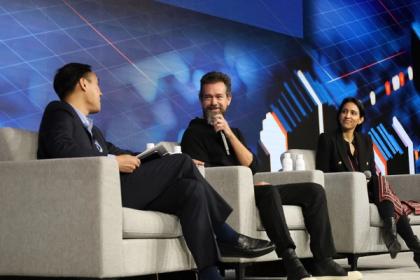
Jack Dorsey has consistently advocated for simplicity in organizational design. His leadership philosophy emphasizes independence, innovation, and minimizing unnecessary complexity.
The current restructuring aligns with that vision.
By investing heavily in technology while reducing workforce size, Block aims to position itself for a future where speed and adaptability determine success.
Supporters argue the move prepares the company for long-term competitiveness. Critics worry it may accelerate job insecurity across the industry.
Either way, the decision reflects a belief that artificial intelligence is not a temporary trend but a foundational shift.
A Turning Point for the Tech Industry
Moments like this often mark transitions between technological eras.
Just as automation transformed manufacturing decades ago, AI appears ready to reshape knowledge-based work. Companies are no longer experimenting cautiously — they are restructuring entire organizations around new capabilities.
Block’s layoffs may ultimately be remembered as one of the earliest large-scale examples of AI influencing corporate workforce strategy at this level.
Conclusion: The Beginning of a New Workplace Reality
The announcement from Block is more than a headline about layoffs. It is a signal that the rules of modern employment are changing.
Artificial intelligence is moving from a supporting tool to a central force shaping how businesses operate. For companies, this promises efficiency and innovation. For workers, it introduces both opportunity and uncertainty.
As organizations adapt to an AI-driven future, the balance between technology and human talent will define the next chapter of the global economy.
Block’s decision may feel sudden, but it reflects a broader transformation already underway — one where success depends not on how many people a company employs, but on how intelligently it uses technology.
The era of AI-powered workplaces has begun, and its impact is only just starting to unfold.
⭐ Key Highlights
- Block plans to lay off about 4,000 employees, nearly half its workforce
- CEO Jack Dorsey links restructuring to AI-driven productivity changes
- Company aims to operate with smaller, faster teams
- Move reflects a wider tech industry shift toward automation
- Experts say AI is redefining hiring, skills, and workplace structures
- Layoffs highlight growing impact of artificial intelligence on jobs
Related Article
Luka Dončić Drops 41… But Lakers Stunned by Heartbreaking Last-Second Shot
Burger King Just Changed the Whopper After Years — And Fans Are Shocked
Who Was Robert Cosby? Age, Family, Son, Marriage, and Cosby Name Confusion Explained
Google Sends Shocking Notification to Thousands — Then Rushes to Apologize After Major Mistake
For More Information