


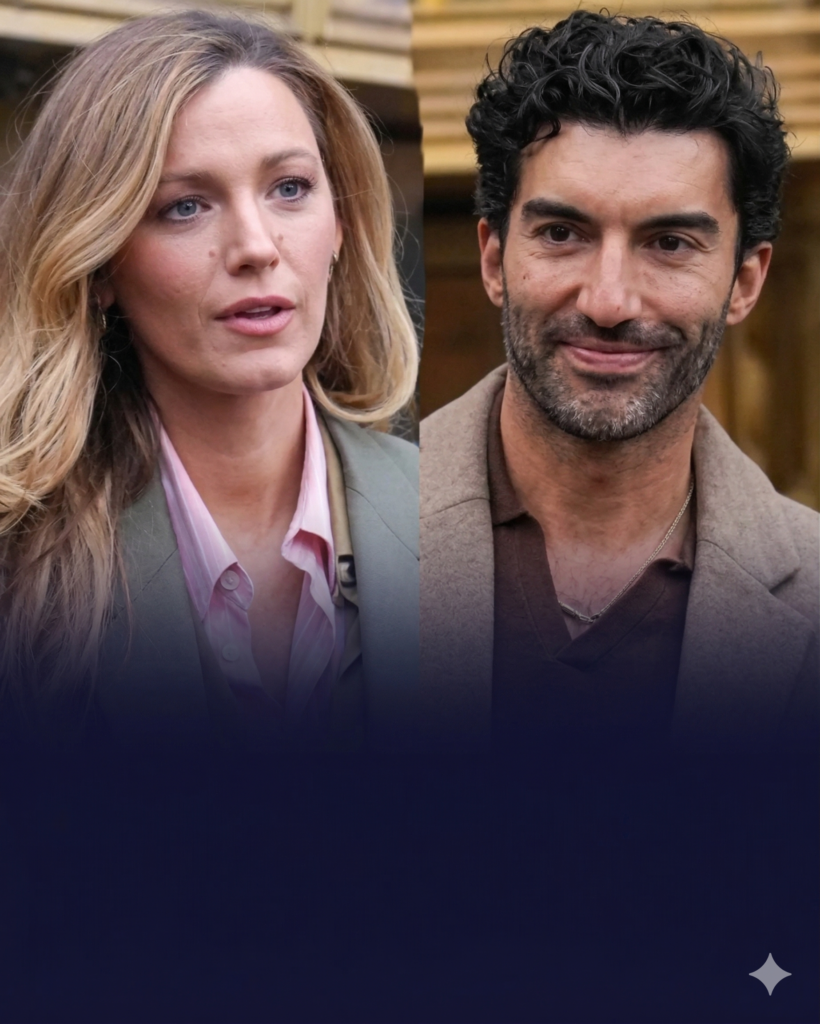
U.S. District Judge Lewis J. Liman issued a 152-page decision on April 2, 2026, that dramatically narrowed Blake Lively’s federal lawsuit against Justin Baldoni, his production company Wayfarer Studios, and several additional defendants.
Out of a total of 13 claims, the judge dismissed 10 of them. The ones that did not survive include:
- Sexual harassment
- Defamation
- Conspiracy
- All claims filed against the five named individual defendants, including Baldoni personally and Wayfarer CEO Jamey Heath
Only three claims made it through and are now heading to trial:
- Breach of contract
- Retaliation
- Aiding and abetting retaliation
One thing worth noting right away: Justin Baldoni is not a defendant in any of those three surviving claims. The only party still named from his side is his production company, Wayfarer Studios, in a single remaining claim.
Why Were Blake Lively’s Sexual Harassment Claims Thrown Out?
This is the question nearly everyone wants answered — and the explanation has everything to do with legal jurisdiction and employment classification, not with what may or may not have actually happened on set.
The California Law Problem
Lively’s sexual harassment claims were built on the California Fair Employment and Housing Act, known as FEHA. For that law to apply, the conduct being challenged needs to have a meaningful, substantial connection to California. The problem is that It Ends With Us was filmed in New Jersey — not California. Because the alleged incidents took place on a New Jersey set, Judge Liman ruled that California’s harassment statute simply had no reach over them.
The Employee vs. Independent Contractor Issue
The second obstacle was just as significant. Under Title VII of the Civil Rights Act — the federal law that prohibits workplace sexual harassment — protections are extended to employees. Lively, however, worked on the film as an independent contractor. The judge ruled that this classification put her outside Title VII’s scope for the purpose of pursuing harassment claims.
It is important to be clear about what this ruling is not. It is not a finding that the alleged conduct never happened. It is not a declaration that Baldoni did nothing wrong. It is, purely and specifically, a legal determination that the statutes Lively relied on do not apply to her circumstances. That distinction matters quite a bit.
What Were Blake Lively’s Original Allegations Against Justin Baldoni?
To fully appreciate why this ruling carries so much weight, it helps to go back to the beginning and understand what Lively actually said happened.
Lively first filed a formal complaint with the California Civil Rights Department on December 20, 2024, then followed it up with a federal lawsuit on December 31 of the same year. A more detailed amended complaint came in February 2025, expanding the list of defendants and laying out the allegations in full.
On the harassment side, Lively claimed that Baldoni:
- Kissed her on camera during a scene that did not require it
- Entered her trailer without any warning while she was breastfeeding
- Made repeated, unwelcome comments about her weight and physical appearance
- Fostered a work environment that was sexually charged and hostile throughout production
Beyond what allegedly happened on set, Lively made a second, equally serious argument: that after she raised concerns, Baldoni and his team responded by deliberately working to tear down her public reputation. She alleged that a network of crisis PR operatives was brought in to seed and amplify negative stories about her across social media and entertainment press — all before the film had even been released. Lively claimed that coordinated campaign cost her approximately $161 million in lost earnings and professional damage, a figure Baldoni’s legal team has disputed.
Her attorney Sigrid McCawley was quick to clarify the team’s position after the ruling: retaliation, not harassment, has always been the beating heart of this case. Lively spoke up about unsafe working conditions, McCawley argued, and was punished severely for doing so. That argument now goes to a jury.
Justin Baldoni’s Position and His Own Lawsuit That Was Dismissed
Justin Baldoni has denied every one of Lively’s allegations consistently and without qualification. His attorneys described the sexual harassment claims as “very serious” and expressed gratitude for the court’s thorough review of the record.
What is easy to forget amid all the noise is that Baldoni did not just play defense. In January 2025, he went on the offensive and filed his own lawsuit — a $400 million case against Lively, her husband Ryan Reynolds, and their publicist Leslie Sloane. He alleged defamation, extortion, and breach of contract, and claimed the couple had effectively seized creative control of his film and then worked to cast him as the villain in a story of their own making.
That $400 million countersuit did not survive either. Judge Liman dismissed it in June 2025, ruling that Lively’s harassment allegations represented legally protected activity. Because of that, Baldoni could not use her protected speech as the foundation for a defamation case against her.
What Happens Next: The May 2026 Trial
Losing 10 claims is a serious blow, but it does not end the litigation. Jury selection is currently scheduled to begin on May 18, 2026, and when the trial opens, it will center on the three claims that survived: retaliation, aiding and abetting retaliation, and breach of contract.
Of those three, the retaliation claims carry the most weight and the most public interest. They address the core allegation that Baldoni’s team brought in professional reputation-management operatives — specifically crisis PR figures Melissa Nathan and Jennifer Abel — and directed them to run a coordinated digital campaign against Lively as punishment for raising workplace safety concerns. If a jury ultimately agrees with Lively’s account, the financial consequences could be enormous.
Both sides did make an effort to avoid going to trial. A court-ordered mediation session took place in February 2026, but the two parties were unable to find common ground. With that avenue closed, a full jury trial in New York is now the expected outcome.
Who Else Has Been Drawn Into This Dispute?
What started as a two-person conflict between a director and his lead actress has pulled in an unusually long list of well-known figures.
Taylor Swift, one of Lively’s closest friends, became part of the story when text messages between the two were unsealed as part of court proceedings. Swift’s legal team worked hard to keep her out of it, but the messages became public regardless. In one exchange, Swift referred to Baldoni in sharply critical terms, while Lively described him as a “doofus director.”
Gigi Hadid and Hugh Jackman were both named by Lively as individuals who might hold relevant information in support of her claims.
Jenny Slate and Isabela Ferrer, who appeared in the film alongside Lively and Baldoni, were subpoenaed at various points. Slate’s private text messages, released during discovery, showed her describing Baldoni in deeply unflattering terms.
FAQ:
Q.1. Were the sexual harassment claims dismissed because the court found them untrue?
Ans: No, and this point deserves emphasis. The dismissal had nothing to do with the truthfulness of what Lively alleged. It came down entirely to legal technicalities — the California harassment law she cited could not reach conduct that occurred in New Jersey, and the federal law she cited did not cover independent contractors. The judge made no finding on whether the alleged behavior actually took place.
Q.2. Does this ruling mean Justin Baldoni is cleared of all wrongdoing?
Ans: Not at all. Baldoni is no longer a named defendant in the three surviving claims, but his production company, Wayfarer Studios, still faces trial. More importantly, the jury will be asked to decide whether an organized campaign was run to retaliate against Lively — and that question directly concerns people and entities in his professional orbit.
Q.3.Why do the three surviving claims still matter so much?
Ans: Retaliation, aiding and abetting retaliation, and breach of contract may sound less dramatic than sexual harassment, but they go to the question of whether Lively was deliberately and systematically targeted for speaking up. If the jury decides she was, the damages could run into the tens or even hundreds of millions of dollars.
Q.4. What became of Baldoni’s $400 million lawsuit against Lively?
Ans: Judge Liman dismissed it in June 2025. The ruling found that Lively’s harassment allegations were protected activity under the law, which meant Baldoni could not legally claim that her protected speech damaged his reputation in a way that entitled him to relief.
Q.5. When does the trial actually begin?
Ans: Jury selection is scheduled to start on May 18, 2026, in the U.S. District Court for the Southern District of New York. Mediation in February failed to produce a settlement, so a full jury trial is expected to proceed as planned.
Conclusion
The Blake Lively claims dismissed decision is one of the most significant moments in this saga so far — but it is not the final chapter. Ten claims gone, three claims standing, and a trial date confirmed for May. What the ruling changed is the scope of what a jury will be asked to decide. What it did not change is the fact that someone will still have to answer for what allegedly happened after It Ends With Us wrapped filming.
May 2026 is when Blake Lively is expected to take the witness stand, when both legal teams will lay out their full arguments in open court, and when a jury of ordinary Americans will get to decide what the evidence actually shows. That is the moment this entire year-plus of legal wrangling has been building toward.
For More Information

Related Article
Gucci Mane Kidnapping Explained: Who Did It, Why It Happened, and What Comes Next
Hired to Kill: Inside the US Special Forces Mercenary Killing Unit Lawsuit and the UAE Connection
Texas Firefighter Child Abuse Case: 3 Howe Volunteers Arrested in 2026 Scandal
No Exit, No Deal: Inside America’s Crumbling U.S.-Iran Conflict Strategy
Braylon Mullins Net Worth 2026: NIL Deals, College Earnings & NBA Draft Breakdown