


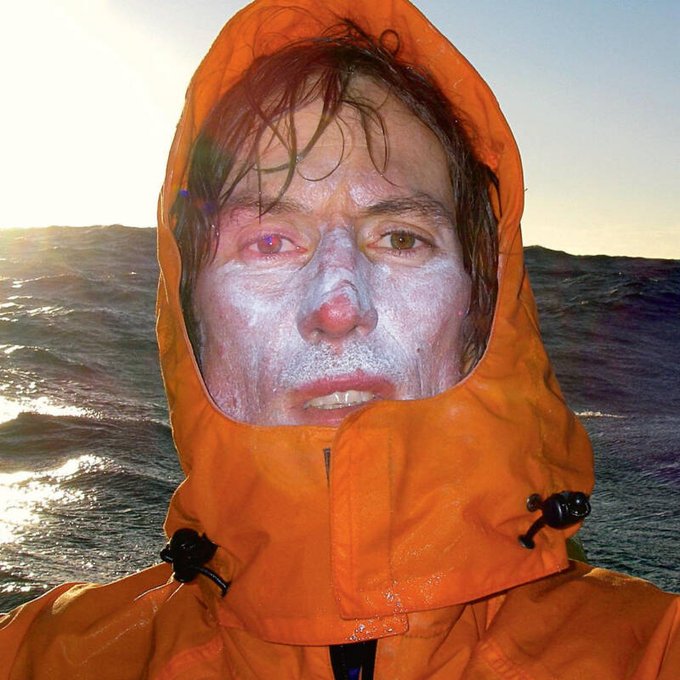
Most of us have a friend we haven’t called in years. We tell ourselves it’s fine — they’re out there somewhere, and that’s enough. Actor and author Andrew McCarthy told himself exactly the same thing, right up until his son’s blunt, kitchen-table question stopped him cold: “You don’t really have any friends, do you, Dad?”
That single sentence sparked one of the most honest, road-worn explorations of male friendship in recent memory. McCarthy, best known for his Brat Pack roles in Pretty in Pink and St. Elmo’s Fire, drove nearly 10,000 miles across 22 states — through Appalachia, the Mississippi Delta, the Chihuahuan Desert, and the Rocky Mountains — to understand what friendship truly means to men and why so many of us let it quietly slip away. The result is his book Who Needs Friends: An Unscientific Examination of Male Friendship Across America, and the lessons he carried home from that journey are ones most American men could genuinely use right now.
The Moment That Started Everything
Andrew McCarthy’s cross-country friendship journey didn’t begin on a highway. It began at his kitchen table. His son Sam was strumming a guitar and sharing a story about one of his own buddies when he turned to his father and made an offhand observation that stung more than any critic’s review ever had.
McCarthy initially brushed it off. He insisted he had friends — he just didn’t see them very often. He knew they were out there. Wasn’t that enough?
“When he left, I sat in the kitchen and thought — it’s not enough,” McCarthy later explained. “I need to go see my friends.”
What started as a simple drive to visit a friend in Baltimore who was going through a rough patch gradually grew into something much larger. He pushed on to Kentucky. Then farther. Then farther still. The conversations he had along the way kept building momentum, and McCarthy kept driving — eventually covering nearly 10,000 miles over six weeks, despite admitting he doesn’t particularly enjoy being behind the wheel.
The trip, as he describes it, was accidental in its scale but entirely deliberate in its purpose.
Why Men Let Friendships Drift — and Why That Matters
One of the most striking things Andrew McCarthy discovered on his journey to reconnect with old friends was how universal the problem really is. Across the country, men from every walk of life — cowboys, blues musicians, preachers, teenagers, retired cops — told him the same story: friendships that once felt essential had slowly been pushed aside by work, marriage, kids, and distance.
McCarthy doesn’t blame anyone for it. He had lived it himself.
“These guys were so important to me when I was young,” he said. “Then they all moved away, and I was the last one standing.”
The cultural forces behind this drift are real and deep-rooted. As McCarthy explores in the book, male friendships in 19th-century America were far more emotionally intimate than we might expect — men were openly affectionate with one another in ways that would raise eyebrows today. Then, sometime around the post–World War II era, a new masculine ideal took hold. Vulnerability became weakness. Emotional openness became something to avoid. John Wayne certainly wasn’t asking his friends how they felt.
That cultural shift left generations of men without any real model for keeping close friendships alive. And the consequences are measurable: male loneliness in America has become a genuine public health concern, with research consistently linking social isolation to serious physical and mental health risks.
What Andrew McCarthy Learned About Male Friendship on the Road
The Andrew McCarthy friendship and loneliness story is not a bleak one — not by a long shot. What he discovered on the road was that men genuinely want to connect. They just need a little permission to do it.
“People are reluctant to talk about friendship because it carries no urgency and no monetary value,” McCarthy writes. “But give them an opening, and they often surprise you.”
One of the most memorable moments came at a fast-food restaurant in Ohio, where McCarthy struck up a conversation with two retired cops in their seventies. He had nearly dismissed them as just a couple of old guys nursing their coffee. Instead, they gave him one of the most moving glimpses of male friendship he encountered on the entire trip.
“We started telling each other ‘I love you,'” the men shared with him. “I say it to my wife. I say it to my kids. Why shouldn’t I say it to my best friend of 60 years? It’s not a strange thing.”
That kind of ease and unapologetic tenderness — two men openly acknowledging what they meant to each other — stayed with McCarthy long after he drove away. By the time the journey ended, he was telling his own friends directly how much they mattered to him.
“It gave me the courage to be vulnerable with my friends — to say, ‘Hey, you mean a lot to me,'” he reflected. “That turned out to be a bigger deal than I expected.”
The Difference Between Having Friends and Actually Showing Up for Them
A central insight from Andrew McCarthy’s travel story about friendship is the gap between having friends in theory and actually being a friend in practice. McCarthy is candid about the fact that he had plenty of people he considered friends — but that wasn’t the same as actively nurturing those relationships.
“There are a lot of people I’ve known for years, and I’m warm with all of them,” he said. “But they’re not close friends in any real sense.”
Hollywood, he points out, is particularly good at producing surface-level connections. Bonds form fast and feel real on a film set, then dissolve just as quickly once the shoot is over. Most of McCarthy’s genuinely meaningful friendships existed well outside the industry.
The road trip itself became its own kind of lesson. McCarthy took back roads instead of interstates. He let the journey be slow and occasionally uncomfortable. He stayed wherever the road took him. And he came to believe that the sheer physical effort — actually driving thousands of miles to appear at someone’s door — said something to his friends that a phone call or a text never could.
“I can’t believe you drove all this way just to see me,” more than one of them told him.
That showing up mattered. Not just to them — to him, too.
What Friendship Really Offers — and Why “Safety” Is the Right Word
When McCarthy asked the men he met across the country to name the single most important quality in a friendship, most answered with trust. But McCarthy came back with a slightly different word: safety.
“Safety includes trust, but it goes a step further,” he explains. “You need to feel like you’re in a space where you can say something real to someone — and they’ll come back with, ‘Yeah, I know exactly what you mean.'”
It’s a small distinction with real weight behind it. Trust is about reliability. Safety is about the feeling you get when you’re in someone’s presence — the sense that you can set down the armor for a while and nothing bad will come of it. That’s the quality that makes friendship genuinely restorative, and it’s what McCarthy says he rediscovered mile by mile.
“The trip reminded me what actually matters in my life — that feeling of safety I get from my real friends,” he said. “Knowing someone has your back. That’s something I’d been going without for a long time.”
For a man who readily describes himself as a lone wolf, that was a significant thing to say out loud.
Lessons American Men Can Take From McCarthy’s Journey
Andrew McCarthy’s story of reconnecting with old friends isn’t just a personal memoir — it reads almost as a quiet challenge to a generation of men who have let their closest friendships quietly fade without ever meaning to. A few lessons stand out clearly:
Make the effort visible. McCarthy drove thousands of miles because doing something concrete told his friends the relationship was worth it. You don’t need to cross the country — but an actual visit, a real phone call, or even a handwritten letter means more than a liked photo ever will.
Say what you actually mean. Two retired cops in an Ohio fast-food restaurant demonstrated something most men keep locked away: telling a friend, out loud and without embarrassment, that you love them. It felt strange to McCarthy at first. Then it felt like something he should have been doing all along.
Stop letting distance be the reason. Many of McCarthy’s friendships had existed in name only for years. Physical distance doesn’t have to mean emotional distance. He proved that with every mile of the trip.
Check in before there’s a crisis. The trip started because McCarthy visited a friend in a difficult time and felt guilty realizing he hadn’t even known things were bad. Staying in regular contact isn’t just a nice gesture — it’s how you actually remain part of someone’s life.
Be patient with it. Friendships don’t run on autopilot. They need time, consistency, and the occasional inconvenience. That’s not a burden — it’s the point.
FAQ:
What is Andrew McCarthy’s new book about? Who Needs Friends: An Unscientific Examination of Male Friendship Across America follows McCarthy’s nearly 10,000-mile road trip across 22 states, during which he visits old friends and talks with men from all walks of life about the state of male friendship in America. The book was published on March 24, 2026.
What inspired Andrew McCarthy to write about male friendship? The starting point was a comment from his son Sam, who casually observed over dinner that McCarthy didn’t really have friends — not in any active, present sense. That remark stayed with McCarthy and eventually sent him on a cross-country journey of reflection and reconnection.
What did Andrew McCarthy take away from his cross-country trip? He came home with the understanding that he genuinely needs his friends — not just in an abstract way, but in the day-to-day texture of his life. He also found that men across America are far more open to honest conversation about connection than our culture typically gives them credit for.
Why do men tend to struggle more with friendship than women? McCarthy traces it back to cultural conditioning around masculinity — specifically the post–WWII idea that vulnerability is weakness. Women are generally encouraged to invest in their relationships. Men, on the other hand, often operate on the assumption that a friendship will hold itself together without much tending, and are often surprised when it doesn’t.
What is the most important quality in a friendship, according to Andrew McCarthy? Safety. More than trust on its own, safety is the feeling of being able to say something real to another person and know you’ll be met with genuine understanding — not judgment, not advice, just recognition.
It’s Never Too Late to Pick Up the Phone
What a 10,000-mile trip taught actor Andrew McCarthy about friendship is something most of us already feel somewhere deep down but rarely act on: the people who matter most to us deserve more than the comfortable assumption that they already know it.
McCarthy drove across America to prove that — to himself and to them. Most of us won’t take a six-week road trip to do the same. But the call you’ve been putting off? The visit you keep meaning to make? The friend you haven’t really spoken to in longer than you’d like to admit? Every one of those is within reach today.
For More Information

Related Article
What Happened Between Druski and Erika Kirk? The Viral Sketch Everyone Is Talking About
Mega Millions Results March 24, 2026 — Winning Numbers, Jackpot Update & Prize Breakdown
Sora Shutting Down: The Real Reason OpenAI Pulled the Plug — And What to Use Instead