


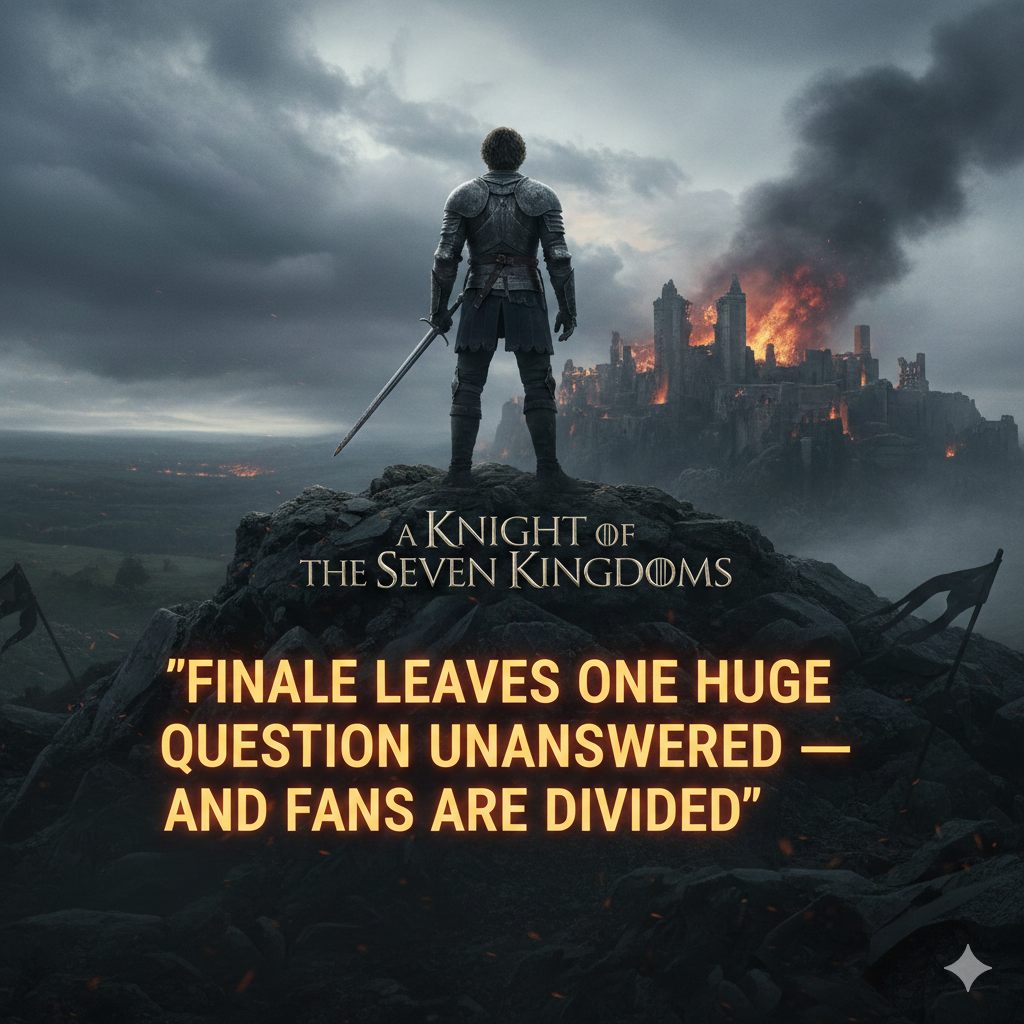
The finale of A Knight of the Seven Kingdoms didn’t end with a massive battle or shocking death — instead, it left fans debating one powerful question: Was Dunk ever truly a knight at all?
Rather than delivering a simple resolution, the episode closes on an emotional and morally complex note, forcing viewers to reconsider everything they believed about the series’ heroic lead. The ending stays true to the spirit of George R. R. Martin’s world, where honor is often more complicated than titles or traditions.
A Quiet Finale With a Big Emotional Impact
Unlike the political chaos audiences associate with Westeros stories, the finale focuses on character rather than spectacle. The story centers on Ser Duncan the Tall — better known as Dunk — as he faces scrutiny over his past and his legitimacy as a knight.
Throughout the season, Dunk has tried to live by the ideals of knighthood: protecting the weak, choosing compassion, and standing against injustice. But the finale introduces lingering doubts about whether he was ever officially knighted in the first place.
Instead of offering a clear confirmation, the episode intentionally leaves space for interpretation, turning the mystery into the emotional core of the story.
The Knighthood Mystery Explained
The finale strongly hints that Ser Duncan the Tall may not have received a formal knighting ceremony before his former mentor died. In Westerosi tradition, being a knight requires an official ritual — something Dunk’s backstory now casts into uncertainty.
However, the show carefully avoids labeling him a fraud. Instead, it asks a deeper question: does knighthood come from ceremony, or from actions?
Dunk consistently behaves more honorably than many nobles who carry the title legitimately. His courage, empathy, and willingness to defend others make him embody the ideals knights are supposed to represent — even if the paperwork, so to speak, might be missing.
This moral ambiguity is exactly what makes the finale resonate with viewers.
Egg’s Role and the Future King’s Perspective
A key emotional layer comes from Dunk’s bond with his young squire, Egg, who viewers know will eventually become King Aegon V Targaryen.
Egg’s unwavering belief in Dunk highlights the theme that true leadership is learned through example, not status. The finale subtly shows how Dunk’s values help shape Egg’s understanding of justice and compassion — qualities that later define his reign.
Their relationship remains the emotional anchor of the series, grounding the larger political world in personal loyalty and friendship.
A Different Kind of Westeros Story
Fans expecting a traditional Game of Thrones-style climax may find the finale surprisingly restrained. Instead of dramatic betrayals or large-scale warfare, the episode chooses introspection.
This approach reflects the show’s overall tone. A Knight of the Seven Kingdoms tells smaller, human stories set within a massive fantasy world. The stakes are personal rather than global, focusing on identity, honor, and moral choices.
The finale reinforces that this series is less about power struggles and more about what it means to be good in a flawed society.
Performance Highlights Elevate the Ending
Critics have praised the performances for carrying the emotional weight of the finale. The cast brings subtlety and sincerity, allowing quiet conversations to feel as impactful as battles.
Actor Sam Spruell, among others, helps add tension and realism to the story’s conflicts, emphasizing how reputation and perception shape life in Westeros.
Rather than relying on spectacle, the episode succeeds because viewers become invested in Dunk’s internal struggle — his fear of being exposed and his desire to live up to the ideals he admires.
Why the Ambiguous Ending Works
The decision not to fully confirm Dunk’s knighthood is intentional. By leaving the truth uncertain, the show invites audiences to reflect on the meaning of honor itself.
In a world where many knights abuse their power, Dunk represents something rare: integrity without privilege. The finale suggests that titles may matter less than choices, and that greatness often comes from ordinary people trying to do the right thing.
This thematic focus aligns perfectly with the broader message of Martin’s storytelling — heroes are defined by actions, not labels.
What the Ending Means Going Forward
The unresolved mystery also sets up future seasons. Questions about Dunk’s past could resurface, potentially challenging his reputation or forcing him to confront his identity more directly.
At the same time, his growing bond with Egg hints at larger historical events yet to come, connecting this smaller story to the wider history of Westeros.
Rather than closing the book, the finale feels like the beginning of a longer journey.
⭐ Conclusion
The A Knight of the Seven Kingdoms finale proves that powerful storytelling doesn’t always need explosive moments. By focusing on identity, honor, and personal integrity, the episode delivers a thoughtful ending that lingers long after the credits roll.
Whether Dunk is officially a knight may never be fully answered — but the finale makes one thing clear: sometimes, being honorable matters far more than being recognized.
For More Read
Army Kills World’s Most Wanted Drug Lord — Hours Later, Mexico Erupts in Chaos
BAFTAs 2026 Shock: Alan Cumming Forced to Halt Ceremony After Unexpected Outburst
Paradise Season 2 Just Dropped — And Fans Are Shocked by This Massive Twist
Hard Launch Alert! Paul Mescal & Gracie Abrams Steal the Spotlight at the 2026 BAFTAs
For More Information
