


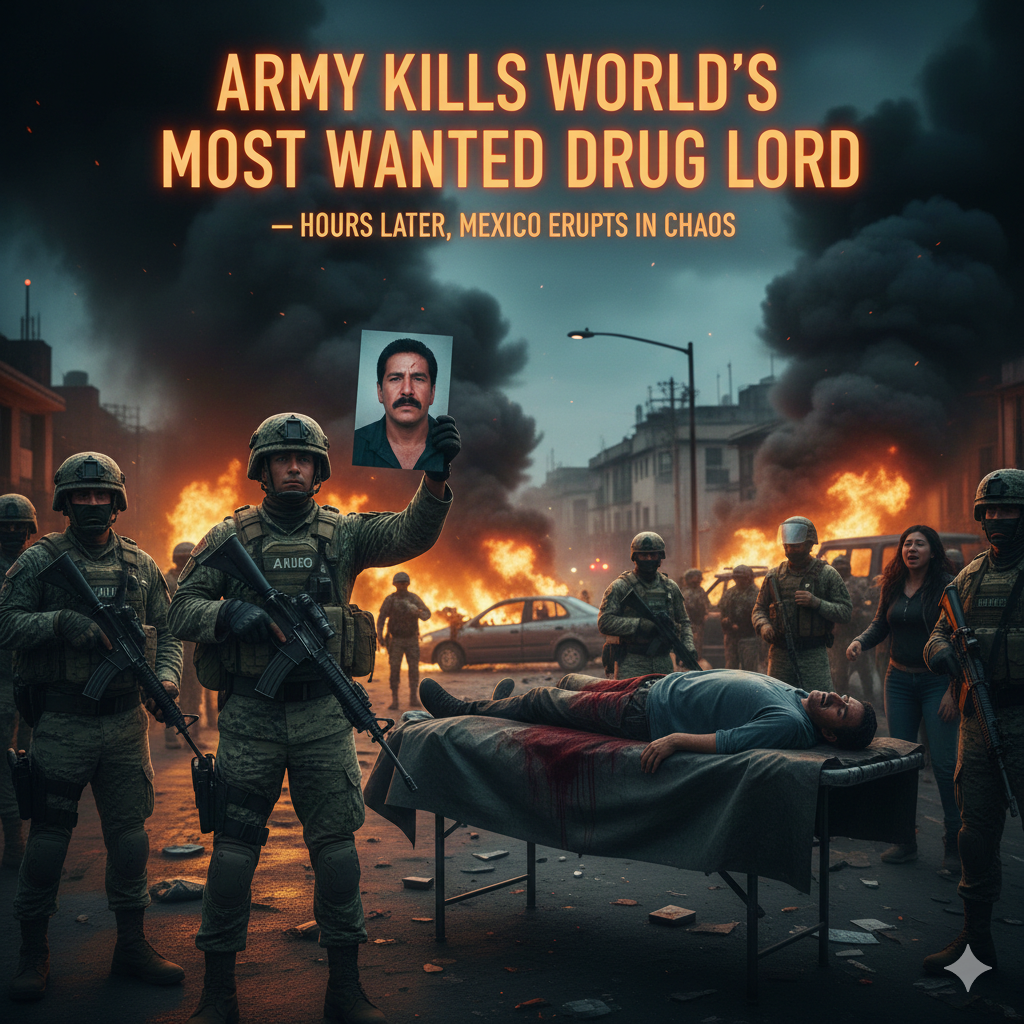
A Major Blow to Organized Crime Sparks Nationwide Tension
Mexico is facing a tense and uncertain moment after a dramatic military operation led to the death of one of the country’s most powerful cartel leaders. While officials describe the mission as a significant victory against organized crime, the aftermath has raised serious fears of escalating violence.
The operation targeted Nemesio Rubén Oseguera Cervantes, widely known as “El Mencho,” the head of the Jalisco New Generation Cartel, a criminal group considered among the most dangerous in the world. His death has sent shockwaves across the country and triggered an immediate security response.
Military Operation Followed by Rapid Unrest
Soon after news of the operation spread, authorities reported violent reactions in several regions. Groups believed to be linked to the cartel set up roadblocks, burned vehicles, and attempted to disrupt transportation routes.
Highways were temporarily shut down, and emergency services were deployed to restore order. Residents in affected areas described scenes of confusion and fear as smoke rose from blocked roads and security forces increased patrols.
Major cities in western Mexico, including Guadalajara, experienced heightened security measures as officials worked to prevent further escalation.
Security Alerts and International Warnings
The violence prompted international concern, leading to official safety warnings for foreign nationals. The U.S. diplomatic mission issued a security alert advising citizens to remain indoors and avoid unnecessary travel while operations continued.
Authorities warned that conditions could change quickly due to ongoing enforcement actions. Some public transportation services faced disruptions, and travelers were urged to monitor official updates before moving through affected regions.
The alerts highlighted how cartel-related incidents can quickly impact both residents and visitors, especially in areas with strong criminal influence.
Why the Cartel Leader Mattered
El Mencho rose from a relatively unknown figure to lead one of Mexico’s fastest-growing criminal organizations. Under his leadership, the cartel expanded its reach across multiple states and international drug routes.
The organization became known for its aggressive tactics and strong operational structure, allowing it to compete with older and more established criminal groups. Authorities in Mexico and abroad had long viewed him as a central figure behind large-scale drug trafficking operations.
For years, capturing or eliminating him was considered a key objective in efforts to weaken cartel networks.
Experts Warn of a Dangerous Power Vacuum
Despite the operation being viewed as a strategic success, analysts caution that the period following a cartel leader’s death can be especially unstable.
When leadership suddenly disappears, rival factions often compete to take control. These internal struggles can lead to clashes between groups seeking territory, resources, and influence.
Security specialists say violence sometimes increases temporarily after such events, as criminal organizations reorganize and test government responses.
Government Faces Critical Challenge
Mexican authorities now face the complex task of maintaining stability while preventing retaliation. Increased military and police presence has been reported in several regions, with officials emphasizing that public safety remains the top priority.
The government aims to stop coordinated attacks before they spread further, while also reassuring citizens that institutions remain in control.
At the same time, communities affected by cartel activity remain cautious, aware that sudden changes in criminal leadership can reshape local security conditions.
What Happens Next?
The future of the cartel remains uncertain. Some analysts believe a successor could quickly consolidate power, allowing operations to continue with little disruption. Others warn that fragmentation within the organization could spark prolonged conflict.
Either outcome carries risks. A unified cartel could remain a powerful force, while internal divisions might create multiple smaller but equally violent groups.
For ordinary citizens, the immediate concern is whether calm will return — or whether retaliation will continue in the days ahead.
Conclusion: A Historic Moment With Uncertain Consequences
The death of El Mencho represents one of the most significant moments in Mexico’s fight against organized crime in recent years. It signals the government’s willingness to confront powerful criminal networks head-on.
However, history shows that removing a cartel leader rarely ends violence overnight. Instead, it often marks the beginning of a fragile transition period filled with uncertainty.
As security forces remain on alert and communities watch closely, Mexico now enters a critical phase — one that will determine whether this operation leads to lasting stability or a new wave of cartel conflict.
For More Read
For More Information
