


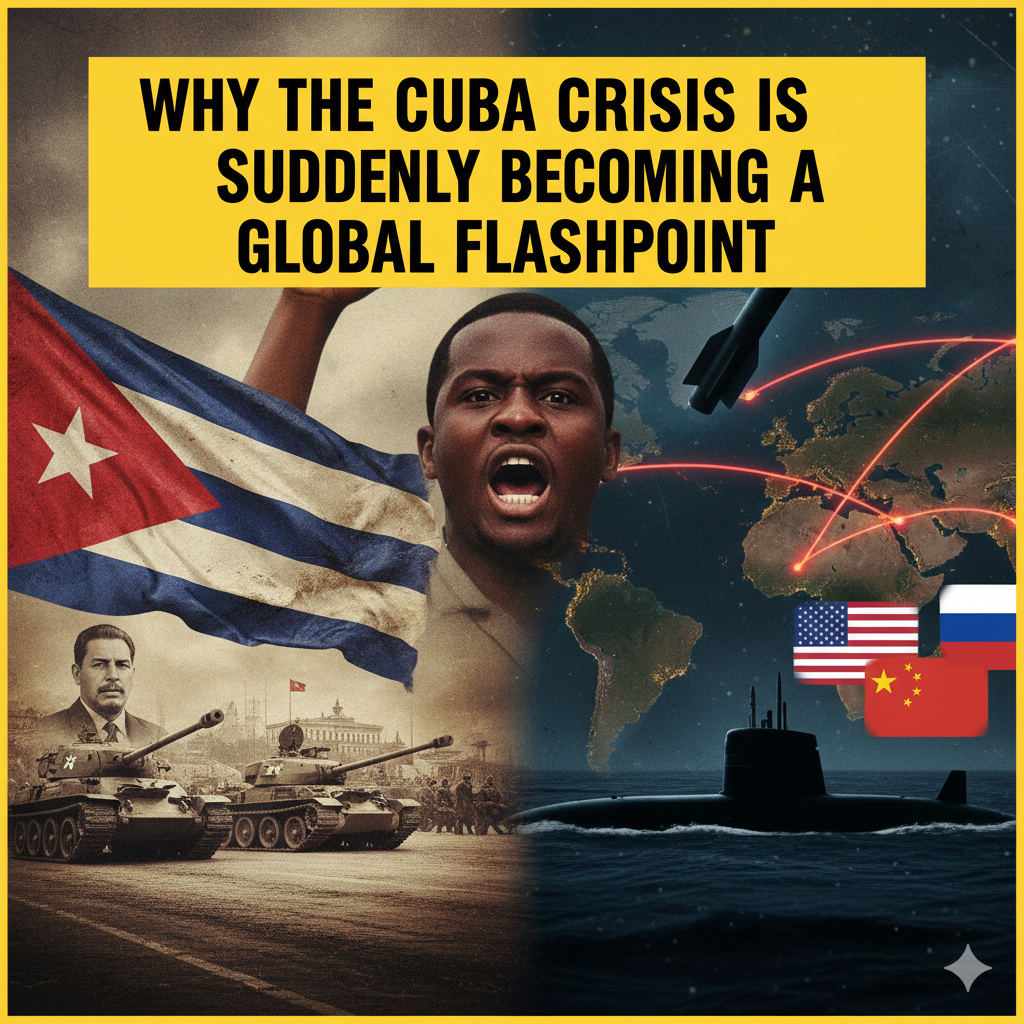
The Caribbean is once again at the center of global attention — and this time, it’s not because of tourism or trade. Growing pressure from the United States on Cuba, combined with rising military activity in the region, has sparked serious concern among international leaders, raising fears of economic collapse, humanitarian fallout, and widening geopolitical divisions.
As tensions escalate, Caribbean nations and global observers are warning that the situation could reshape regional stability for years to come.
Why Cuba Is Facing Increasing Pressure
Cuba’s economic crisis has deepened dramatically in recent months, driven in part by long-standing US sanctions and tightening financial restrictions. The decades-old US embargo — one of the longest trade restrictions in modern history — already limits Cuba’s access to international markets, investment, and banking systems. (Wikipedia)
These measures affect nearly every sector of the Cuban economy, from energy imports to food supply chains. Experts say the island’s heavy dependence on foreign fuel and currency makes it particularly vulnerable when restrictions intensify.
According to international assessments, shortages of fuel and resources have disrupted agriculture, transportation, and healthcare operations, worsening daily life for ordinary citizens. (Wikipedia)
Schools have faced closures, public transit has been reduced, and even waste collection services have struggled due to fuel shortages — signs of how deeply the crisis has penetrated everyday society.
Humanitarian Concerns Begin to Grow
The worsening economic conditions are now raising humanitarian alarms.
International organizations warn that supply disruptions threaten food production and water systems, creating risks for vulnerable communities. Hospitals have also faced operational challenges as energy shortages affect essential services. (Wikipedia)
Observers argue that while sanctions aim to pressure governments politically, the immediate consequences often fall hardest on civilians. This has fueled renewed debate among global leaders over whether economic pressure is achieving political goals or worsening humanitarian outcomes.
Military Activity Adds to Regional Anxiety
Economic tensions are unfolding alongside increased US military operations in parts of the Caribbean linked to anti-drug and regional security missions. These actions have drawn mixed reactions across Latin America and Caribbean nations.
Some governments have supported stronger enforcement against organized crime, while others warn that military interventions risk destabilizing the region and violating sovereignty principles. (Wikipedia)
Several leaders have emphasized that the Caribbean should remain a “zone of peace,” urging diplomacy instead of forceful escalation. Regional cooperation groups have repeatedly called for dialogue and multilateral solutions to avoid broader conflict. (Wikipedia)
CARICOM Leaders Voice Concerns
At recent regional discussions, Caribbean Community (CARICOM) leaders expressed unease about rising geopolitical pressure and potential spillover effects.
Smaller island nations worry that instability could disrupt trade routes, tourism revenue, and migration patterns — all vital to their economies. Any escalation between major powers in the Caribbean, analysts say, could quickly ripple across the entire region.
Diplomats have urged Washington to balance security objectives with economic and humanitarian considerations, emphasizing that regional stability depends heavily on cooperation rather than confrontation.
The Bigger Geopolitical Picture
The current situation reflects broader global tensions, where economic sanctions and military strategies increasingly overlap with humanitarian and diplomatic concerns.
Historically, US-Cuba relations have remained strained since the Cold War era, shaped by ideological differences and political disputes following the Cuban Revolution. The embargo, introduced in the early 1960s, continues to define the relationship today. (Wikipedia)
However, analysts note that today’s crisis is unfolding in a far more interconnected world. Economic shocks now spread faster across borders, and regional alliances play a larger role in shaping diplomatic responses.
What Happens Next?
The future of the crisis remains uncertain.
If economic conditions worsen, Cuba could face deeper migration pressures and humanitarian challenges, potentially affecting neighboring countries. Meanwhile, continued military activity risks escalating political tensions across Latin America and the Caribbean.
Many global observers believe diplomacy will be critical in the coming months. Without meaningful dialogue, the region could enter a prolonged period of instability — one that extends far beyond Cuba itself.
Conclusion
The growing standoff surrounding Cuba highlights how economic pressure, humanitarian concerns, and regional security are increasingly intertwined. While the United States aims to pursue strategic and political objectives, Caribbean leaders are warning that the broader consequences may reshape the region’s future.
As tensions continue to rise, the world is watching closely — because what happens in the Caribbean now could influence global diplomacy far beyond its shores.
For More Read
Underdogs Rewrite History as Bodø/Glimt Deliver Champions League Earthquake
Jonathan Kuminga’s Explosive Hawks Debut Has Warriors Fans Asking One Big Question
Lakers Make Major Front Office Decision — Rob Pelinka’s Future Finally Revealed
Lakers Blow Late Lead in Shocking Collapse — Magic Steal Win in Final Seconds
For More Read
