


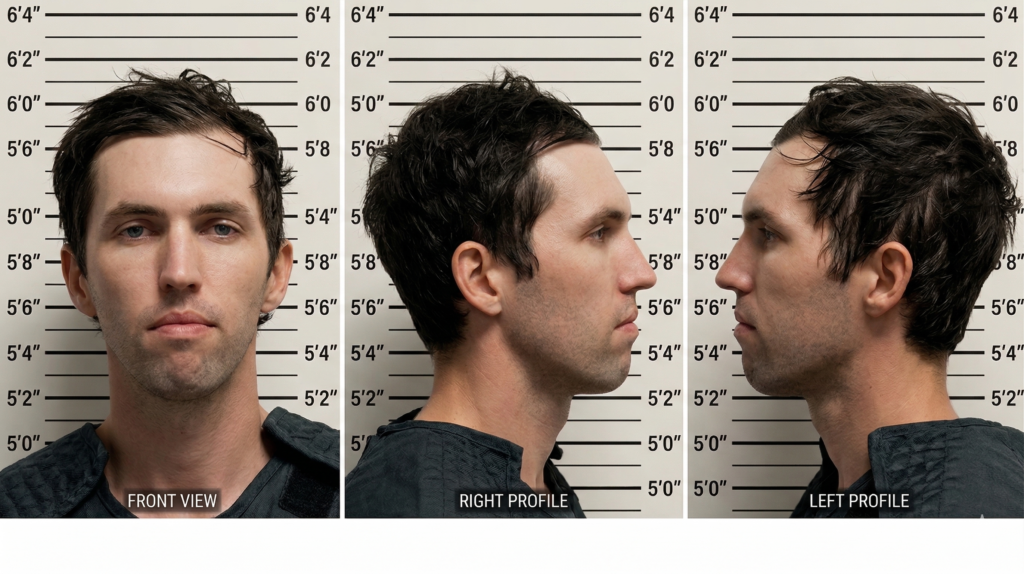
Tyler James Robinson was 22 years old when he was taken into custody in September 2025. A Utah resident, Robinson was reportedly a student at Utah Valley University — the very institution where the shooting occurred.
He surrendered to police on September 11, 2025, one day after Kirk was killed. As of this writing, Robinson has not yet formally entered pleas, since his arraignment is set to take place after his preliminary hearing wraps up. It is important to note that, under the United States legal system, Robinson is presumed innocent unless and until a jury finds him guilty beyond a reasonable doubt.
Prosecutors have brought the following charges against him:
- Aggravated murder — a capital charge
- Felony use of a firearm
- Obstruction of justice
- Witness tampering
Prosecutors have also attached victim-targeting enhancements to several counts and included an aggravating factor — specifically, that the alleged offense occurred in the presence of a child. Should Robinson be convicted on the capital murder charge, he could face the death penalty.
September 10, 2025: What Happened the Night of the Shooting
A Public Event Turns Tragic
Charlie Kirk, then 31 years old, was speaking at an outdoor amphitheater on the Utah Valley University campus when he was struck by a single gunshot. According to investigators, the shot was fired from a building standing roughly 140 yards from the stage. Kirk was rushed to medical care but did not survive.
The scene that followed was captured on dozens of cellphones by people in the audience — footage that was later entered as evidence during court proceedings. In the days immediately after the shooting, investigators pulled together more than 40 separate witness statements, along with digital records, surveillance footage, and forensic material gathered from the crime scene.
What Evidence Prosecutors Are Relying On
Court filings have detailed the evidence the state intends to use against Tyler Robinson. According to those documents, that evidence includes:
- A bolt-action rifle found in a wooded area near the shooting location
- DNA collected from the suspected weapon and surrounding items, which prosecutors say is consistent with Robinson’s genetic profile
- A spent cartridge casing and several unfired rounds recovered at the scene
- Cartridges bearing engravings tied to internet memes and video game references — and, based on court testimony, reportedly similar items found during a search of Robinson’s residence
- A reported confession made directly to law enforcement
Robinson’s attorneys have not yet been able to fully contest this evidence in open court, since the case has not progressed to the preliminary hearing phase.
Inside the Tyler Robinson Investigation
Moving Toward a Death Penalty Case
Following Robinson’s arrest, the Utah County Attorney’s Office wasted little time. Within the 60-day window that Utah law requires, prosecutors formally filed their notice of intent to seek the death penalty — a move that immediately drew pushback from Robinson’s legal team.
His attorneys argued that the decision to pursue capital punishment was rushed and may have been shaped by the emotional weight of the case rather than a dispassionate assessment of the legal standards required. Prosecutors pushed back firmly, insisting the facts and circumstances of the alleged crime fully justify a capital filing and that waiting longer would have compounded the injustice already done to Kirk’s family.
A Conflict-of-Interest Fight That Shook the Prosecution
One of the more striking subplots in the Tyler Robinson case emerged in early 2026, when the defense discovered that a senior deputy prosecutor handling the case — Chad Grunander — had an 18-year-old child who had been present at the UVU event on the night of the shooting.
Robinson’s attorneys moved to disqualify the entire Utah County Attorney’s Office from the case. Their argument was direct: Grunander’s family connection to the event created an appearance of bias that could not be remedied, especially given his involvement in the death penalty decision.
The two-day evidentiary hearing that followed was contentious. The prosecution responded with testimony from both Grunander and his child, who was a student at UVU. The younger Grunander testified that they had not personally witnessed the shooting, had not seen anyone matching Robinson’s description, and had already left campus before investigators moved in. Grunander himself testified that he learned of his child’s presence there through a text message — while he was at a separate event approximately 60 miles away.
On February 24, 2026, Fourth District Judge Tony Graf sided with the prosecution, ruling that the Utah County Attorney’s Office could remain on the case. The judge found no credible evidence that the child’s presence at the event had influenced the office’s legal decisions in any meaningful way.
Tyler Robinson Case Update: Where Things Stand Right Now
A Preliminary Hearing on the Calendar — and a Motion to Push It Back
As of late March 2026, a preliminary hearing in the Tyler Robinson case is set for May 18, 19, and 21. For those unfamiliar with the term — a preliminary hearing is not a trial. It is an earlier stage in which the prosecution presents enough evidence for a judge to determine whether probable cause exists to send the case to trial. Think of it as a threshold moment: the prosecution must show the court there is a reasonable basis to move forward.
On March 27, 2026, however, Robinson’s defense team filed a motion to postpone the May hearing, or cancel it outright and reschedule for a later date. The core of their argument is that they have not yet received all the evidence they are legally entitled to. Specifically, forensic materials from three agencies — the FBI, the ATF, and the Utah State Bureau of Investigation — had not been handed over to the defense at the time of filing.
The defense also pointed out that the discovery already in their possession would take several hundred hours to work through properly, and that Robinson has a constitutional right to have fully prepared attorneys standing beside him before any significant court proceeding takes place.
As of publication, the state had not yet filed a formal response to the postponement request.
Cameras in the Courtroom: Still an Open Question
Separately, Judge Graf ruled in March 2026 on a motion filed by Robinson’s defense requesting that certain case documents be kept away from the public eye. The defense argued that the case’s national reach created a genuine risk of tainting any future jury pool.
Graf was not persuaded. He ruled that court documents carry a strong presumption of public access under the law, and that the defense had not made a compelling enough case to justify sealing the records. The question of whether cameras and audio equipment will be allowed inside the courtroom itself remains open — a hearing specifically on that issue is scheduled for April 17, 2026.
The Road Ahead: Understanding What Comes Next in the Tyler Robinson Case
Preliminary hearing — If it goes forward in May, or whenever it is eventually rescheduled, this is the stage where the prosecution presents its key evidence and witnesses before a judge. The defense gets to cross-examine witnesses. The goal for prosecutors is to clear the probable cause bar; the goal for the defense is to undercut that showing.
Arraignment and formal pleas — Robinson has not yet entered a formal plea. That happens after the preliminary hearing, once the case officially moves toward trial.
Pre-trial motions — In a capital case with this much evidence and this many disputed issues, a lengthy pre-trial battle is almost certain. Expect fights over what evidence can be shown to a jury, whether expert testimony will be allowed, and how the trial itself will be structured.
Trial — If the case reaches a jury, it will proceed in two distinct phases. The first phase determines guilt or innocence. If Robinson is convicted on the capital charge, a second phase takes place separately to decide the sentence.
Capital cases in the United States routinely take years from arrest to trial. The pace here is not unusual — it reflects how seriously the courts treat proceedings where someone’s life is potentially at stake.
FAQ:
Q.1. Who is Tyler Robinson?
ANS: Tyler James Robinson is a 22-year-old man from Utah who is accused of fatally shooting Charlie Kirk, the founder of Turning Point USA, at Utah Valley University in Orem, Utah, on September 10, 2025. He turned himself in to police the next day. Robinson has not yet entered a formal plea and is legally presumed innocent until proven guilty.
Q.1. What charges does Tyler Robinson face?
ANS: Robinson has been charged with aggravated murder — a capital offense — along with felony use of a firearm, obstruction of justice, and witness tampering. Prosecutors have also added victim-targeting enhancements to several charges. A conviction on the murder charge could result in a death sentence.
Q.3. When is Tyler Robinson’s next court date?
ANS: A preliminary hearing is currently scheduled to begin on May 18, 2026, and run across three days. However, as of late March 2026, Robinson’s defense team has asked the court to postpone or vacate that hearing, arguing that not all required forensic evidence from the FBI, ATF, and Utah State Bureau of Investigation has been turned over to the defense.
Q.4. What evidence has been collected in the Tyler Robinson investigation?
ANS: According to court filings, investigators gathered DNA samples from the suspected weapon, a bolt-action rifle found near the scene, spent and unspent ammunition, extensive cellphone video from witnesses, over 40 formal witness statements, and what is described as a confession from Robinson to law enforcement. Both the FBI and ATF are contributing forensic analysis to the case.
Q.5. Will the Tyler Robinson trial be open to cameras?
ANS:That has not yet been decided. A hearing set for April 17, 2026, is specifically dedicated to resolving whether cameras and microphones will be permitted in the courtroom. Judge Graf has already ruled that written court documents must remain publicly accessible, but the question of live broadcast coverage is still being argued.
A Case That Has Captured the Country’s Attention
The Tyler Robinson case has few comparisons in recent American criminal history. A prominent public figure killed in front of thousands of people, a suspect who turned himself in the very next day, a death penalty filing, and a series of legal disputes that have kept the case in the news for months — it is the kind of story that forces people to pay attention, regardless of where they fall on the political spectrum.
The legal process ahead is still lengthy. The postponement motion, the April media hearing, and the enormous volume of forensic evidence being reviewed all point to a case that will occupy the courts well into 2026 and likely beyond. Whatever one’s views on the parties involved, Tyler Robinson is entitled to a full and fair trial — and every indication is that the Utah court system is working to provide exactly that.
For More Information
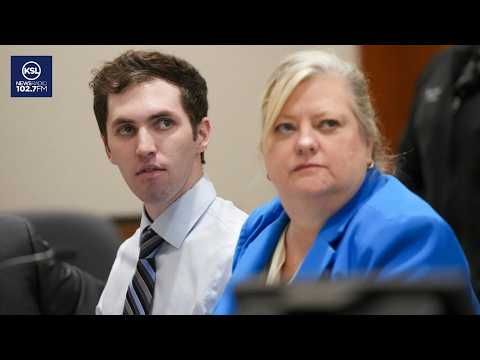
Related Article
Kid Rock Apache Flyby Near Nashville Protests Triggers Military Probe
Trump White House Ballroom Controversy: Costs, Security & 2026 Construction Debate
Who Is Braylon Mullins? The Rise of College Basketball’s Newest Star
Warriors vs Nuggets Odds: Denver Covers as Nuggets Win 116–93