
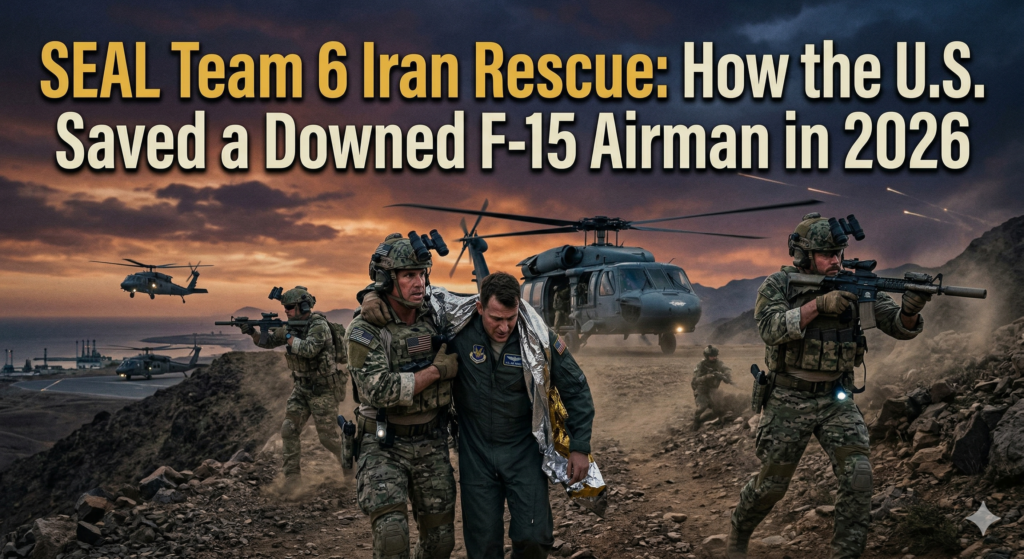
Everything begins with what happened on the afternoon of Friday, April 3, 2026, over the rugged terrain of southwestern Iran.
An F-15E Strike Eagle — one of the most capable strike aircraft in the U.S. Air Force’s fleet — was carrying out a combat mission over Iranian territory when it was hit by Iranian air defenses. The impact forced both crew members to eject: the pilot and the weapons systems officer, a colonel whose name has not been publicly released. Both men came down in hostile, largely uninhabited mountain country.
The downing was historically significant. It was the first time a U.S. fighter jet had been destroyed in combat by enemy fire in more than two decades, and it immediately became a defining moment in the ongoing conflict. Iran’s Islamic Revolutionary Guard Corps moved quickly to claim responsibility, crediting one of its air defense systems with the kill and releasing imagery it said showed debris from the aircraft.
The pilot was found and recovered within a matter of hours after the ejection. The colonel, however, had landed in a more isolated location — one that made immediate recovery impossible. What unfolded over the next 48 hours was a desperate, high-stakes race that neither side could afford to lose.
48 Hours Behind Enemy Lines
The story of how the colonel kept himself alive and out of Iranian custody for nearly two full days is, by itself, an extraordinary account of training applied under genuine pressure.
Rather than sheltering near the wreckage — which Iranian forces had already begun moving toward — the colonel put distance between himself and the most obvious search zones. He moved uphill into the mountains, eventually ascending a ridgeline that reached roughly 7,000 feet in elevation. He found concealment inside a rock crevice and stayed there, waiting and evading while both Iranian military units and civilian volunteers scoured the surrounding area below.
Tehran had not left the search to chance. The IRGC locked down large portions of the mountainous Kohgiluyeh and Boyer-Ahmad province and issued a public broadcast asking local residents to report any sightings of the missing American officer. A financial reward of approximately $60,000 was placed on information leading to his capture. Iranian drones swept the terrain. Ground patrols moved through the valleys.
At some point during his time in hiding, the colonel activated an emergency distress signal using his standard-issue survival communications equipment. That signal reached U.S. forces — but triggered an immediate problem that had to be resolved before anyone could move toward him.
The CIA Operation That Made the Rescue Possible
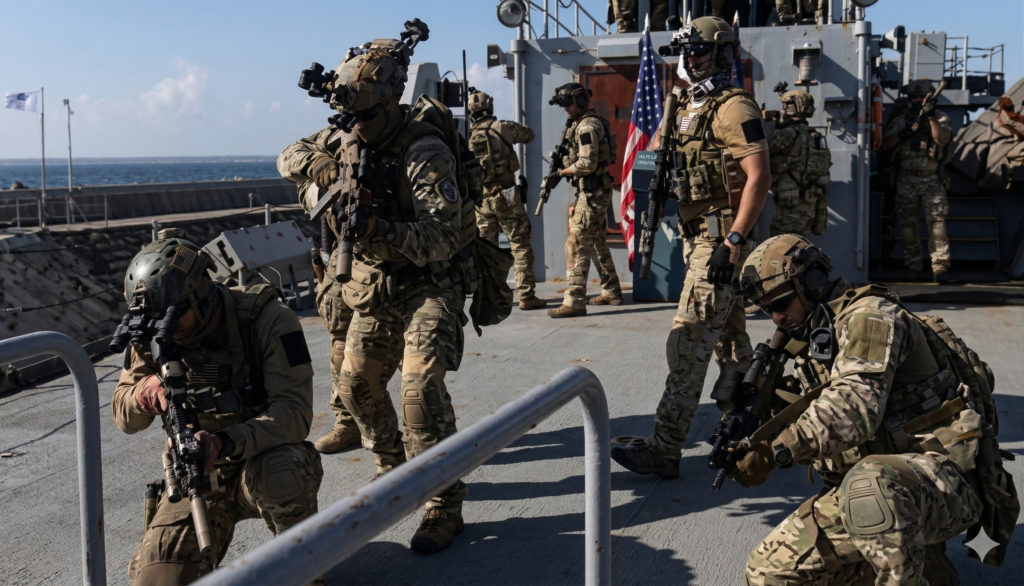
The intelligence dimension of the US airman rescued in Iran April 2026 operation deserves its own chapter, because without it, the physical rescue would likely never have succeeded.
When U.S. forces picked up the colonel’s distress signal, the immediate concern was whether it was real or a deliberate trap set by Iranian intelligence to draw in a rescue team. That uncertainty held the operation in place until Saturday morning, when the CIA was finally able to confirm — with assistance from Israeli intelligence, according to Reuters — that the signal was genuine and that no ambush was waiting. Israeli forces also temporarily suspended their own strikes in the area during this window to avoid interfering with the mission.
While that verification was underway, the CIA had already set a parallel operation in motion. Agency operatives began feeding coordinated false information through multiple channels inside Iran, planting the story that U.S. forces had already retrieved both crew members and were transporting the colonel out of the country through a coastal maritime route. The intent was to pull Iranian search resources away from the mountains — and according to officials who described the operation to American news outlets, it achieved exactly that.
Once the CIA had pinpointed the colonel’s exact location inside the mountain crevice and passed the coordinates to the Pentagon and the White House, the decision to launch was made without delay. One senior official described the pace to Fox News as follows: within eight hours of the green light, aircraft were in the air. Within twelve hours, U.S. forces were physically on the ground inside Iran.
SEAL Team 6 Goes In: The Rescue Operation Inside Iran
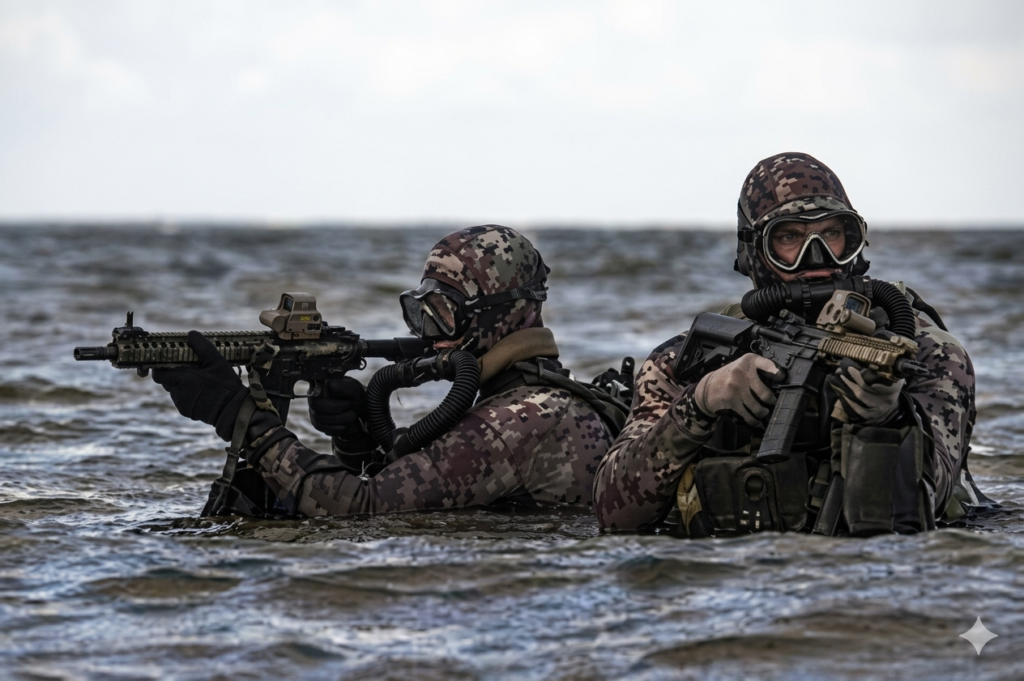
By any standard of measurement, the rescue mission that followed stands among the most operationally complex combat search and rescue operations ever attempted by U.S. forces.
The Size and Composition of the Force
What the U.S. assembled for this mission was not a small, quiet infiltration team. Officials described a force involving hundreds of military and intelligence personnel operating across multiple platforms simultaneously. Dozens of warplanes flew top cover and fire support throughout the operation. HH-60W Jolly Green II combat search and rescue helicopters transported special operations teams into the extraction area. HC-130J Combat King aircraft provided command, control, and refueling support overhead. The New York Times, citing an unidentified U.S. official, reported that Navy SEAL Team 6 was the unit specifically assigned to physically reach the colonel and bring him out.
The operation used an abandoned airfield located south of Isfahan in central Iran as a forward staging base — a logistically significant choice given that Isfahan is one of Iran’s most strategically sensitive cities, housing military installations, air defense infrastructure, and nuclear-related facilities.
When the Mission Extended Into Daylight
The original plan called for a nighttime extraction. Night operations reduce the enemy’s ability to track movement, and the cover of darkness was considered essential to the mission’s success. That timeline did not hold.
As U.S. special forces reached the colonel’s position and prepared to extract him, Iranian forces were already in close proximity. The engagement that followed was described by reporters on the ground as a significant firefight that pushed the operation well past its planned window, ultimately forcing it to continue into daylight — a far more exposed and dangerous situation for the rescue team. U.S. strike aircraft provided continuous fire support during this phase, targeting Iranian convoys attempting to converge on the extraction site.
The colonel was brought out alive, though seriously wounded. He and his rescuers were airlifted from Iranian territory. Two C-130 Hercules transport aircraft that became disabled at the forward staging location were destroyed by U.S. forces before departure to ensure they could not be captured and exploited by Iran. Several MH-6 and AH-6 special operations helicopters were also intentionally demolished at the site for the same reason.
Trump Announces the Result
Throughout Saturday, President Trump had been following the operation’s progress directly from the White House, alongside Joint Chiefs Chairman General Dan Caine and Defense Secretary Pete Hegseth. The operation was, as Trump later described it, being monitored in real time by the country’s senior military and civilian leadership.
When word came through that the colonel had been successfully extracted and was airborne, Trump went immediately to Truth Social. “WE GOT HIM!” was the opening. What followed was an extended personal statement in which Trump described the colonel as a “highly respected” officer who had been alone in “the treacherous mountains of Iran” while Iranian forces hunted him, and praised the men and women who carried out the mission as having accomplished something nearly without precedent.
A second post acknowledged that the colonel had been “seriously wounded,” adding that he would nonetheless be “just fine.” Trump announced a formal press conference with senior military officials in the Oval Office for Monday, April 6, at 1:00 p.m. ET, and framed the twin rescues — the pilot recovered on Friday and the WSO brought home over the weekend — as a historic first. “This is the first time in military memory that two U.S. pilots have been rescued, separately, deep in enemy territory,” the president wrote. He closed with the line: “WE WILL NEVER LEAVE AN AMERICAN WARFIGHTER BEHIND.”
The colonel was transferred to medical facilities in Kuwait following the rescue.
How Iran and U.S. Allies Responded
Internationally, the reaction split sharply along predictable lines.
Israeli Prime Minister Benjamin Netanyahu posted a personal statement congratulating Trump and drawing a direct connection between the American rescue and Israel’s own tradition of never abandoning its people in the field. Netanyahu, who was himself wounded in a rescue operation and lost a brother during the 1976 Entebbe raid, called the mission a demonstration that free nations can overcome seemingly impossible obstacles when they commit fully to the task.
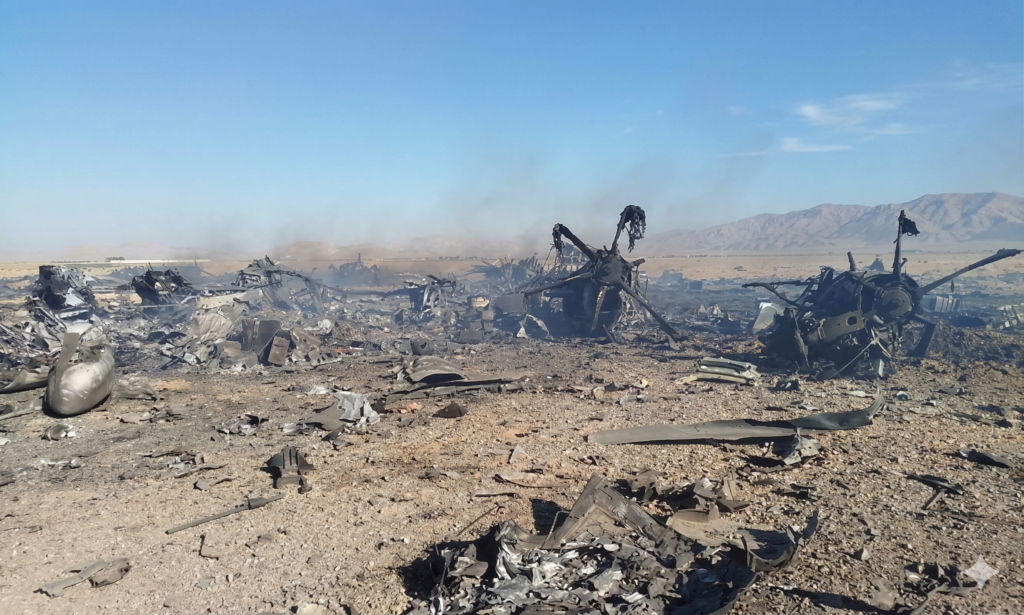
Iran pushed a very different narrative. State television aired footage that it claimed showed wreckage of American aircraft destroyed during the operation, presenting this as evidence of a failed mission. Iranian military spokesman Ebrahim Zolfaghari specifically cited two C-130s and two Black Hawk helicopters as having been destroyed. U.S. officials confirmed that aircraft were lost — but maintained that they had been deliberately disabled and destroyed by American forces themselves to prevent capture, not brought down by Iranian fire. Notably, Iranian authorities did not directly deny that the colonel had been successfully recovered and removed from their territory.
FAQ:
Q:1. What happened to the F-15E that was shot down over Iran? An F-15E Strike Eagle was hit by Iranian air defenses on Friday, April 3, 2026, during an active combat mission. Both crew members ejected over Iranian territory. The pilot was recovered the same day. The weapons systems officer — a colonel — spent more than 24 hours evading capture in the mountains before being rescued by U.S. special operations forces.
Q:2. Who carried out the rescue of the F-15 airman inside Iran? U.S. special operations forces conducted the extraction, with Navy SEAL Team 6 identified as the primary unit responsible for physically recovering the colonel. The ground operation was supported by dozens of American warplanes, combat search and rescue helicopters, and CIA operatives who executed an intelligence deception campaign inside Iran before and during the mission.
Q:3. What exactly was the CIA deception campaign in the Iran rescue? Prior to the rescue, CIA operatives deliberately spread false reports through multiple channels inside Iran, claiming that U.S. forces had already located the missing officer and were moving him out of the country via a maritime route on the coast. The aim was to pull Iranian search teams away from the mountains where the colonel was actually hiding, creating a window for the real extraction.
Q:4. Were any Americans killed during the Iran rescue operation? No American fatalities have been publicly reported. The rescued colonel sustained serious injuries. Two C-130 transport aircraft and several small special operations helicopters were lost — but U.S. officials say those aircraft were deliberately destroyed by American forces to prevent them from being captured by Iran, not shot down in combat.
Q:5. What did President Trump say after the rescue was complete? Trump announced the rescue on Truth Social early Sunday morning, calling it “one of the most daring Search and Rescue Operations in U.S. History” and confirming the colonel was safe but seriously wounded. He announced a White House press conference with military leadership for Monday, April 6, at 1:00 p.m. ET to provide a fuller account of the operation.
What This Mission Means and Why It Matters
The SEAL Team 6 Iran rescue F-15 airman 2026 operation will be studied and written about for years. Not simply because of what was accomplished — though the accomplishment itself was remarkable — but because of the conditions under which it was carried out. Deep inside an active adversary’s territory, in terrain that favored the defenders, with an enemy that was well-organized, numerically superior on the ground, and highly motivated to prevent the rescue, U.S. forces went in anyway and brought their man home.
The colonel survived. Both crew members of that F-15E are alive. And every element of the mission — the intelligence work, the deception, the air support, the ground operation — worked in coordination toward a single outcome.
For More Information
Related Article
Is Starbucks Open on Easter 2026? Hours, Locations & What to Expect
Pan American Day 2026: History, Facts & Why April 14 Is Celebrated in the USA
Dawn Staley vs Geno Auriemma Controversy: What Really Happened at the 2026 Women’s Final Four
LA28 Olympics Ticket Website Crash: What Happened & How Fans Can Still Get Tickets