


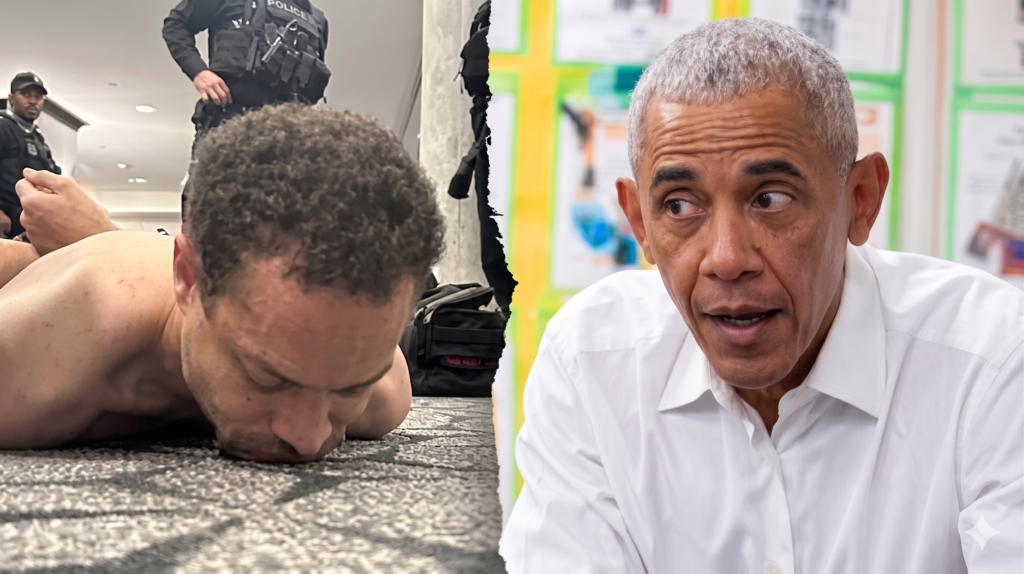
The day after the attack — Sunday, April 26, 2026 — former President Obama published a statement on social media. He said that although the details surrounding the motive behind the previous night’s shooting were not yet clear, it was the responsibility of every American to reject violence as a tool of political expression. He added that the incident served as a reminder of the courage shown daily by Secret Service agents, and expressed relief that the officer who had been shot was expected to make a full recovery.
Taken alone, it reads like a fairly standard response from a former head of state. Most former presidents say something similar after national tragedies — measured, unifying, and deliberately nonpartisan.
The problem was the context surrounding it.
By the time Obama’s post appeared, Allen’s identity had been public for hours. His manifesto, confirming his plan to target Trump administration officials, had already been confirmed by federal investigators and reported extensively by major news outlets. His social media history, filled with anti-Trump rhetoric, had been reviewed and discussed at length. The picture wasn’t murky at all — it was fairly detailed.
So when Obama described the motive as unclear, a large portion of his audience didn’t see cautious diplomacy. They saw a statement that didn’t hold up against the facts that were already widely available.
What Cole Allen’s Manifesto Actually Said

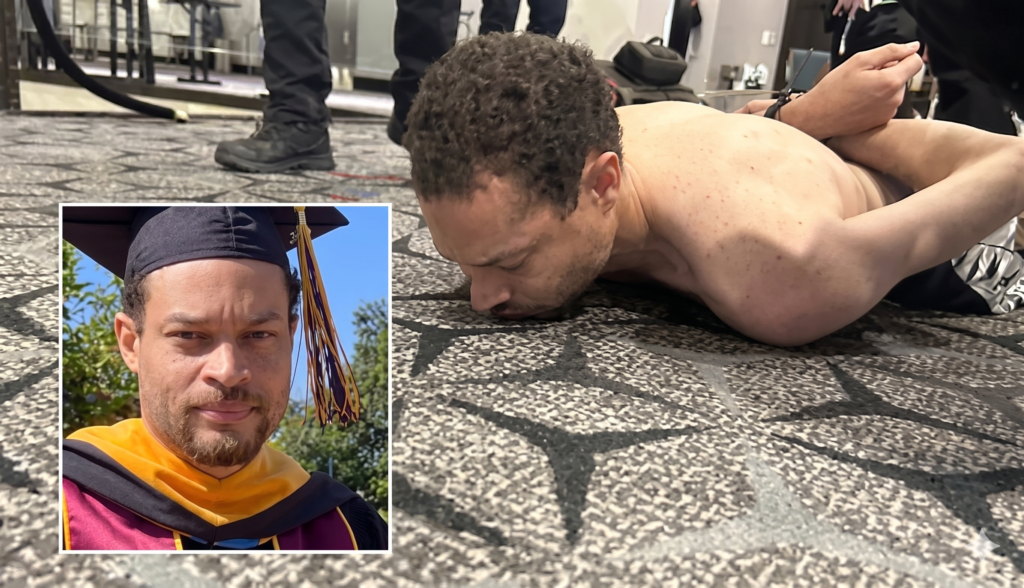
Understanding the depth of the backlash requires knowing what the manifesto actually contained. Based on reporting from CBS News, CNN, and federal officials, here is what the document laid out.
Allen wrote that his intended targets were Trump administration officials, organized by rank from the most senior downward. He acknowledged that law enforcement, hotel staff, and other guests were not his primary focus — but he made it clear that he would not allow their presence to stop him from reaching his actual targets if it came to that.
What struck investigators and reporters most was the document’s tone. It wasn’t frantic or disorganized. Allen opened with a casual greeting, acknowledged that his family would likely be shocked, and then worked through his reasoning in a structured, almost clinical way. He apologized to his parents. He apologized to his students. And then he explained, point by point, why he believed he had no other choice.
The Political Anger Running Through Every Page
Allen’s stated motivations were explicitly political. He argued that the actions of the Trump administration amounted to crimes he could no longer ignore. He framed his decision to act not as aggression, but as what he described as a moral obligation — a response to suffering he believed was being caused by the people sitting in that ballroom.
He addressed potential objections to his plan, writing out hypothetical counterarguments and following each with his own rebuttal. One section dealt with the idea that violence was un-Christian. His response was that turning the other cheek applied to wrongs done to oneself — not, in his view, to wrongs done to others.
The document also included operational details. Allen noted the specific ammunition he had selected and explained that his choice was intended to reduce unintended harm to bystanders. He said he did not expect forgiveness, but that he could not find any other way to get close enough to act.
How Federal Investigators Responded
After Allen’s arrest, federal law enforcement officials confirmed that he had shared anti-Trump content on his social media accounts in the months before the attack. His manifesto, they said, was consistent with a politically motivated plan to target administration officials. Acting U.S. Attorney General Todd Blanche confirmed in a public statement that the early evidence pointed clearly to Allen having targeted members of the Trump administration who were attending the dinner that evening.
Why Obama’s Statement Hit Such a Raw Nerve
The pushback was immediate and came from a wide range of people. Critics argued that calling the motive unclear — at a moment when a detailed written document explaining it was already circulating — was not a defensible position.
Former EPA Administrator Lee Zeldin was among the most direct in his criticism. He pointed out that the suspected shooter had sent an anti-Trump manifesto to his family specifically laying out his plan to go after Trump administration officials, and had done so minutes before rushing a ballroom that contained the president, the vice president, and much of the Cabinet. There was no ambiguity, Zeldin argued, so there was no reason to suggest there was.
Political commentator Batya Ungar-Sargon went further, calling the statement an outright falsehood and suggesting that acknowledging the real motive was something Obama’s post had deliberately sidestepped. Actor James Woods echoed the criticism with a sharper edge, referencing the publicly available manifesto in his response.
Those Who Came to Obama’s Defense
To be fair, not everyone read the statement as evasive. Some observers made a reasonable counterpoint: federal investigators had not yet formally declared an official motive at the time Obama posted. The investigation was still in its earliest hours. From a strictly legal standpoint, “motive not yet confirmed” is technically different from “motive unknown.”
There’s also a long tradition of former presidents avoiding politically charged language in the immediate aftermath of violent incidents, regardless of which party is involved. Some of Obama’s supporters argued he was simply following that convention — and that no matter what he had written, critics on the other side would have found fault with it.
Both points have merit. But they didn’t do much to slow the criticism. When a suspect’s own written account of his intentions is already being cited by federal prosecutors and reported by every major news organization, saying the situation lacks clarity is a tough sell — regardless of the reasoning behind it.
Trump’s Reaction to Both the Attack and the Manifesto

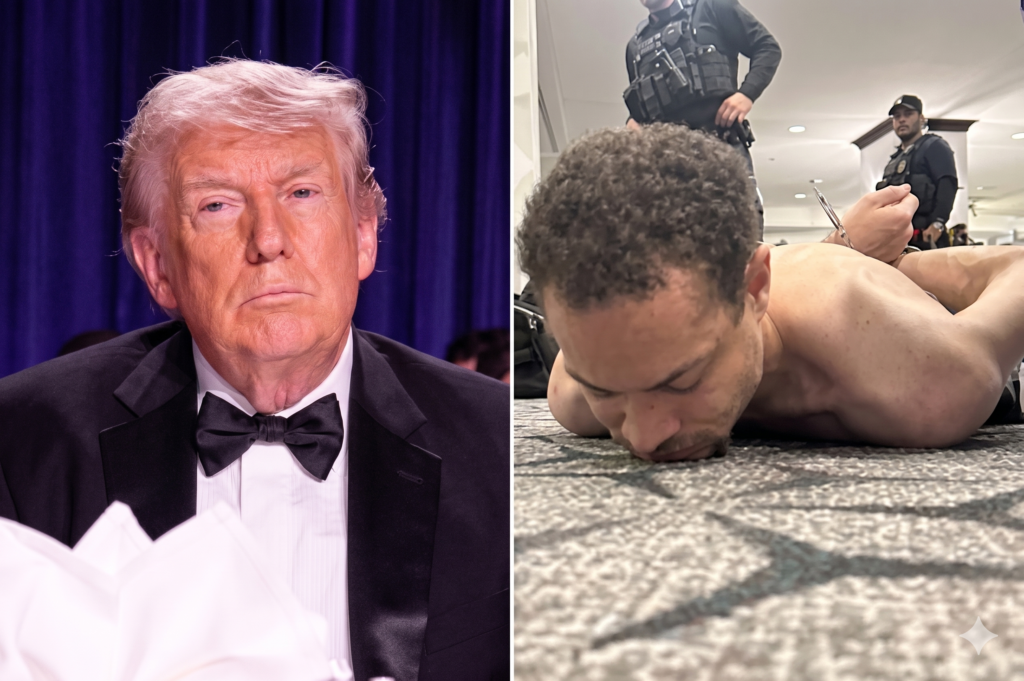
President Trump, who had been evacuated from the dinner when the shooting broke out, addressed the manifesto publicly within hours of the incident. On Sunday evening, during a televised interview with “60 Minutes” host Norah O’Donnell, Trump pushed back strongly when she read passages from Allen’s alleged document. O’Donnell cited sections in which Allen described administration officials as targets and outlined his grievances. Trump responded sharply, taking direct issue with both the content of the manifesto and the way O’Donnell was presenting it.
Earlier, Trump had shared footage and images of Allen’s arrest on his Truth Social account, referring to the suspect as a “would-be assassin.” He also drew attention to what he called anti-Christian sentiment in Allen’s social media history — a detail he described as especially significant.
What This Moment Reveals About America’s Political Climate
The argument over Obama’s statement is about more than word choice. It cuts to something that’s been sitting just below the surface of American public life for a while now — the question of how political leaders respond when violence intersects directly with partisan politics.
For critics, Obama’s statement was a missed opportunity at best and deliberate misdirection at worst. The manifesto was right there. The motive, as Allen himself described it, wasn’t hidden. Declining to acknowledge it felt, to many people, like a choice rather than a precaution.
For supporters, the statement reflected the kind of careful restraint that former presidents are expected to exercise. Adding political heat to an already volatile situation, they argued, serves nobody well.
What’s harder to argue about is the content of the manifesto itself. Federal officials have confirmed it. Journalists have reported on it in detail. And the words in it belong to Allen alone. Whatever debate surrounds how public figures should respond to this kind of attack, the document he wrote speaks for itself.
FAQ:
What did Obama actually say about the WHCD shooting?
Obama posted a social media statement on April 26, 2026, saying that the details about the motive behind the shooting were not yet fully known, and urged Americans to reject political violence in all its forms. He also expressed gratitude to the Secret Service and wished the injured officer a full recovery. The statement was criticized because Allen’s manifesto — which clearly outlined his plan to target Trump administration officials — had already been confirmed by investigators and widely reported before Obama’s post appeared.
What was in Cole Allen’s manifesto?
Based on confirmed reporting from multiple major news organizations and federal officials, Allen’s manifesto stated that he planned to target Trump administration officials in order of their seniority. The document explained his political motivations, addressed potential objections to his actions, and included logistical details about how he intended to carry out the attack. Allen sent the manifesto to his family roughly ten minutes before charging the security checkpoint at the Washington Hilton.
Did investigators officially confirm Allen’s motive?
Acting Attorney General Todd Blanche said publicly that early evidence suggested Allen had been specifically targeting members of the Trump administration at the dinner. However, federal officials also noted that a formal, legally confirmed motive had not yet been declared at the time of their initial statements, as the investigation was still in its early stages.
Who were the most prominent critics of Obama’s statement?
Notable critics included former EPA Administrator Lee Zeldin, commentator Batya Ungar-Sargon, and actor James Woods, among others. Most of the criticism focused on the same central point — that the manifesto had been in the public domain for hours before Obama posted, making it difficult to characterize the motive as unknown.
What charges does Cole Allen currently face?
As of April 27, 2026, Allen has been charged with using a firearm during a crime of violence and assaulting a federal officer with a dangerous weapon. U.S. Attorney Jeanine Pirro has indicated that more charges are expected as the investigation progresses. Allen is reportedly not cooperating with authorities.
A Country Still Looking for Answers
The WHCA shooting has left America with no shortage of hard questions — about how someone gets a disassembled firearm past a hotel where the president is staying, about how online political radicalization leads to real-world violence, and about how public figures are expected to speak when a crisis carries undeniable political undertones.
Obama’s statement added another layer to all of it. Whether you see it as careful and responsible or as a deliberate dodge depends largely on where you stand politically — and that division, more than anything else, is part of what makes this moment so revealing.
For More Information

Related Article
Cole Tomas Allen: WHCA Shooting Suspect Identified as California Teacher With Anti-Trump Manifesto
DC Press Dinner Shooting: Trump Evacuated, Gunman in Custody — Latest Updates
2026 NFL Draft Day 3 Live Picks Tracker: Jermod McCoy, Cade Klubnik and Every Round 4–7 Pick
Families Fleeing, Homes Destroyed: Inside the Georgia Florida Wildfires of 2026