


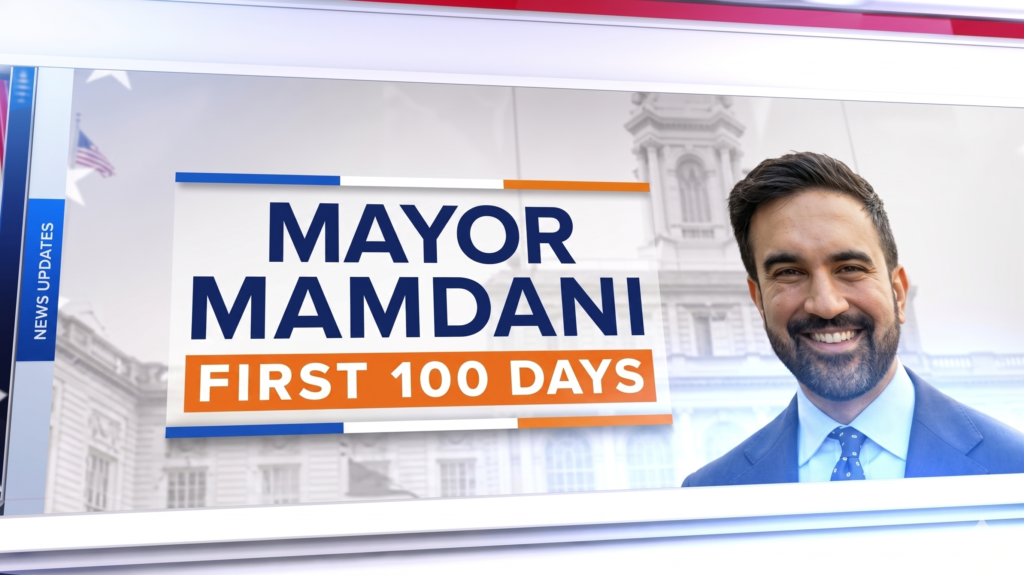
Zohran Mamdani walked into City Hall in January 2026 carrying more symbolism than perhaps any New York City mayor in recent memory. At 34, he became the city’s youngest mayor in a generation, its first Muslim mayor, and one of the few openly democratic socialist politicians ever elected to lead a major American city. People across the political spectrum held their breath — some with excitement, others with genuine alarm.
Now that his first 100 days are behind him, the picture is far messier than either side expected. His supporters still cheer his energy and street-level presence. His critics, though, are getting louder — and their concerns are harder to dismiss with each passing week. From reversed campaign pledges to tense standoffs with the NYPD, from head-scratching budget choices to a 100-day celebration that many found tone-deaf, the conversation around NYC Mayor Mamdani’s first 100 days has taken a noticeably critical turn.
This article walks through what actually happened during those first months in office, why critics are pushing back so hard, where the administration has stumbled, and what New Yorkers should pay attention to going forward.
Who Exactly Is Mayor Zohran Mamdani?
For readers less familiar with his background, a quick look at who Mamdani is helps explain why his mayoralty has been so polarizing from day one.
He is a registered member of both the Democratic Party and the Democratic Socialists of America — a dual affiliation that puts him considerably to the left of even most progressive Democrats. Before winning the mayor’s race, he served in the New York State Assembly, representing Astoria, Queens. His campaign leaned heavily on a handful of bold promises: fare-free public buses, genuinely affordable housing, higher taxes on the wealthy, and a fundamentally different approach to policing.
His election surprised a lot of people. With Senator Bernie Sanders as a close ally, Mamdani positioned New York City as the proving ground for a new kind of left-wing urban governance. Whether that experiment is going well, however, is now very much up for debate.
The 100-Day Rally: A Victory Lap That Raised Eyebrows

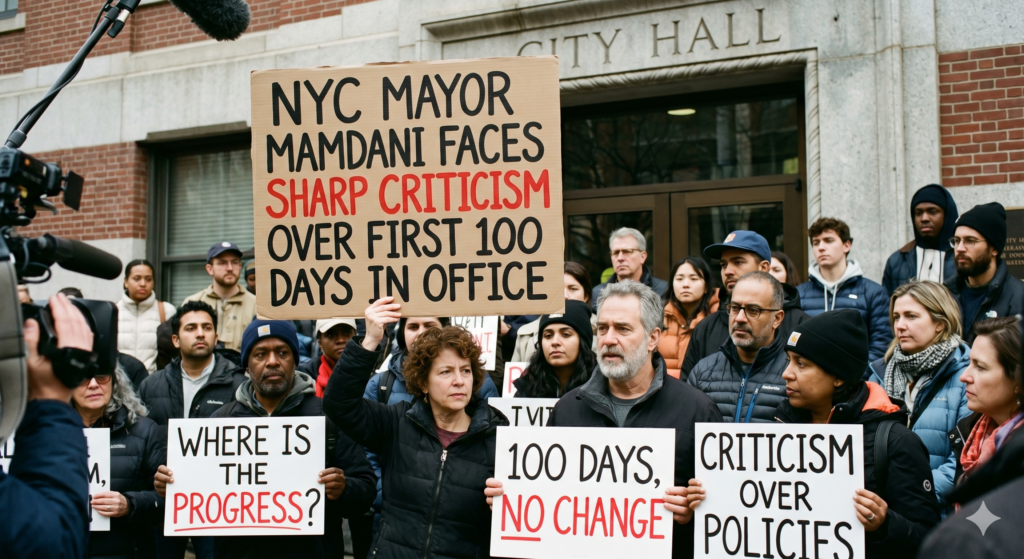
Rather than marking 100 days in office with a straightforward press briefing or policy announcement, Mamdani held a full-blown rally at the 3,200-seat Knockdown Center in Queens. Bernie Sanders was there. Crowds chanted “DSA!” and “Tax the Rich!” Staffers set up what observers called a “100-day museum” — a series of displays highlighting the administration’s early achievements, arranged like exhibits in a gallery.
The centerpiece of his speech? Potholes. Mamdani claimed his administration had already filled 100,000 potholes city-wide and introduced the phrase “pothole politics” to describe his governing style — the notion that a government earns public trust by proving it can handle the everyday stuff before tackling bigger challenges.
That framing didn’t land well with everyone. Several commentators, including longtime New York Post columnist Michael Goodwin, described the event as a sign of political insecurity rather than genuine confidence. A Marist College poll released around the same time showed that only 48% of New Yorkers approved of Mamdani’s performance — a number that was actually lower than where former Mayor Eric Adams stood at the same point in his tenure, which itself ended in scandal.
Broken Promises: The Free Bus Pledge Falls Apart
No single issue has done more damage to Mamdani’s early credibility than the collapse of his most talked-about campaign promise — completely free buses for New York City riders.
The idea wasn’t pulled from thin air. As a state assembly member, Mamdani had overseen a free-bus pilot program in Queens that produced real results: ridership climbed by roughly 30%, and assaults on bus operators dropped by nearly 40%. He turned those numbers into a centerpiece of his mayoral campaign, and voters responded enthusiastically.
But within his first 100 days as mayor, Mamdani admitted the promise simply cannot happen this year. Budget pressures, funding gaps, and the legal requirement to deliver a balanced budget made it impossible to move forward in the immediate term. His critics were not sympathetic.
Tim Young of the Heritage Foundation put it bluntly on social media, accusing Mamdani of misleading voters on transit and other campaign pledges. Others drew a broader point — that the gap between socialist campaign rhetoric and the financial realities of running a city of eight and a half million people was always going to catch up with him.
To be fair, some supporters argue that transforming a transit system as massive as New York’s cannot happen overnight, and that negotiations are still underway. But for a promise that was sold as a near-term deliverable, the walkback stings — particularly among working-class New Yorkers who took Mamdani at his word.
Library Funding: A Pledge Quietly Reversed
The free bus reversal wasn’t the only one. During his campaign, Mamdani also committed to boosting funding for New York City’s public library system — a broadly popular promise in a city full of students, researchers, and communities that rely on libraries as community anchors. Once in office, his administration moved in the opposite direction, cutting library budgets instead of expanding them.
For many residents, this felt like a betrayal that went beyond politics. Libraries serve some of the city’s most vulnerable communities. Cutting their budgets while simultaneously allocating tens of millions of dollars to new racial equity offices has given ammunition to critics who argue that Mamdani’s priorities are driven more by ideology than by the practical needs of everyday New Yorkers.
Michael Goodwin’s Critique: The Policing Problem

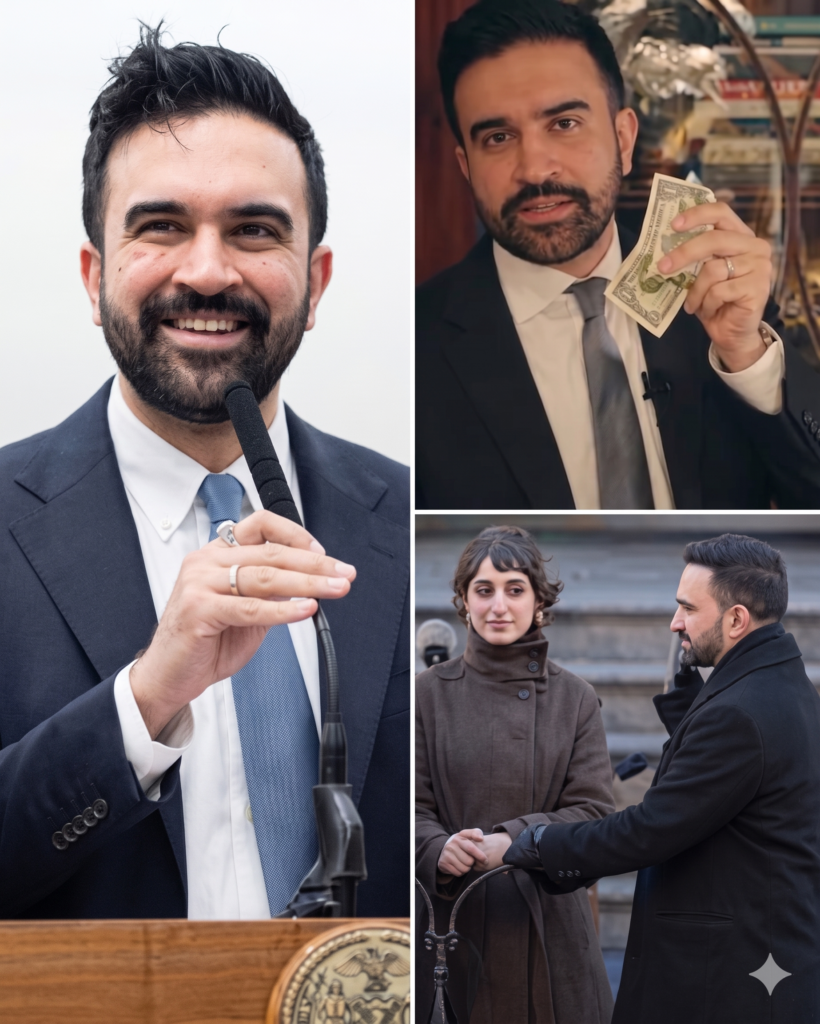
If one voice has consistently and carefully tracked the warning signs in Mamdani’s early tenure, it is New York Post columnist Michael Goodwin — a veteran political observer who has covered New York City governance for decades.
Goodwin’s sharpest criticisms have focused on public safety and policing. Within his first few weeks in office, Mamdani used the word “murder” to describe a law enforcement shooting in Minneapolis before any investigation had concluded. Not long after, two separate NYPD officers were involved in fatal shootings in New York City itself. Mamdani’s response, Goodwin argued, was neither what the officers deserved nor what Police Commissioner Jessica Tisch needed from her boss.
Goodwin essentially gave Mamdani a failing grade on his early handling of public safety, writing that his language and instincts belonged to a junior state legislator, not the mayor in charge of the country’s largest police department — one with 35,000 trained officers on the job every day.
The friction between Mamdani and Commissioner Tisch has been a recurring undercurrent throughout his first 100 days. Mamdani at one point signaled that he would override Tisch on policing policy when the two disagreed — a statement that created confusion about the chain of command and unsettled many in the department.
Things escalated further in March, when a violent attack took place just outside Gracie Mansion — the mayor’s official residence. Critics felt the administration’s response was disorganized and that Mamdani struggled to project the kind of calm authority that moments of crisis demand from a mayor.
Tensions With New York’s Jewish Community
Among the most consequential ongoing challenges of Mamdani’s early tenure is his fractured relationship with New York City’s large and influential Jewish community.
The friction predates his time in office. During the campaign, Mamdani stated that he would order the arrest of Israeli Prime Minister Benjamin Netanyahu if he set foot in New York City. That comment alarmed many Jewish leaders and set a tone that carried into his administration. The situation worsened when a spokeswoman for the mayor suggested that synagogues hosting events supportive of Israel might be in violation of international law — a statement that generated immediate outrage from community leaders across the religious spectrum.
At the 100-day mark, Rabbi Elliot Cosgrove of Park Avenue Synagogue said publicly that nothing in Mamdani’s first months in office had done anything to ease the concerns he had raised before the election. Other leaders criticized the mayor for attending Passover events in ways that felt performative rather than genuinely engaged.
For a mayor governing a city with one of the largest Jewish populations in the entire world, these are not minor diplomatic missteps. They reflect a fundamental failure to build the kind of cross-community trust that running New York City requires. Mamdani will need to take concrete, not cosmetic, steps to repair these relationships if he hopes to govern effectively going forward.
Budget Decisions Under the Microscope
Mamdani’s spending choices have sparked criticism from moderates, conservatives, and even members of his own party. His administration’s budget allocated $5.6 million annually to the Office of Racial Equity and another $4.6 million to the Commission on Racial Equity — a combined $10.2 million per year dedicated to racial equity bodies, at the very same time that library funding was being trimmed and the free bus program was being postponed.
The Department of Justice has also reportedly begun examining certain aspects of Mamdani’s racial equity policy proposals, adding a federal dimension to the local controversy.
On top of that, Mamdani drew sharp internal criticism for publicly attacking City Council Speaker Julie Menin through social media videos while budget negotiations were ongoing. Democratic operative Bill Cunningham, who once served as communications chief under Mayor Michael Bloomberg, pointed out the obvious problem: the Speaker is exactly who Mamdani needs to be working with, not campaigning against.
Even Bronx City Councilman Kevin Riley — who had previously endorsed Mamdani — publicly accused the mayor’s office of sharing content that was misleading about the council’s budget proposal. When your own endorsers are pushing back, something has gone wrong.
To Be Fair: Where Mamdani Has Delivered
A serious assessment of any politician’s performance has to include what they’ve actually done well, not just where they’ve stumbled.
Mamdani has been unusually visible as mayor. He has ridden the subway, taken calls at the city’s 311 center, joined sanitation crews for illegal dumping cleanups, and generally kept up the kind of accessible, on-the-ground presence he promised during the campaign. For many New Yorkers who felt disconnected from previous mayors, that visibility matters.
His administration also introduced practical quality-of-life changes, such as requiring large apartment buildings in West Harlem to use proper trash bins rather than leaving garbage bags piled on sidewalks — a change that residents in those neighborhoods genuinely welcomed.
And while the free bus rollout has hit a wall, the push for transit reform has not been abandoned entirely. Advocates note that changing how a transit system as enormous as New York’s is funded takes years of groundwork, and that Mamdani has at least kept the conversation moving.
FAQ
Is Mayor Mamdani failing in his first 100 days?
It depends on what you’re measuring. Critics highlight the reversed campaign promises, the NYPD friction, the Jewish community tensions, and a 48% approval rating as clear signs of a troubled start. Supporters argue that early progress on infrastructure, transit reform groundwork, and consistent public engagement represent a solid foundation for the years ahead.
What specifically did Michael Goodwin criticize about Mamdani?
Goodwin’s most pointed criticism focused on public safety. He argued that Mamdani made irresponsible statements about law enforcement shootings without waiting for facts, failed to properly support the NYPD in key moments, and behaved more like a protest organizer than the mayor of the largest city in the country.
Why has Mamdani struggled with New York’s Jewish community?
The tension stems from several issues: his stated willingness to arrest the Israeli prime minister, social media content liked by his wife that was sharply critical of Israel, and comments from his own spokeswoman about pro-Israel events at synagogues. Many Jewish leaders say none of those issues have been adequately addressed in his first 100 days.
What happened to Mamdani’s promise of free buses?
Mamdani acknowledged that free buses will not become a reality in 2026, pointing to the difficulty of securing funding and the legal requirement to submit a balanced city budget. Critics called it a broken promise; supporters described it as an honest acknowledgment of the fiscal challenges involved.
How do New Yorkers broadly view Mayor Mamdani right now?
According to a Marist College poll taken near the 100-day mark, roughly 48% of New Yorkers approve of how Mamdani is doing his job. That figure is lower than where even Eric Adams stood at the same stage of his mayoralty — and Adams, of course, later faced a federal indictment. It signals that Mamdani has real work ahead in winning over the broader electorate.
The Hard Part Is Just Beginning
Zohran Mamdani’s first 100 days as New York City’s mayor have been anything but dull — but “interesting” and “effective” are two very different things. He has brought energy, visibility, and ideological clarity to an office that had grown deeply unpopular under his predecessor. Those are not small things.
But the broken promises, the budget reversals, the public safety stumbles, the escalating tensions with the Jewish community, and the internal clashes within his own party paint a picture of an administration still figuring out the difference between campaigning and governing. New York City does not reward that learning curve forever.
Eight and a half million people live in this city. They need more than rallies, museums to minor accomplishments, and pothole counts. They need a mayor who can deliver — on transit, on safety, on housing, and on the basic promise that City Hall is working for all of them, not just the loudest corners of his political base.
For More Information

Related Article
DC Appeals Court Blocks Trump Contempt Probe — Here’s What the 2026 Ruling Really Means
It’s Official: HBO Max and Paramount+ Will Combine Into a Single Streaming Service
Sergio Garcia Breaks His Driver at the 2026 Masters — And the Whole World Watched
Reuters Report: Iran’s New Supreme Leader Mojtaba Khamenei Disfigured and Hidden from Public After