


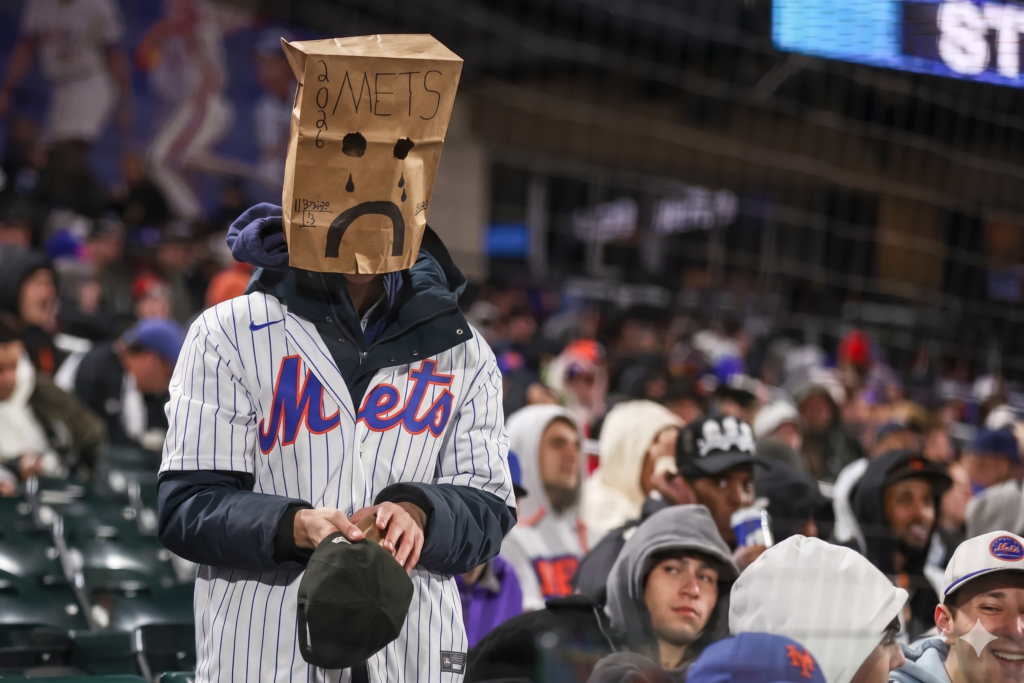
To truly grasp the scope of this collapse, it helps to understand one important detail: the Mets are not losing ugly. They are losing painfully. The streak has not been defined by blowouts or no-shows from the lineup. Instead, it has been built on late-inning implosions, blown leads, and a relievers’ room that simply cannot close out games.
Game twelve arrived on April 21, 2026, in a 5-3 loss to the Minnesota Twins at Citi Field. Starter Nolan McLean was nearly untouchable through the first five innings, retiring every batter he faced. Francisco Lindor gave New York a 3-0 lead with a three-run home run. For a few brief moments, it genuinely looked as though the misery might finally be ending.
It was not.
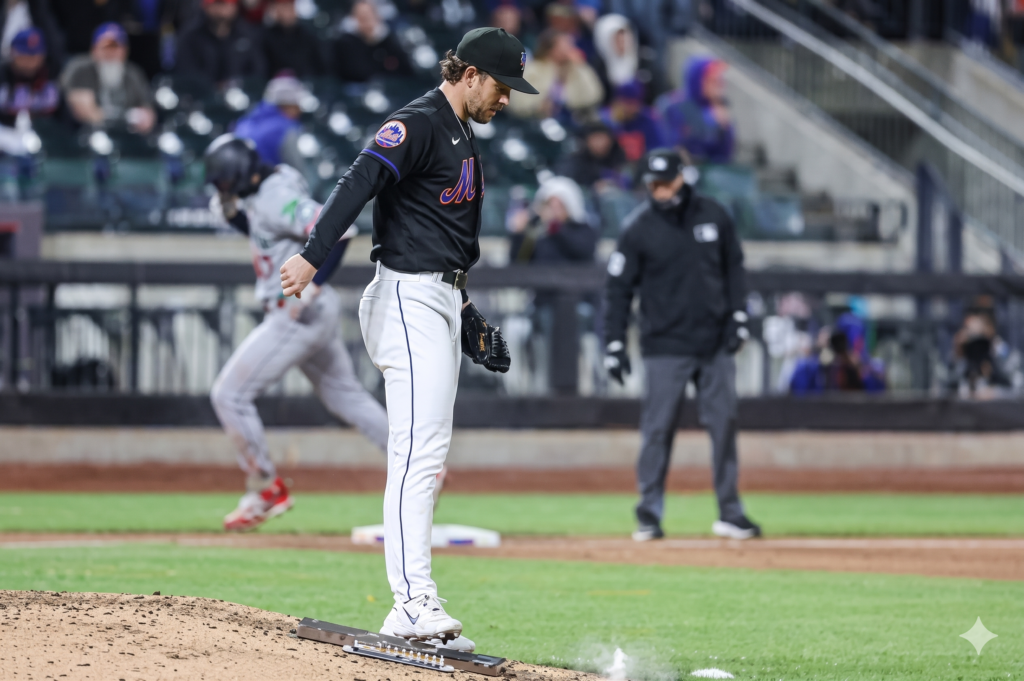
Byron Buxton launched a home run in the sixth inning to cut the deficit to one. The Twins drew even in the seventh with an RBI single off McLean. That brought the game to the ninth inning, tied at three — and it brought in Devin Williams.
The Mets Bullpen Collapse vs. Twins: What Devin Williams Did in the Ninth
If you want a single moment that captures everything wrong with this team right now, the Mets bullpen collapse vs. the Twins in the ninth inning of game twelve is it. Williams, a three-year, $45 million offseason signing who was brought in to be New York’s reliable closer, entered with the score tied and left without retiring a single batter.
He walked Josh Bell to lead off the inning. Then he walked Ryan Jeffers. Kody Clemens tried a sacrifice bunt, but the throw from Mark Vientos to third base went awry, loading the bases with nobody out and no one retired. Luke Keaschall then punched a single through the infield, scoring one run. Matt Wallner drew a walk to push across another. Just like that, a game the Mets controlled for eight innings was gone.
Williams addressed reporters after the final out was recorded. “It is tough, man,” he said. “I have never been part of something like this, you know?” His honesty earned him some respect in the clubhouse, but for a franchise carrying well over $300 million in payroll this season, honesty does not fill the scoreboard — or the seats.
What makes this episode especially concerning is that it was not a one-time failure. Williams has now blown two consecutive save chances against Minnesota specifically, and his struggles have been a recurring theme throughout this entire losing run. He and several other late-inning relievers have turned victories into losses so frequently that even strong starting pitching performances have gone to waste.
New York Mets 12 Straight Losses: Putting It in Historical Context

Numbers tell part of the story, but context tells the rest. The New York Mets’ 12 straight losses in 2026 mark the seventh time in the franchise’s history that the team has dropped a dozen or more games consecutively — and the first time it has happened since 2002.
That 2002 squad dropped 12 in a row during August, which effectively ended whatever slim playoff hopes they still carried. They finished the year with a 75-86 record, landing in last place in the NL East. The key difference is timing: that skid came in August, when the season was nearly finished. The 2026 version is happening in April, leaving a full five months of baseball still to be played.
Here is where this streak ranks within the franchise’s history:
- The longest losing streak in Mets history sits at 17 consecutive games — a record this team has not yet threatened.
- The 2026 streak is tied for the seventh longest in the organization’s entire history.
- Since 1965, only three Mets teams have ever lost more than 11 games in a row, with the most recent prior example occurring in 2004.
- This is also the first time in franchise memory that a losing streak of this length has coincided with one of the highest payrolls in the sport.
That last point stings the most. This is not a rebuilding squad with a thin roster and limited resources. It is a team built to win now, and it is losing like a team built in the opposite direction entirely.
Steve Cohen’s Reaction: How the Mets’ Owner Is Handling the Crisis
Owner Steve Cohen has been vocal — and quiet — in equal measure during the Mets nightmare season of 2026. On the quiet side, reports confirmed that Cohen sent a series of private, supportive text messages to manager Carlos Mendoza as the losses mounted, a move that was widely read as a public signal that Mendoza’s job was not yet in immediate jeopardy. At a time when media speculation about the manager’s future was running hot, that gesture carried real weight.
On the vocal side, Cohen’s track record adds pressure to every message he sends. After the Mets’ 2025 late-season collapse — a similarly heartbreaking implosion that cost them a playoff spot on the final day — Cohen posted a lengthy apology on X, calling the team’s performance “unacceptable” and promising a thorough review of what went wrong. Fans remember that post very clearly.
Now, less than a year later, some of those same questions are resurfacing. How much internal dysfunction is the ownership glossing over with a big checkbook? At what point does financial investment alone stop being an acceptable answer to roster-level failure? For now, Mendoza appears to have a lifeline — but that lifeline looks shorter with every passed ball, every blown save, and every walk-off loss to a team the Mets were supposed to beat.
Are the Mets’ Playoff Hopes for 2026 Already Gone?
Here is the honest answer: no, but the window is closing quickly.
Sitting at 7-16 with the worst record in baseball, New York’s playoff hopes for 2026 have taken a meaningful hit. According to FanGraphs, postseason probability for the Mets had already dipped below 45 percent before the twelfth loss was made official. Given that Atlanta, Philadelphia, and Los Angeles all look capable of claiming NL playoff spots, the Mets simply do not have the luxury of dropping many more series the rest of the spring.
That said, history offers something worth holding onto. The 2017 Los Angeles Dodgers endured an 11-game losing streak mid-season and still played in Game 7 of the World Series that October. The 2025 Cleveland Guardians fell into a lengthy skid and clawed their way back to win the division on the final day of the regular season. In the Wild Card era, at least five franchises have made the postseason despite suffering a nine-game or longer losing streak at some point during that same year.
So the Mets are not mathematically eliminated. They are not even close to that point. But recovery requires Juan Soto — who has been out since before the streak began with a calf strain — to return healthy and productive. It requires the starting rotation to continue performing well. And above all else, it requires the bullpen to stop giving games away in the final three outs.
Twins Comeback vs. Mets: Give Minnesota Some Credit
There is a tendency to frame this entire narrative around what the Mets did wrong, which is fair — but it would be incomplete without acknowledging that the Twins’ comeback against the Mets on April 21 was a product of sharp, disciplined baseball from Minnesota’s side.
The Twins worked patient at-bats, ran the bases intelligently, and put pressure on a Mets defense and bullpen that cracked under that pressure. Kody Clemens’ sacrifice bunt attempt in the ninth may not have been executed flawlessly, but the resulting chaos — a throwing error, three runners on base, no outs — was exactly the kind of moment Minnesota had been engineering all night.
Credit Minnesota for identifying what this Mets team struggles with and attacking it relentlessly. The Twins did not simply benefit from New York’s mistakes. They manufactured situations where those mistakes were far more likely to happen. That is smart baseball, and it exposed something important about the 2026 Mets: when games tighten in the late innings, this team does not yet know how to win them.
What Has to Change for the Mets to Turn This Season Around
Salvaging 2026 is not impossible, but it requires several things to change at the same time.
The bullpen must become reliable. This is the single most urgent issue on the roster. Williams needs to rediscover the form that made him one of the more effective closers in the league during his peak years. Other high-leverage relievers need to match the quality of the starting staff. If the back end of the pitching staff does not stabilize, no amount of offensive production will be enough.
Juan Soto’s return must provide a jolt. His absence from the lineup before and during this streak removed one of the most feared hitters in the sport from the middle of the order. When a left fielder of Soto’s caliber is healthy and in the lineup, opposing pitchers approach the entire batting order differently. His return could shift the offensive dynamic considerably.
Starting pitching needs to stay consistent. Nolan McLean, David Peterson, and the rotation as a whole have not been the problem. Good starts have been wasted by the bullpen. That dynamic needs to flip — the rotation earns wins, and the relievers protect them.
Carlos Mendoza must keep the clubhouse steady. Reported friction between Lindor and Soto is concerning. Twelve straight losses test even the most unified groups, and this club has shown signs of strain. Mendoza’s ability to maintain focus and trust in the locker room may be just as important as any bullpen adjustment going forward.
FAQ:
Q:1. How long is the Mets’ current losing streak in 2026?
Ans: As of April 22, 2026, the New York Mets have lost 12 games in a row. Their overall record is 7-16, which is the worst mark in all of Major League Baseball at this stage of the season.
Q:2. When was the last time the Mets lost this many straight games?
Ans: The last time New York lost 12 consecutive games was during the 2002 season, when a mid-August skid effectively ended their playoff push. That team finished at 75-86 and last in the NL East.
Q:3. What is the longest losing streak in Mets franchise history?
Ans: The franchise record stands at 17 consecutive losses. The current 2026 streak, while historically painful, has not come close to that figure.
Q:4. Why has Devin Williams been so ineffective for the Mets?
Ans: Williams came to New York on a three-year deal worth $45 million following a difficult stint with the Yankees, hoping for a fresh start. So far in 2026, he has been one of the most unreliable relievers in the bullpen, blowing multiple saves and failing to record an out during his most damaging ninth-inning appearance against the Twins.
Q:5. Does Carlos Mendoza still have the support of Mets ownership?
Ans: For the moment, yes. Owner Steve Cohen reportedly sent supportive messages to Mendoza as the losing streak built, signaling that the manager’s job was not immediately at risk. However, insider sources have begun naming potential replacements, which suggests the situation could change quickly if results do not improve over the coming weeks.
What This Streak Is Really Telling Us About the 2026 Mets
The Mets losing streak of 2026 has moved well beyond the category of a rough patch. It is a full-scale organizational crisis unfolding in real time — one that raises fundamental questions about roster construction, relief pitching philosophy, clubhouse chemistry, and what it actually takes to win baseball games when the pressure peaks in the final three innings.
The talent on this team is genuine. The financial commitment from ownership is undeniable. But twelve straight losses make one thing very clear: spending money and winning games are two entirely separate tasks, and right now, the Mets are failing at the second one in a historically embarrassing fashion.
For More Information

Related Article
Mike Vrabel Dianna Russini Photo Scandal: NFL Rules No Discipline as Russini Resigns
Breaking: Nancy Mace Introduces Resolution to Expel Cory Mills Over Ethics Scandal
John Gotti’s Grandson Sentenced for $1.1 Million COVID Fraud Case
Shamar Elkins: The Louisiana Father Who Killed 8 Children in Shreveport