


By any standard, the negotiations held in Islamabad on April 11–12, 2026 were a landmark event. Vice President JD Vance led the American team, flanked by Special Envoy Steve Witkoff and Trump’s son-in-law Jared Kushner. Across the table, Iran sent Parliament Speaker Mohammad Bagher Qalibaf and Foreign Minister Abbas Araghchi at the head of a delegation comprising roughly 70 officials drawn from diplomatic, military, and economic backgrounds.
It was the first direct, face-to-face meeting between American and Iranian officials in more than a decade — and the highest-level contact between the two governments since Iran’s Islamic Revolution in 1979.
Yet despite the weight of that moment, the talks fell apart just after 7 a.m. on Sunday morning. A visibly frustrated Vance addressed reporters before boarding his flight back to Washington: “Iran has chosen not to accept our terms. I think that’s bad news for Iran much more than it’s bad news for the United States of America.”
The United States had come in with three core demands: Iran must dismantle its major nuclear enrichment sites, hand over nearly a thousand pounds of enriched uranium, and reopen the Strait of Hormuz to all shipping — without charging tolls. Iran rejected all three.
Why Pakistan? Islamabad’s Unexpected Role as the Sole Mediator
Perhaps the most underappreciated aspect of this entire crisis is how indispensable Pakistan has become to the peace process. White House press secretary Karoline Leavitt made it official when she stated that Pakistan is “the only mediator in this negotiation” — a striking acknowledgment of Islamabad’s diplomatic clout in a conflict involving two global powers.
What makes Pakistan so well-positioned? It has long maintained working relationships with both Washington and Tehran, which gives it a rare kind of credibility that few other nations can claim. Prime Minister Shehbaz Sharif was personally involved in brokering the initial ceasefire between the US and Iran — the one that made the Islamabad summit possible in the first place.
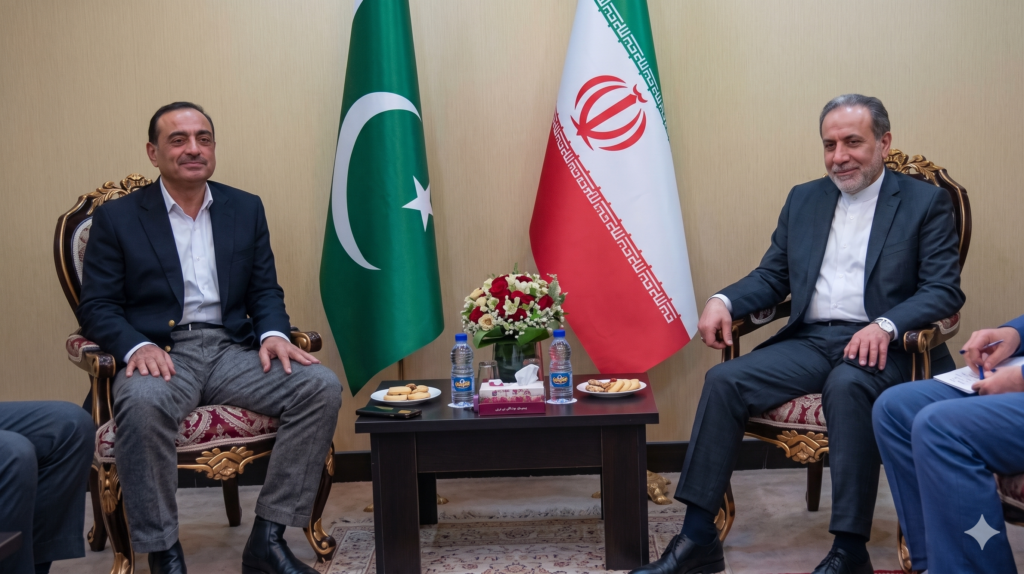
The most active figure in all of this, however, has been Army Chief General Asim Munir. After the Islamabad talks fell through, Munir didn’t waste time. He flew directly to Tehran and sat down with Iranian Foreign Minister Araghchi, carrying messages from the American side. President Trump has spoken about Munir with open admiration, referring to him as his “favorite field marshal” and giving him much of the credit for keeping negotiations from dying entirely.
“It’s more likely [that talks resume], you know why? Because the field marshal is doing a great job,” Trump told reporters.
Even after the breakdown, both governments continued passing messages through Pakistan. By April 15, the White House confirmed that a second round of talks would “very likely” take place in Islamabad once again. Leavitt told reporters that the administration feels “good about the prospects of a deal.”
The Witkoff and Kushner Factor: The Right People for the Job?
Sending Steve Witkoff and Jared Kushner to lead the most sensitive nuclear negotiations in decades has raised more than a few eyebrows in foreign policy circles. Aaron David Miller, a veteran Middle East negotiator who worked under six different secretaries of state, pulled no punches in his assessment: “Iran and the US under Kushner and Witkoff? Failure. They get an F in diplomacy.”
The criticism isn’t new. Both men were involved in stalled negotiations over the Russia-Ukraine war and made little headway during Israel-Hamas ceasefire talks. In early February 2026, they led a round of indirect talks with Iran in Muscat, Oman. A third session followed in Geneva in late February. Neither produced any concrete outcome.
The Geneva talks, in particular, revealed how wide the gap really is. According to reports, the American team demanded that Iran shut down its three main nuclear facilities — at Fordow, Natanz, and Isfahan — and transfer all remaining enriched uranium to the US. Iran flatly refused. Bloomberg later reported that the American negotiators left Geneva “disappointed,” while Iranian and Omani officials struck a notably more upbeat tone.
Interestingly, Iranian officials told The Guardian they were more willing to engage with Vance than with Witkoff or Kushner directly — a signal that reportedly influenced the decision to place Vance at the front of the Islamabad delegation. Pakistan is also said to have pushed for this arrangement behind the scenes.
Kushner’s personal approach to diplomacy has itself become a talking point. His view that “peace is not that different from business” sits uneasily with many experienced international negotiators, who argue that nuclear policy requires a very different kind of expertise — one that can’t be substituted with deal-making instincts alone.
The Nuclear Sticking Points: What Is Actually Blocking a Deal?
Strip everything else away, and you’re left with one central problem: Iran’s nuclear program.
Here is where each side currently stands:
The US Position: Washington is pushing for a 20-year ban on Iranian uranium enrichment, the complete removal of all highly enriched uranium from Iranian soil, and the physical dismantling of Iran’s key enrichment facilities.
Iran’s Position: Tehran maintains that enriching uranium is a sovereign right it will not surrender. At the Islamabad talks, Iranian officials agreed only to a “monitored process of downblending” — meaning reducing the concentration of enriched uranium under supervision rather than shipping it out of the country. They also pushed back hard on the proposed 20-year timeline, countering with a much shorter period described as “single digits.”
The Strait of Hormuz: Since early in the conflict, Iran has effectively closed this critical shipping lane — through which about one-fifth of global oil normally flows — to vessels from countries that haven’t made individual side arrangements with Tehran. The US is demanding it be reopened unconditionally. Iran sees its control over the strait as one of its few remaining cards to play.
Adding to the pressure, Trump announced a US naval blockade of Iranian ports on April 13, sending oil prices briefly above $100 a barrel. Since then, prices have pulled back toward $95 as diplomatic activity has picked up again.
What Is Trump Actually Saying About All This?
The president’s tone has shifted from one day to the next. On April 15, he told Fox News that the war is “very close to over.” Earlier that same week, he hinted to the New York Post that a second session might happen within 48 hours: “Something could be happening over the next two days, and we’re more inclined to go there.”
When the Islamabad talks were still ongoing, Trump struck a notably relaxed tone. “We win regardless of what happens,” he said to reporters outside the White House. “Maybe they make a deal, maybe they don’t.”
That breezy confidence is undercut by the seriousness of his stated red line. During his 2026 State of the Union Address, Trump was unambiguous: “I preferred a diplomatic solution, but I will not allow Iran to get nuclear weapons.”
As of now, the White House has not formally requested an extension of the ceasefire, which is scheduled to expire around April 22. But both sides continue talking — and that, for the moment, is keeping the situation from escalating further.
What Happens If the Talks Fail a Second Time?
A second collapse in negotiations would carry consequences far beyond Washington and Tehran.
The Council on Foreign Relations has laid out the tight spot Trump finds himself in. Keeping the naval blockade running maintains economic pressure on Iran, but it also pushes global oil prices higher — and prolonged disruption to the Strait of Hormuz could tip the world economy into serious trouble.
There’s also a military dimension to consider. Former diplomats caution that without skilled negotiators who understand nuclear policy in depth, the US may end up allowing Iran to quietly rebuild its military capacity during the ceasefire window — gaining time without giving anything meaningful in return. CNN’s analysis of satellite images confirmed that Iran was already using the ceasefire to clear debris from its underground missile installations.
Iran’s leverage is genuine and shouldn’t be underestimated. Despite suffering significant military setbacks at the hands of US and Israeli forces, Tehran has shown no inclination to yield on its nuclear program. It controls a chokepoint that the global oil market simply cannot ignore.
Pakistan, for its part, has made clear it intends to stay involved regardless of how negotiations unfold. If direct talks break down again, Islamabad’s function would likely shift from honest broker to crisis stabilizer — working to prevent an all-out resumption of hostilities rather than facilitating a peace agreement.
FAQ: Iran War Negotiations and Pakistan Talks
Q:1. Where are the US-Iran peace talks taking place?
Ans: All direct negotiations between the US and Iran have been held in Islamabad, Pakistan. Earlier indirect rounds took place in Muscat, Oman and Geneva, Switzerland, with Oman serving as the go-between. The White House has confirmed that Pakistan is currently the sole mediating party in the talks.
Q:2. Who represents the United States in the Iran negotiations?
Ans: Vice President JD Vance has taken the lead at the direct talks in Islamabad. Special Envoy Steve Witkoff and Jared Kushner are also core members of the delegation. Witkoff and Kushner were more prominently involved in the earlier, indirect rounds held in Muscat and Geneva.
Q:3. What is the biggest obstacle to a peace agreement?
Ans: Iran’s nuclear program is the central roadblock. The US is demanding a 20-year halt to uranium enrichment and the removal of all enriched uranium from Iranian territory. Iran maintains that enrichment is a national right and has only agreed to a shorter, supervised reduction process. Unresolved issues around the Strait of Hormuz and the conflict in Lebanon are adding further complications.
Q:4. Is a second round of talks in Pakistan happening?
Ans: As of April 19, 2026, the White House has said another meeting in Islamabad is “very likely.” Pakistan’s army chief has been shuttling between Washington and Tehran to keep lines of communication open. However, no specific date has been officially announced yet.
Q:5. Is the ceasefire between the US and Iran still in effect?
Ans: A two-week ceasefire was agreed upon ahead of the Islamabad summit and is set to expire around April 22. The United States has not formally signed on to an extension, but both governments appear reluctant to let it expire while there is still a chance of resuming talks.
The World Is Waiting on Pakistan’s Next Move
The US-Iran negotiations playing out in Pakistan rank among the most high-stakes diplomatic events of the Trump presidency. Whatever comes next will ripple outward — shaping oil markets, regional security, and the future of nuclear nonproliferation for a generation.
The first round ended without a deal, but the conversation hasn’t stopped. Pakistan’s singular role as mediator gives Islamabad an extraordinary degree of leverage over the process, and Army Chief Asim Munir’s persistent back-channel diplomacy may yet deliver the breakthrough that 21 hours of face-to-face talks could not produce.
At its heart, the nuclear question is what everything hinges on. Both sides want to walk away looking like they won, and neither can afford to be seen surrendering on something as fundamental as uranium enrichment. Whether Vance, Witkoff, and Kushner can find that middle ground — or whether Trump ultimately needs to build a different kind of negotiating team — is the question the world is waiting to see answered.
For More Information

Related Article
Kevin Durant Injury Update Today: KD Ruled Out for Game 1, Return Timeline & Rockets Impact
D4vd Arrested: “Romantic Homicide” Singer Held in Teen Girl’s Murder Case
Henry Winkler’s Happy Days Souvenir: The Story Behind Fonzie’s Iconic Jacket