
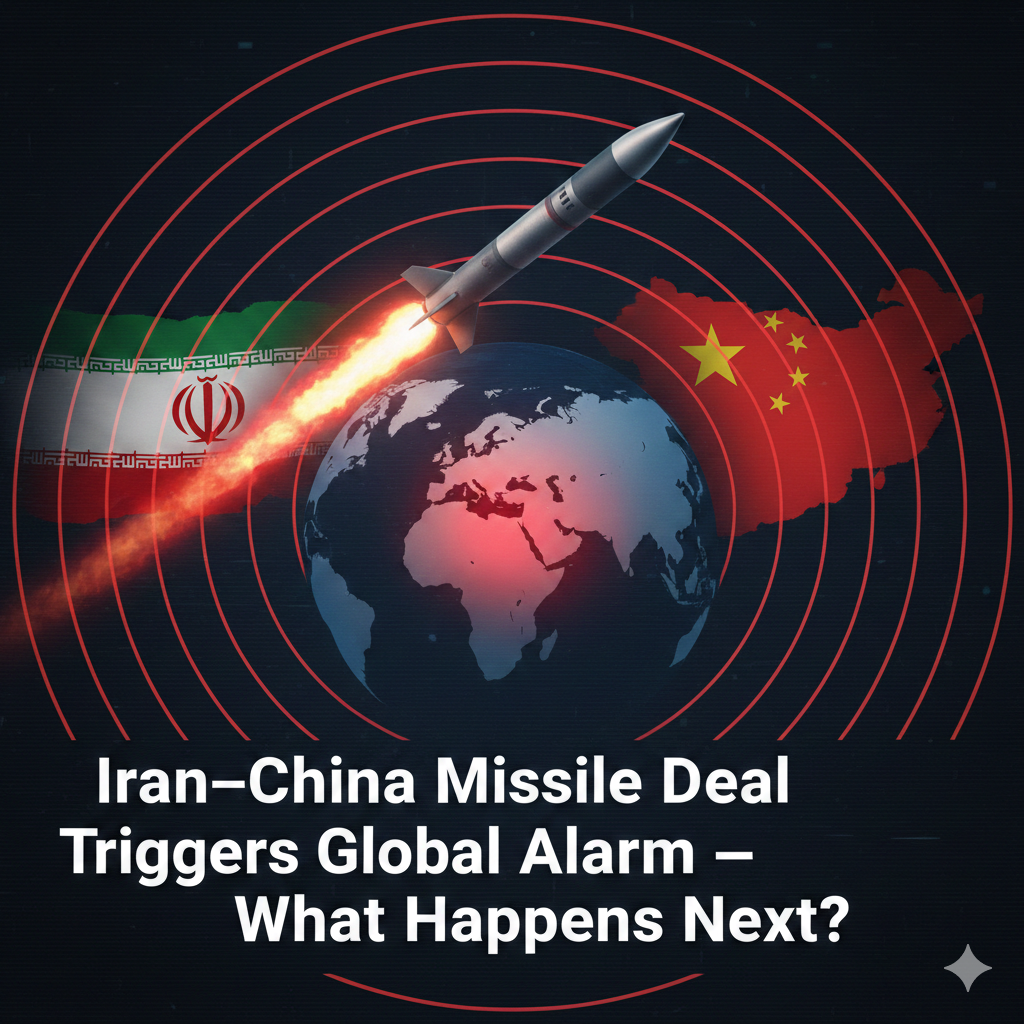
A growing geopolitical storm is unfolding as reports of a potential missile cooperation deal between Iran and China raise alarms across global capitals. What began as quiet diplomatic speculation has quickly turned into a major international concern, with analysts warning the agreement could reshape regional security and deepen existing rivalries.
As details remain limited, the controversy highlights how military partnerships are increasingly influencing global power dynamics — and why this issue matters far beyond the Middle East.
Rising Concerns Over Missile Cooperation
According to defense analysts and diplomatic sources, the reported agreement may involve advanced missile technology collaboration, including development support and technical exchanges. While neither government has publicly confirmed the full scope, the possibility alone has triggered strong reactions worldwide.
Security experts believe such cooperation could significantly enhance Iran’s missile capabilities. Tehran already maintains one of the region’s most extensive missile programs, which it describes as defensive. Critics, however, argue that expanded technology access could alter the balance of power in an already volatile region.
Officials in the United States have expressed concern that any transfer of advanced systems or expertise could undermine ongoing efforts to limit missile proliferation.
Why the Deal Matters Globally
The issue extends far beyond bilateral relations. Military technology agreements often carry strategic implications that ripple through alliances and international negotiations.
Western policymakers fear that deeper defense ties between Iran and China could weaken sanctions pressure and complicate diplomatic efforts aimed at controlling weapons development. Some analysts say the move reflects a broader shift toward alternative global partnerships as nations seek to reduce dependence on Western-led systems.
Experts also point out that missile technology plays a central role in modern deterrence strategies. Even incremental improvements in accuracy or range can change how neighboring countries calculate risks and defense policies.
China’s Strategic Position
China has consistently emphasized that its foreign partnerships focus on economic cooperation and regional stability. Beijing has avoided confirming specific military arrangements, instead reiterating its support for dialogue and peaceful conflict resolution.
However, geopolitical observers note that China’s expanding global influence increasingly includes security relationships alongside trade and infrastructure investments. The country has strengthened ties across Asia, Africa, and the Middle East as part of its long-term strategic outreach.
Some analysts interpret the reported cooperation as part of a broader effort to expand diplomatic leverage in regions traditionally influenced by Western powers.
Regional Reactions and Diplomatic Pressure
The potential missile deal has sparked concern among Middle Eastern nations already navigating complex security challenges. Regional governments worry that new military capabilities could escalate tensions or trigger competitive defense buildups.
International institutions, including the United Nations, have repeatedly urged restraint and transparency in weapons development programs. Diplomats emphasize that confidence-building measures and verification mechanisms remain critical to preventing misunderstandings that could lead to conflict.
Meanwhile, European policymakers within the European Union are calling for renewed diplomatic engagement, stressing that dialogue remains the most effective path to reducing escalation risks.
Expert Opinions: A Shift Toward Multipolar Security
Geopolitical experts see the controversy as part of a larger transformation in global politics. Instead of a single dominant security framework, the world is increasingly moving toward a multipolar system where regional partnerships shape influence.
Defense analysts argue that countries facing sanctions or political pressure often seek alternative alliances to secure economic and technological cooperation. This trend, they say, makes traditional diplomatic tools less predictable.
At the same time, scholars caution against assuming immediate military escalation. Many agreements involve long-term planning rather than rapid deployment of new capabilities. Still, perception alone can fuel tensions, especially in sensitive regions.
Why This Story Matters Now
For everyday readers, the issue may feel distant, but its consequences can affect global stability, energy markets, and international trade routes. Rising geopolitical tension often leads to economic uncertainty, influencing fuel prices, supply chains, and financial markets worldwide.
The situation also highlights how technology and defense partnerships increasingly intersect with diplomacy. In a connected world, regional security decisions quickly become global concerns.
As governments monitor developments, transparency and communication will play a crucial role in preventing misunderstandings that could escalate into larger conflicts.
The Bottom Line
The reported Iran–China missile cooperation has become more than a bilateral issue — it represents a test of modern diplomacy in an era of shifting alliances. While many details remain unclear, the strong international response shows how sensitive military technology agreements have become.
Whether the situation leads to confrontation or renewed negotiation will depend on diplomatic engagement in the coming months. For now, the world is watching closely, aware that even early-stage defense partnerships can reshape geopolitical realities.
In an increasingly interconnected global landscape, the story serves as a reminder: strategic decisions made behind closed doors can carry consequences felt far beyond national borders.
For More Read
America Heard the Promises… But Did Trump Answer the Biggest Economic Question?
Martin Short Faces Heartbreaking Family Tragedy After Daughter’s Death
Pedro Pascal’s Valentine’s Weekend Outing Sparks Massive Dating Speculation Online
Bill Gates Breaks Silence: Billionaire Apologizes as Epstein Files Spark Fresh Global Controversy
2 thoughts on “Iran–China Missile Deal Triggers Global Alarm — What Happens Next?”