


“The Lord Jesus, on the night he was betrayed, took bread, and when he had given thanks, he broke it and said, ‘This is my body, which is for you; do this in remembrance of me.’ In the same way, after supper he took the cup, saying, ‘This cup is the new covenant in my blood; do this, whenever you drink it, in remembrance of me.'” 1 Corinthians 11:23-25
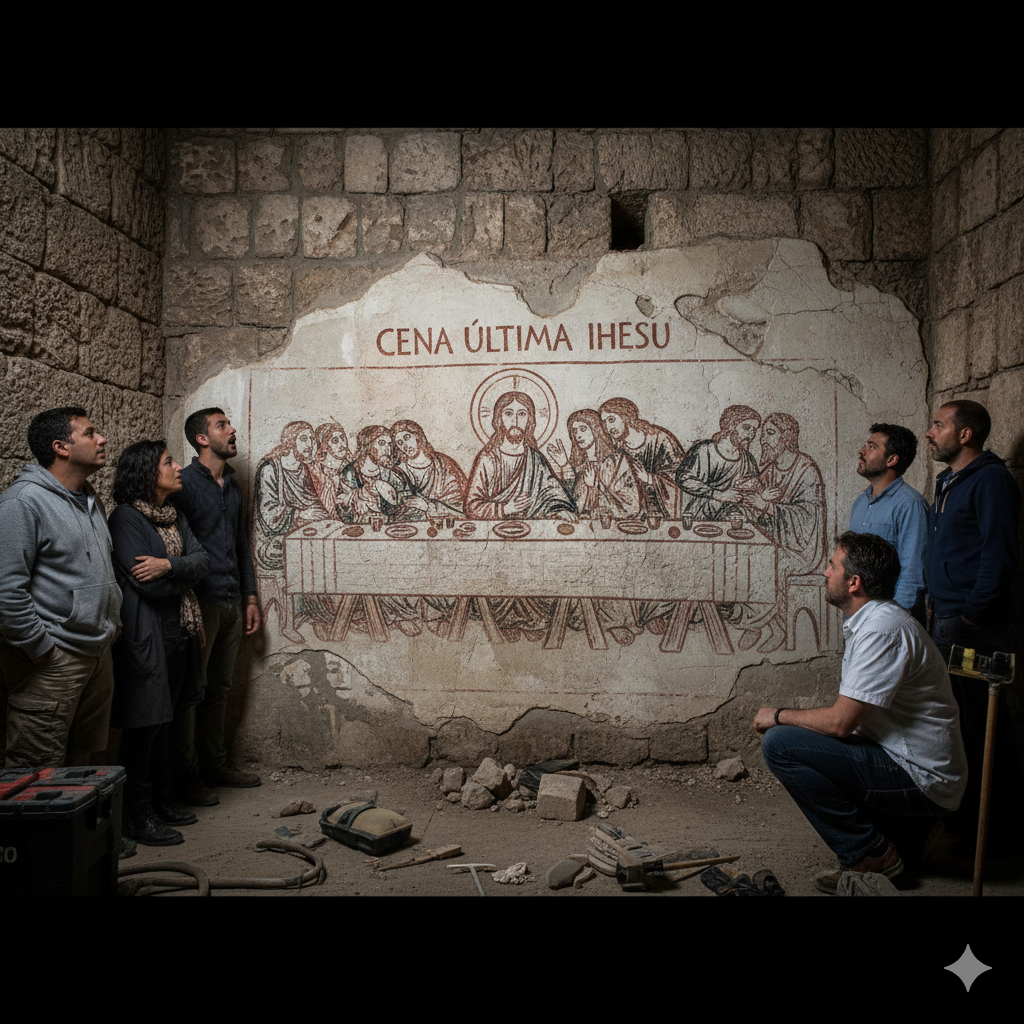
Researchers have revealed previously unseen inscriptions carved into the walls of the Cenacle in Jerusalem — the building long honored by Christian tradition as the site of Jesus’s Last Supper. The markings, left behind by pilgrims centuries ago, are offering historians new clues about the diverse backgrounds and spiritual motivations of those who journeyed to the sacred location during the Middle Ages.
The discoveries were made using advanced photographic and digital enhancement methods that exposed faint carvings embedded in the stone. These techniques allowed scholars to identify inscriptions, heraldic symbols, and sketches that had faded with time and were not easily visible to visitors.
The Last Supper holds central importance in Christian belief. According to the Gospels of Matthew, Mark, Luke, and John, it was during this final meal that Jesus predicted Judas Iscariot’s betrayal and introduced the symbolic sharing of bread and wine, establishing what would become the Eucharist. Although biblical texts describe the event taking place in an upper room in Jerusalem, they do not specify an exact address. Over the centuries, tradition associated the event with a structure on Mount Zion. During the Crusader era, the site became known as the Cenacle, a building that has endured repeated destruction and reconstruction throughout history.
For generations, the Cenacle has attracted pilgrims from across Europe, the Middle East, and beyond. The newly identified graffiti confirms that visitors came from a wide range of regions and social classes.
Among the findings is an inscription connected to Johannes Poloner of Regensburg, a 15th-century traveler who documented his visit to the Holy Land. In his writings, he described the location as the place where Christ shared his final meal with his disciples. Scholars also identified a coat of arms believed to belong to Tristram von Teuffenbach, an Austrian nobleman who participated in a pilgrimage to Jerusalem in 1436.
Another notable carving reads “Christmas 1300” and appears stylistically linked to Armenian nobility. Historians suggest this could relate to the presence of Armenian leadership in Jerusalem following late 13th-century military campaigns in the region.

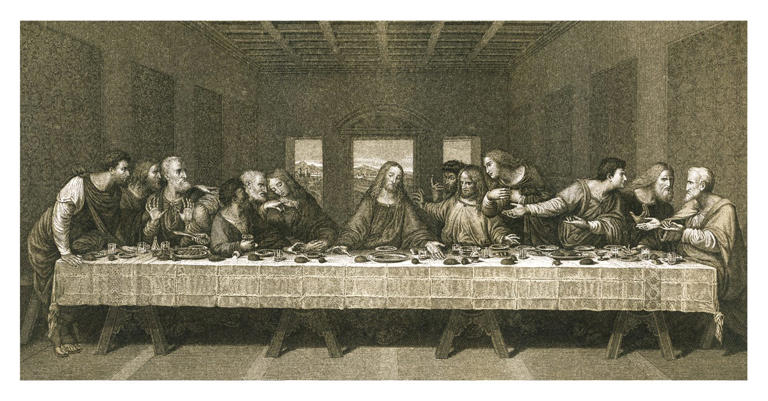
“Now in the church of Mount Sion where the high altar now stands in that very place Christ supped with His disciples giving them His own body and blood wherefore it was called by Christ the Great Supper room.”
While these discoveries do not provide definitive archaeological proof that the Cenacle is the precise site of the Last Supper, they strengthen evidence of its long-standing religious significance. The building’s layered history — shaped by conquests, renovations, and shifting political control — makes absolute confirmation unlikely.
Still, scholars say the graffiti provide valuable historical insight. The inscriptions highlight the international character of medieval pilgrimage and demonstrate that devotion to the site extended far beyond Western Europe. Each carving represents a personal expression of faith from travelers who undertook long and often dangerous journeys to stand in a place they believed holy.
Centuries later, those quiet messages etched into stone are helping modern researchers better understand the spiritual landscape of the medieval world.
For More information

For More Read
Tina Brown Explodes After Jeffrey Epstein Dinner Invite — Calls It ‘The Predator’s Ball
Epstein Files Bombshell? The Truth Behind the Pam Bondi Claim
Top UAE Human Rights Official Linked to Jeffrey Epstein in Newly Released Emails