


The San Francisco Chronicle published the initial report on the afternoon of April 10, 2026. A former female staffer who had worked in Swalwell’s Castro Valley district office starting in 2019 — when she was just 21 years old — described two separate incidents in which she says the congressman sexually assaulted her while she was too intoxicated to give consent.
The first alleged incident took place in September 2019, following a night out with Swalwell and a group of friends in downtown Pleasanton. According to the woman, she consumed so much alcohol that she has almost no memory of the evening. She told the Chronicle she woke up the next morning in his hotel room, unclothed, with no clear recollection of what had happened the night before.
The second alleged incident occurred in 2024. By that point, the woman was no longer employed by Swalwell. She said she met him in New York City after a charity gala, and the two went out for drinks. Her last clear memory of the evening, she told the Chronicle, was excusing herself to use the restroom. She said she woke up the following morning experiencing vaginal bleeding and bruising. To support her account, the Chronicle reviewed text messages she sent to a friend in the aftermath, spoke with multiple people she had previously confided in, and examined medical records confirming that she sought pregnancy and STD testing shortly after the encounter.
The woman also described a pattern of behavior she says preceded the alleged assaults. She claimed Swalwell sent her explicit images of himself through Snapchat, asked her to send nude photos in return, attempted to kiss her in her car after a donor meeting, and asked her to perform a sexual act on him in a parking lot.
That same night, CNN expanded the story significantly by reporting that three other women had come forward with their own accounts. One of those accounts closely matched the former staffer’s story. The others included allegations that Swalwell sent unsolicited explicit photos, kissed a woman without her consent in a public setting, and that another woman ended up in his hotel room at the end of the evening with no memory of how she arrived there.
Swalwell Denies the Sexual Assault Claims — Yet Apologizes to His Wife for Unspecified ‘Mistakes’
Swalwell’s public response was notable for two reasons: what he said and what he deliberately chose not to say.
In his initial written statement, Swalwell rejected the accusations entirely, calling them politically motivated. He pointed to his nearly two-decade public service record — first as a prosecutor, then as a congressman — and argued that the timing of the story, so close to the start of mail-in voting in the primary, was not a coincidence.
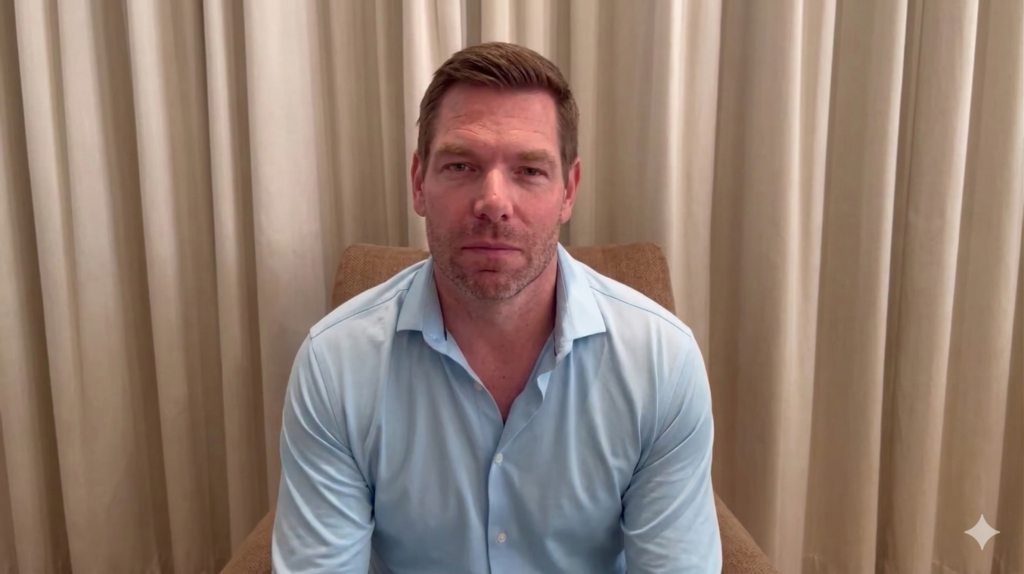
Later that night, he posted a video to social media. In it, he repeated his denial of the assault allegations, describing them as “absolutely false” and insisted that the events described by his accuser simply did not happen. But then he added something unexpected.
He acknowledged making “mistakes in judgment” at some point in his past — and issued a direct apology to his wife for what he called putting her “in this position.” He made no effort to specify what those mistakes were or how they related to the allegations being reported. He ended the video by saying he would spend time with his family over the weekend and planned to share more information soon.
That combination — a blanket denial of sexual assault alongside a vague but clearly sincere apology to his spouse — has drawn enormous scrutiny. Political observers and journalists have pointed out that the two positions are difficult to reconcile. If nothing happened, they ask, what exactly is he sorry about?
Swalwell Vows to Keep Fighting — and Signals Possible Legal Action
Despite mounting pressure to exit the race, Swalwell did not announce a withdrawal. Instead, his team signaled that he intends to fight back. His attorney made a public appearance in the days following the story, indicating that legal action against the woman who brought the allegations to the Chronicle may be forthcoming. Swalwell himself framed the situation as an attack by opponents who are threatened by his frontrunner status.
The Swalwell Campaign Crisis of 2026: How a Frontrunner’s Campaign Fell Apart Overnight

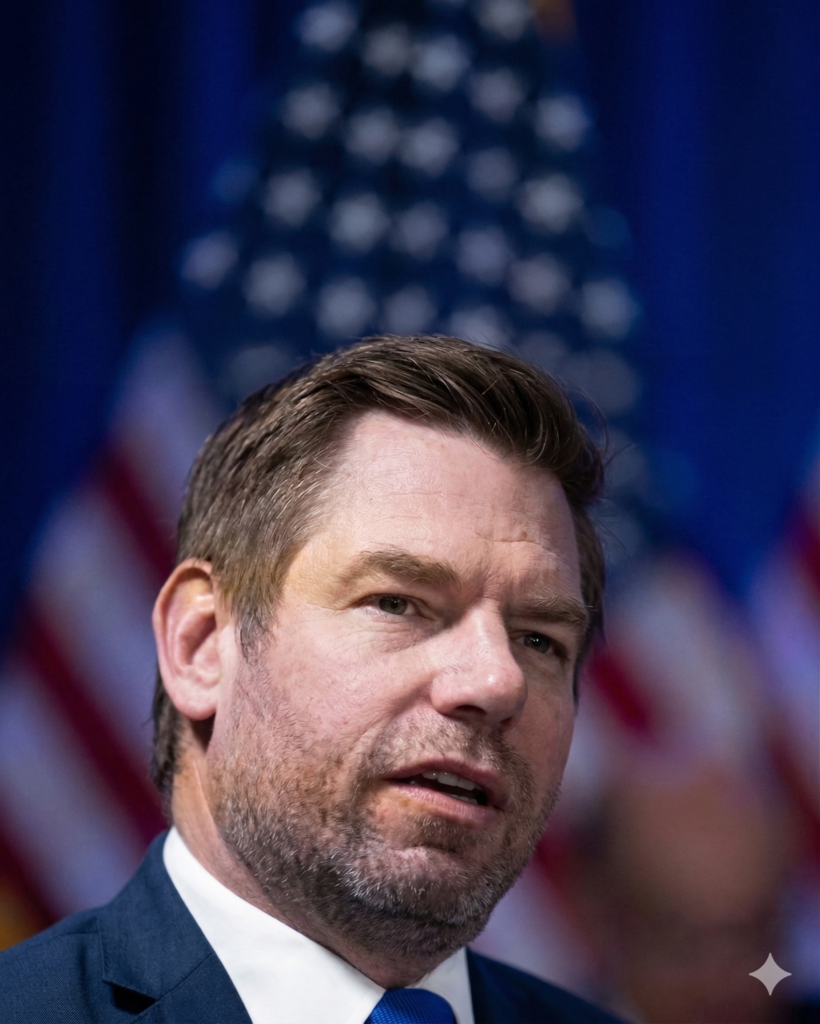
The speed at which Swalwell’s campaign infrastructure crumbled was striking, even by the standards of modern political crisis management. By the end of April 10, people who had been instrumental to his campaign were already walking out the door.
Representative Jimmy Gomez, a Los Angeles Democrat who had been co-chairing Swalwell’s campaign, stepped down from his role and publicly asked Swalwell to withdraw from the race. He described the allegations as “the ugliest and most serious accusations imaginable” and said that his own continued involvement “begins and ends with trust.” Fellow co-chair Representative Adam Gray followed suit.
The pressure from within the Democratic Party’s leadership structure was equally swift. House Minority Leader Hakeem Jeffries, Whip Katherine Clark, and Caucus Chair Pete Aguilar put out a joint statement demanding that Swalwell “immediately” end his campaign for governor. Former Speaker Nancy Pelosi, in her own statement, said she had spoken personally with Swalwell and made clear that stepping away from the race was the right course of action, adding that the matter required a full investigation conducted with transparency and accountability.
California Senators Adam Schiff and Alex Padilla both pulled their endorsements. The California Teachers Association, which had previously backed Swalwell, said the allegations were “incredibly disturbing and unacceptable.” His campaign was cut off from ActBlue, the Democratic Party’s primary online fundraising platform. A pro-Swalwell independent expenditure committee announced it was halting all activity.
Among his fellow gubernatorial candidates, reactions varied. San Jose Mayor Matt Mahan, State Superintendent Tony Thurmond, and former State Controller Betty Yee all directly called on Swalwell to exit the race. Tom Steyer and Katie Porter — the two candidates widely considered to be running closest to Swalwell at the top of the field — expressed solidarity with the alleged victim but declined to explicitly call on him to drop out.
The Swalwell Staffer Accusation Case: Who Is the Accuser and Why She Spoke Now
The woman who brought the allegations to the San Francisco Chronicle has not been publicly named. She told the newspaper that fear kept her silent for years — fear of damaging her career and fear of the personal consequences that can follow when someone speaks out against a powerful public official.
“He was the foundation of my career,” she reportedly explained, describing why she waited so long to come forward. Her decision to speak to the Chronicle came only after the story had begun circulating in political circles, pushed largely by Democratic activist and attorney Cheyenne Hunt, who runs Gen-Z for Change, a left-leaning youth civic engagement organization. Hunt had been amplifying claims about Swalwell’s alleged behavior on social media for days before the Chronicle piece went live, and she stated she was coordinating with the accuser’s legal team and a major media outlet to ensure the story was reported carefully and thoroughly.
Swalwell’s campaign initially tried to dismiss Hunt’s posts as political opportunism, calling the allegations a “false, outrageous rumor” engineered by “flailing opponents” who had aligned themselves with right-wing conspiracy theories. Hunt rejected that framing firmly. She wrote that accusing assault survivors of working with MAGA forces was “morally repugnant” and that the women involved deserved to be heard.
What the Allegations Mean for the 2026 California Governor’s Race
Just weeks before these allegations became public, Swalwell was performing strongly in the polls and had assembled a formidable coalition of labor, institutional, and elected endorsers. California’s jungle primary was set to begin accepting mail-in ballots on May 4, 2026, with Election Day falling on June 2. That narrow timeline has made the stakes of this moment even more significant.
With Swalwell as yet uncommitted on whether he will stay in the race, the other candidates are navigating a genuinely unusual situation — one in which a frontrunner’s campaign may effectively be over without any formal announcement of withdrawal.
A separate controversy has also emerged from the Democratic Party’s response. While leadership quickly called on Swalwell to end his gubernatorial bid, they drew a clear line at calling for him to resign his congressional seat. Critics across the political spectrum have found that distinction difficult to accept. If the allegations disqualify someone from serving as governor, the argument goes, it is not obvious why they should not also disqualify someone from continuing to serve in Congress.
FAQ:
Q1: Did Eric Swalwell admit to any wrongdoing?
Ans: Not directly. He categorically denied committing sexual assault. At the same time, he acknowledged making “mistakes in judgment” in his past and offered an apology to his wife for placing her in a difficult position. The precise nature of those admitted mistakes was never clarified in any of his public statements, which has generated considerable speculation and scrutiny.
Q2: Is Swalwell still running for California governor?
Ans: As of April 11, 2026, he had not formally withdrawn from the race. He said he would provide an update after spending the weekend with his family. Given that both of his campaign co-chairs have resigned, his fundraising platform has been suspended, and the top figures in the Democratic Party have publicly called on him to quit, however, his ability to mount a credible continued campaign is highly questionable.
Q3: How many women have made accusations against Swalwell?
Ans: At least four women, based on reporting published through April 11, 2026. One former staffer gave the San Francisco Chronicle a detailed first-person account. CNN separately reported on three additional women, one of whose allegations closely matched the staffer’s story, with the other two describing incidents including non-consensual kissing and the receipt of unsolicited explicit photos.
Q4: What has the Democratic Party leadership said?
Ans: House Minority Leader Hakeem Jeffries, Whip Katherine Clark, Caucus Chair Pete Aguilar, and former Speaker Nancy Pelosi all called on Swalwell to end his run for governor and stated that the allegations must be investigated. Senators Schiff and Padilla withdrew their endorsements. Notably, none of the Democratic leaders called on Swalwell to resign his seat in the House of Representatives, a decision that has been widely criticized.
Q5: Could Eric Swalwell face criminal or legal consequences?
Ans: No criminal charges had been filed as of this writing. Swalwell’s legal team signaled that he may pursue civil action against his accuser. Whether law enforcement agencies choose to open investigations based on the published allegations remains to be seen, and the legal picture is likely to evolve as the story continues to develop.
A Scandal That Is Still Unfolding — And Far from Over
What has happened to Eric Swalwell’s political career in the span of a single news cycle is extraordinary by any measure. A candidate who entered the weekend as a genuine frontrunner for the California governorship found himself, by Saturday morning, without his campaign co-chairs, without many of his most prominent endorsers, without access to his fundraising platform, and without the public support of his own party’s leadership.
Yet the story is not over. Swalwell has not stepped down. He has not conceded that any misconduct took place, even while acknowledging personal failures he has declined to name. And as the California primary approaches, every new development carries real consequences for the voters, the other candidates, and the political direction of the country’s most populous state.
What makes this moment worth watching closely — regardless of your political perspective — is the broader set of questions it raises. Questions about accountability, about institutional loyalty, and about how political parties respond when allegations of serious misconduct involve one of their own. Those questions do not have easy answers. But they deserve to be asked.
For More Information

Related Article
US Military Draft 2026: Automatic Registration Law Signed — Who Must Register
Toluca Beats LA Galaxy 3-2 in 2026 Concacaf Champions Cup Quarterfinal First Leg
Rex Heuermann Pleads Guilty in Gilgo Beach Serial Killer Case
Iran Threatens Ships in Strait of Hormuz Despite Ceasefire Deal